
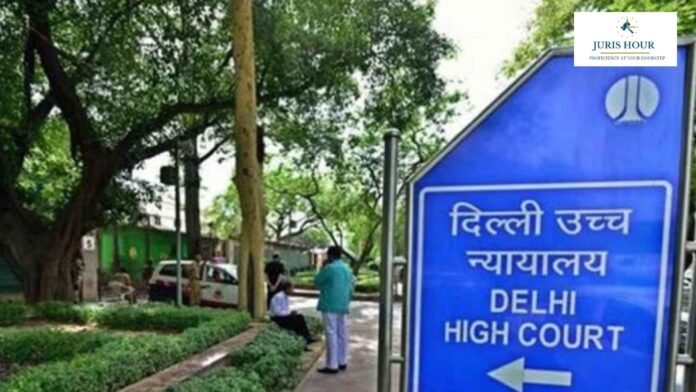
The Delhi High Court has held that a common GST show-cause notice does not become deficient merely because it covers several noticees, while declining to interfere with two adjudication orders arising from an investigation into allegedly ineligible input tax credit (ITC).
The Bench of Justice Anil Kshetarpal and Justice Bharat Parashar directed the petitioner to pursue the statutory appellate remedy under the Central Goods and Services Tax Act, 2017. The Court noted that the notices contained details of the alleged transactions, the network of firms involved and the manner in which invoices unsupported by genuine supplies were allegedly used to avail and pass on ITC.
Buy Now: 210+ GST Judgments E-Magazine – October 2026
However, the Bench expressly left open the merits of the demands, the applicability of Section 74 and the legality of the disputed penalty. Its refusal to exercise writ jurisdiction did not amount to approval of the Department’s demands.
The proceedings arose from an investigation into various firms allegedly involved in availing and passing on ineligible ITC through invoices that did not correspond to actual receipt or supply of goods.
According to the judgment, the show-cause notices referred to a search conducted under Section 67(2) of the CGST Act at the premises of a person alleged to have created the network. Stamps, letterheads and invoices relating to multiple firms were allegedly seized.
The Department alleged that several firms had been registered and operated to facilitate the transfer of ineligible credit through transactions unsupported by genuine supplies.
The petitioner, Manoj Kumar, proprietor of M K Steel Traders, had his statement recorded on May 19, 2023. As recorded in the proceedings, he stated that he assisted in distributing invoices unaccompanied by actual supplies, which were made available through brokers against commission.
The judgment also referred to an alleged transaction chain in which Metal Tech had availed ITC of ₹2,94,04,610 on invoices received from Shree Shyam Enterprises, which had received inward supplies from other firms. This figure concerned the Department’s allegations about the transaction chain and was separate from the demands challenged by the petitioner.
The petitioner challenged two separate orders-in-original dated February 4, 2025, passed by the Additional Commissioner, Central Goods and Services Tax.
The proceedings were based on show-cause notices dated August 1, 2024, accompanied by DRC-01 dated August 2, 2024. The adjudicating authority passed the orders after examining the replies submitted by the noticees.
In the first petition, the petitioner argued that the notice issued under Section 74 was non-speaking and omitted essential particulars necessary to invoke the provision.
In the second petition, he contended that the adjudication order imposed a penalty even though the show-cause notice had not proposed its recovery from him.
Examining the first petition, the High Court noted that the common show-cause notice ran into nearly 80 pages of the paper book and described the alleged modus operandi involving multiple firms and interconnected transactions.
The Bench found that the notice explained how invoices allegedly unsupported by genuine supplies were used to avail and pass on ineligible ITC.
In these circumstances, the contention that vital particulars were missing did not provide sufficient grounds for interference in writ jurisdiction.
The Court clarified that a notice being common to several noticees did not, by itself, make it deficient. The relevant consideration was whether it disclosed the Department’s allegations about the arrangement and the manner in which credit was purportedly availed and transferred.
Nevertheless, the Court left the petitioner free to challenge the notice, the supporting material and the adjudicating authority’s conclusions before the statutory appellate authority. Whether those allegations ultimately established his liability remained open.
In the second petition, the Court recognised that the petitioner’s objection raised a question concerning the scope of the show-cause notice and the legality of the consequential penalty.
The issue required examining whether the notice, read as a whole and in the context of the applicable statutory provisions, contained a proposal capable of legally sustaining the penalty imposed.
The Bench held that the statutory appellate authority was competent to examine the notice, the petitioner’s reply, his statement recorded during the investigation, the adjudication findings and the relevant provisions of the CGST Act.
Accordingly, it declined to determine the penalty issue in writ proceedings.
The Court specifically clarified that relegating the petitioner to appeal did not signify acceptance of the Department’s position. It expressed no final opinion on whether the notice contained an adequate penalty proposal or whether the penalty was legally sustainable.
The petitioner relied on the Supreme Court’s judgment in M/s G.R. Infra Projects Limited, Ratlam v. State of Madhya Pradesh & Others, Civil Appeal No. 11277/2026.
As explained by the High Court, the Supreme Court’s ruling requires a notice invoking Section 74 to disclose the factual particulars underlying allegations of fraud, wilful misstatement or suppression of facts. Mechanical use of those expressions cannot replace the necessary factual foundation.
The High Court accepted that principle but explained that its application depended on the contents of the particular notice.
In the present proceedings, the notices described the alleged network, transactions and roles attributed to the noticees. The Court therefore found no sufficient basis to bypass the statutory appeal process.
The Bench emphasised that its conclusion neither diluted the Supreme Court’s principle nor amounted to a final finding that the requirements of Section 74 had been satisfied.
The Court noted that the proceedings concerned allegations against as many as 158 noticees, including the person alleged to have masterminded the network.
However, it expressly observed that the number of noticees involved did not, by itself, establish the liability of any individual noticee.
The petitioner remained entitled to argue before the appellate authority that the allegations and evidence did not satisfy Section 74 or otherwise sustain the demands against him.
The High Court declined to interfere with the orders-in-original and directed the petitioner to pursue the statutory appellate remedy.
It clarified that the appellate authority must independently examine the available grounds in accordance with law. The merits of the demands, the sufficiency of the Department’s material, the applicability of Section 74 and the disputed penalty were all left undecided.
The Bench further stated that if the petitioner filed an application under Section 14 of the Limitation Act, 1963, seeking exclusion of the period during which the writ petitions remained pending, the competent appellate authority should consider it in accordance with law.
Membership Required to Access Case Details & Order Copy
To view the complete Case Details and Download Order Copy, you must have an active membership. Please subscribe to continue.

