
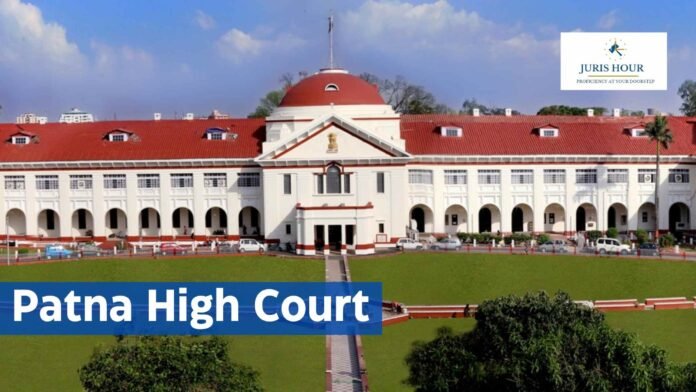
The Patna High Court has held that a taxpayer who had furnished an undertaking acknowledging the demand, submitted post-dated cheques for payment, and secured release of its attached bank account could not later invoke writ jurisdiction by contending that the show cause notice and adjudication order were not properly served through the GST portal.
A Division Bench of Justice Rajeev Ranjan Prasad and Justice Kumar Manish observed that the summary order specifically recorded that reminder notices had been issued and that the last reminder had also been sent to the registered email address. The petitioner, however, stopped short of categorically stating that no email or SMS alerts had ever been received.
The petitioner is a construction company engaged in works contract services and registered under the GST regime in Bihar. According to the company, it had regularly filed GST returns and discharged its admitted tax liability for FY 2020-21.
Buy Now: GST Judgements E-Compilation – June 2026
The controversy arose after the GST department passed an ex parte assessment order under Section 73(9) of the CGST/BGST Act, raising a demand of Tax: ₹8,46,476; Interest: ₹5,71,372; and Penalty: ₹84,646
The total demand exceeded ₹15 lakh, following which recovery proceedings were initiated and the company’s bank account was attached.
The company argued that neither the show cause notice nor the adjudication order had been effectively served upon it.
According to the petitioner, the notices had merely been uploaded under the “Additional Notices and Orders” tab on the GST portal rather than the regular “Notices and Orders” section. Because of this, it claimed that it remained unaware of the proceedings until its bank account was attached.
The petitioner further contended that no effective personal hearing was granted; the show cause notice marked the personal hearing column as “NA”; the proceedings violated Section 75(4) of the GST Act; the department denied genuine Input Tax Credit merely because suppliers allegedly failed to file GSTR-1 returns; and the adjudication order imposed a penalty even though the original show cause notice had proposed no penalty.
The State defended the proceedings by stating that scrutiny of the taxpayer’s returns revealed significant discrepancies.
The department alleged that the taxpayer had claimed Input Tax Credit (ITC) of ₹26.29 lakh in GSTR-3B, whereas ITC reflected in GSTR-2A was only ₹1.84 lakh, resulting in an alleged excess ITC claim of ₹7.84 lakh; and there was also a short payment of tax of ₹62,526 between GSTR-1 and GSTR-3B.
Based on these discrepancies, proceedings under Section 73 were initiated for excess ITC claim and suppression of turnover.
The State also highlighted that after the petitioner’s bank account was attached, the company approached the tax authorities and furnished an undertaking acknowledging the outstanding dues, three post-dated cheques covering the assessed amount, and a request for release of its bank account so that business operations could continue.
The department released the bank account on that basis. One cheque was successfully encashed, while the remaining cheques were dishonoured due to insufficient funds.
According to the State, the petitioner never protested the undertaking at the relevant time and only later challenged the proceedings after obtaining legal advice.
The High Court noted that although the petitioner attacked the validity of service of notices, it remained completely silent on the substantive allegations regarding excess ITC and suppression of turnover.
The Court observed that the writ petition did not explain whether the disputed ITC had actually accrued in the petitioner’s GSTR-2A or provide any factual rebuttal to the department’s calculations.
A significant factor influencing the Court was the petitioner’s conduct after attachment of its bank account.
The Bench observed that the taxpayer voluntarily furnished an undertaking promising payment within three months, submitted post-dated cheques, obtained release of its bank account, and even allowed one cheque to be honoured.
The Court held that there was nothing on record to indicate that the undertaking had been executed under protest or coercion. It described the later plea of compulsion as an afterthought.
The High Court also noted that during the hearing it had offered the petitioner an opportunity to withdraw the writ petition and pursue the statutory appellate remedy under Section 107 of the GST Act, but the petitioner chose to continue with the writ proceedings.
Holding that the petitioner had failed to approach the Court with clean hands and had not made out a case for exercise of extraordinary writ jurisdiction, the Bench dismissed the petition with costs of ₹25,000, payable to the Patna High Court Legal Services Committee within one month.
Membership Required to Access Case Details & Order Copy
To view the complete Case Details and Download Order Copy, you must have an active membership. Please subscribe to continue.
Read More: GST Registration Cancellation Can’t Be Cancelled Without Personal Hearing: Patna High Court

