
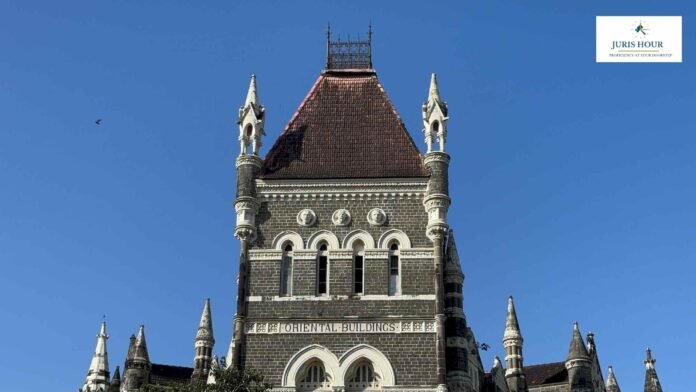
The Bombay High Court has agreed to examine a significant Goods and Services Tax (GST) issue concerning the scope of the term “recipient” under the Central Goods and Services Tax (CGST) Act, while granting ad-interim protection to Airlines against the recovery of a substantial Integrated GST (IGST) demand.
The Bench of Justice Suman Shyam and Justice Advait M. Sethna observed that the central issue requiring determination is whether the petitioner falls within the statutory definition of “recipient” for the purpose of imposing IGST liability.
The case raises the important legal question of whether an entity that neither received nor paid for a service can nevertheless be held liable to pay GST on that transaction.
Buy Now: June 2026 Ultimate Legal & Taxation Combo
The writ petition challenges an Order-in-Original passed by the Additional Commissioner, CGST & Central Excise, Mumbai Central, confirming an IGST demand of ₹24.41 crore under Section 74(9) of the CGST Act, 2017, along with an equivalent penalty and applicable interest.
The tax demand relates to services provided by Computerized Reservation System (CRS) companies, which facilitate airline ticket reservations through global booking platforms used by travel agents and airlines.
Appearing for Singapore Airlines, Senior Advocate Darius Shroff argued that the CRS services were supplied under agreements entered into directly by the CRS companies and that the Indian entity operating Singapore Airlines was neither the recipient of those services nor the party that made payment to the CRS providers.
The airline contended that since it did not satisfy the statutory definition of “recipient” under the GST law, the authorities lacked jurisdiction to raise the IGST demand under Section 74 of the CGST Act. It further argued that fastening tax liability on an entity that neither received nor paid for the services is contrary to the statutory scheme.
The petitioner also relied upon earlier decisions of the Customs, Excise and Service Tax Appellate Tribunal (CESTAT), including British Airways v. Commissioner of Central Excise (Adjn.), Delhi and Singapore Airlines v. Commissioner of Service Tax, Mumbai-I (26 September 2022). The decisions had already recognized that the airline was not liable for service tax because it was not the recipient of the CRS services. The petitioner argued that despite these precedents, the department proceeded with the show cause notice merely to keep the dispute alive, culminating in the impugned order.
Opposing the writ petition, counsel for the Union of India argued that the relevant transactions occurred through the petitioner’s establishment in India and, therefore, the airline could not avoid IGST liability.
The department also contended that the impugned adjudication order is appealable under the statutory framework and urged the High Court to dismiss the writ petition on the ground of availability of an alternative remedy.
The Court framed the principal question as whether an entity that is neither the recipient nor the payer for services provided by the CRS companies can legally be saddled with GST liability on those transactions.
The Bench observed that, on a prima facie reading, this jurisdictional issue deserves deeper judicial examination. It further noted that since the controversy goes to the very jurisdiction of the adjudicating authority, the existence of an alternative appellate remedy would not necessarily prevent the High Court from exercising its writ jurisdiction.
Finding that the matter raises an arguable jurisdictional issue, the High Court issued notice to the respondents; took the department’s reply on record; kept the question of maintainability of the writ petition open; granted ad-interim relief in favour of Singapore Airlines until the next hearing; and permitted the petitioner to file its rejoinder affidavit.
The matter has been listed for further hearing on 10 August 2026.
Membership Required to Access Case Details & Order Copy
To view the complete Case Details and Download Order Copy, you must have an active membership. Please subscribe to continue.

