
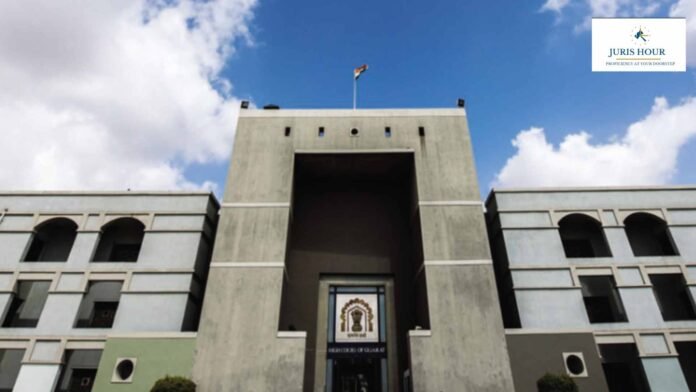
The Gujarat High Court has quashed a reassessment notice issued under Sections 148 and 148A of the Income Tax Act, holding that reassessment proceedings cannot be sustained where the alleged error in depreciation claim does not result in any escapement of taxable income or additional tax liability.
The bench of Justice A.S. Supehia and Justice Vaibhavi D. Nanavati ruled that reopening an assessment merely because the assessee claimed a lower rate of depreciation, which actually increased its taxable profits, was legally untenable.
The petitioner company is engaged in providing waste effluent management services to industrial units located in the Pandesara industrial cluster in Surat. For Assessment Year 2020-21, it filed its return declaring nil taxable income after claiming deduction of ₹20.51 crore under Section 80IA(4)(i), which grants a 100% deduction to eligible infrastructure facilities. At the same time, the company disclosed book profits of ₹23.50 crore and paid tax under the Minimum Alternate Tax (MAT) provisions of Section 115JB.
The return was selected for complete scrutiny under the Computer Aided Scrutiny Selection (CASS) system, and an assessment order under Section 143(3) read with Section 144B was passed on August 30, 2022, accepting the returned income.
Subsequently, the Income Tax Department initiated reassessment proceedings by issuing a notice under Section 148A(1), alleging that the assessee had claimed depreciation at rates of 10% on buildings and 15% on plant and machinery, whereas depreciation should have been claimed at 40% under the applicable rules governing water treatment infrastructure projects. According to the Department, this resulted in escapement of income amounting to ₹15.91 crore.
The company argued that the very foundation of reassessment was flawed because claiming depreciation at a lower rate had actually increased its business profits rather than reducing them.
It was contended that if depreciation had been claimed at the higher rate of 40%, the eligible profits under Section 80IA would have reduced proportionately, resulting in a corresponding reduction in the deduction available under that provision. Consequently, the total taxable income would still have remained nil. Further, the MAT liability under Section 115JB, computed on book profits, would have remained completely unchanged.
The petitioner also submitted that all depreciation details were already available during the original scrutiny assessment and, therefore, the reopening amounted to a mere change of opinion. Reliance was placed on Section 152(2) of the Act, which permits reassessment proceedings to be dropped where the assessee can demonstrate that even after considering the alleged escaped income, the amount originally assessed was not lower than what ought to have been assessed.
The Income Tax Department argued that excess depreciation allowance directly affects computation of business income and therefore constitutes a valid basis for reopening an assessment under Section 147.
The Revenue further contended that the original assessment order did not contain any specific discussion regarding the correctness of depreciation rates claimed by the assessee. Therefore, reassessment could not be characterized as a change of opinion. It also argued that liability under Section 115JB is merely a method of tax computation and cannot validate an incorrect claim made under the normal provisions of the Act.
The High Court rejected the department’s arguments and observed that the alleged escapement itself was illusory.
The Bench noted that the assessee had in fact claimed depreciation at lower rates than those prescribed under the Income Tax Rules. If the correct higher depreciation rate of 40% had been applied, the business income would have been reduced rather than increased. Since the profits from the eligible infrastructure business were entitled to a 100% deduction under Section 80IA(4)(i), the reduction in profits would have correspondingly reduced the deduction, leaving the taxable income unchanged.
The Court emphasized that there was no dispute regarding the assessee’s MAT liability under Section 115JB, which had been computed on audited book profits and accepted during the original assessment proceedings. Even if the Department’s allegation regarding depreciation were accepted, there would be no impact on book profits and therefore no increase in tax liability.
The Bench also found that all material facts relating to depreciation were already available before the Assessing Officer during the detailed scrutiny assessment. Therefore, the reassessment proceedings were based on a mere reappraisal of the same material and amounted to an impermissible change of opinion.
The Court placed significant reliance on its earlier decisions in Moto Tiles (P.) Ltd. v. ACIT and India Gelatine and Chemicals Ltd. v. ACIT, where it had been held that reassessment cannot be justified when the proposed addition would not alter the assessee’s ultimate tax liability because the assessee continues to be governed by the MAT provisions under Section 115JB.
Applying the same principle, the Court held that there was no material available with the Assessing Officer to form a valid belief that income chargeable to tax had escaped assessment.
Allowing the petition, the Gujarat High Court held that the essential requirement for invoking Section 147—namely, escapement of income chargeable to tax—was absent in the present case. Since the alleged error in depreciation claim neither resulted in additional tax liability nor affected the MAT computation, the reassessment proceedings lacked legal foundation.
Accordingly, the Court quashed the order passed under Section 148A(3) and the consequential reassessment notice issued under Section 148, holding that the reopening was based on a mere change of opinion and could not be sustained in law.
Membership Required to Access Case Details & Order Copy
To view the complete Case Details and Download Order Copy, you must have an active membership. Please subscribe to continue.
Read More: Reassessment Can’t Be Invoked While Scrutiny Window Remains Open: ITAT

