
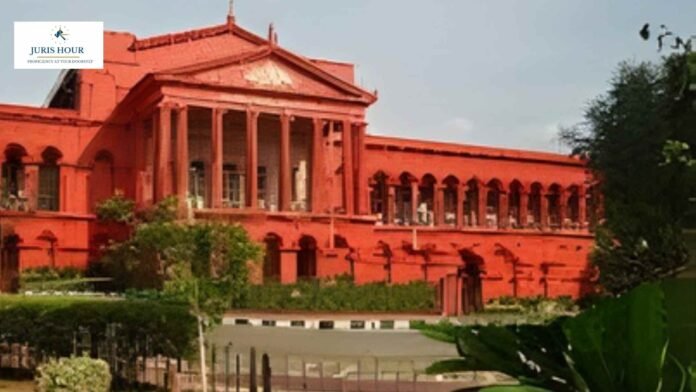
The Karnataka High Court has held that the Income Tax Appellate Tribunal (ITAT) cannot set aside penalty proceedings merely because the underlying assessment order had earlier been quashed by the Tribunal, particularly when the High Court has subsequently restored the assessment.
The bench of Justice S.G. Pandit and Justice Dr. K. Manmadha Rao remanded the matter to the Tribunal for a fresh adjudication on merits and left all legal contentions open.
The case arose out of assessment proceedings initiated against a mining company under Section 153A read with Section 144 of the Income Tax Act. Following the assessment, the Revenue initiated penalty proceedings under Section 271(1)(c) on the basis of additions made in the assessment order, alleging concealment of income or furnishing of inaccurate particulars.
Buy Now: INCOME TAX E-COMPILATION – JUNE 2026
The assessee challenged the penalty before the Commissioner of Income Tax (Appeals), who deleted the penalty. Aggrieved by the deletion, the Revenue approached the ITAT. However, instead of examining whether the statutory requirements for imposing penalty under Section 271(1)(c) were satisfied, the Tribunal dismissed the Revenue’s appeal solely because it had earlier quashed the underlying assessment orders. According to the Tribunal, once the assessment itself had been set aside, the penalty proceedings could not survive.
The Revenue contended that the Tribunal’s reasoning had subsequently become unsustainable because the Karnataka High Court had, by its judgment dated 22 July 2019 in connected appeals, reversed the ITAT’s earlier decision and restored the assessment proceedings. Consequently, the very foundation on which the Tribunal had deleted the penalty no longer existed.
The assessee, on the other hand, informed the Court that review proceedings had been initiated against the High Court’s earlier judgment. However, it was also brought to the Court’s notice that the review petition had been dismissed for non-compliance with office objections, although applications seeking recall of that dismissal had been filed.
The High Court observed that, as on the date of hearing, its earlier judgment restoring the assessment orders continued to hold the field. The mere pendency of attempts to revive the review proceedings could not dilute the binding effect of that judgment.
The Bench noted that the Tribunal had not examined the merits of the penalty proceedings or the legal questions surrounding the applicability of Section 271(1)(c). Instead, it had disposed of the appeal exclusively on the premise that the assessment orders had been quashed. Since those assessment orders had subsequently been restored by the High Court, the Tribunal’s reasoning could no longer be sustained.
The Court further clarified that any future order passed in the review proceedings could always be brought to the Tribunal’s notice, but the Tribunal was required to decide the case based on the legal position prevailing at present.
Rather than deciding the substantial questions of law framed in the appeal, the High Court concluded that the appropriate course was to remit the matter back to the Tribunal. It directed the ITAT to reconsider the appeal afresh on both the merits of the penalty proceedings and all legal issues, without being influenced solely by its earlier view regarding the assessment orders.
The Court expressly left all contentions of both parties open for determination before the Tribunal.
Membership Required to Access Case Details & Order Copy
To view the complete Case Details and Download Order Copy, you must have an active membership. Please subscribe to continue.
Read More: FCCB Redemption Premium Qualifies as Revenue Expenditure: Delhi HC

