
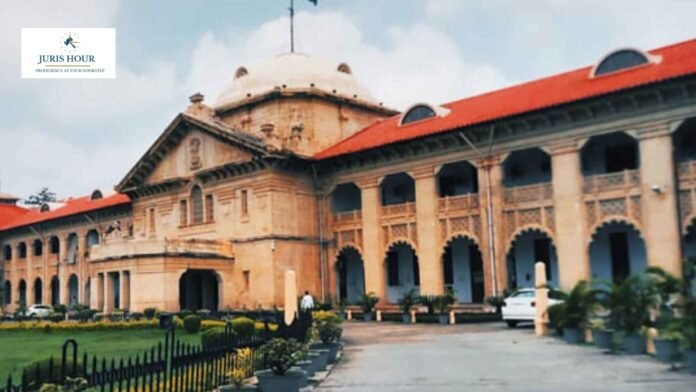
The Allahabad High Court has set aside orders dismissing two GST appeals for lack of prosecution. It held that Section 107(12) of the GST law requires the appellate authority to consider the grounds of appeal and material on record, identify the points for determination, and give reasons for its decision. The taxpayer’s absence alone cannot justify dismissal.
The bench of Justice Piyush Agrawal has observed that Section 107(12) requires an appellate order to state the points for determination, the decision on those points, and the reasons for that decision. Even where an appellant does not effectively pursue the hearing, the authority must examine the appeal and the available record before passing a reasoned order on merits.
Buy Now: E-Magazine: 1000+ Landmark GST Judgments (2017–2026)
The appellant/assessee has challenged an appellate order that left standing a penalty demand of ₹1,24,89,321 for 2024–25.
GST officials had searched its registered premises in Hapur and later issued summons. Following a recommendation to cancel its registration, the department issued a cancellation notice in November 2024. The taxpayer said that an officer subsequently visited the premises, found the business in existence, and dropped the cancellation proceedings on December 3, 2024.
Days later, the department issued a separate notice proposing a penalty under Section 127 read with Section 122(1)(ii) and (vii) of the Uttar Pradesh GST Act, 2017. Although the taxpayer filed a reply, the Deputy Commissioner confirmed the proposed penalty on March 25, 2025. The taxpayer appealed, but the appellate authority dismissed the appeal for lack of prosecution.
The taxpayer argued that the appellate authority had exceeded its powers by dismissing the appeal without addressing its grounds. The State maintained that the taxpayer had failed to appear and had not filed detailed arguments.
In this case, the Court found that the appellate authority had framed no points for determination and had given no reasoned decision on the substance of the appeals. It described the dismissals as mechanical and held that the authority had failed to discharge its statutory duty.
The High Court allowed both writ petitions and quashed the appellate orders. It remanded the matters for fresh, reasoned decisions after a personal hearing.
Membership Required to Access Case Details & Order Copy
To view the complete Case Details and Download Order Copy, you must have an active membership. Please subscribe to continue.
Read More: Service Tax Refund on Cancelled Flat Booking Cannot Be Rejected as Time-Barred: CESTAT

