
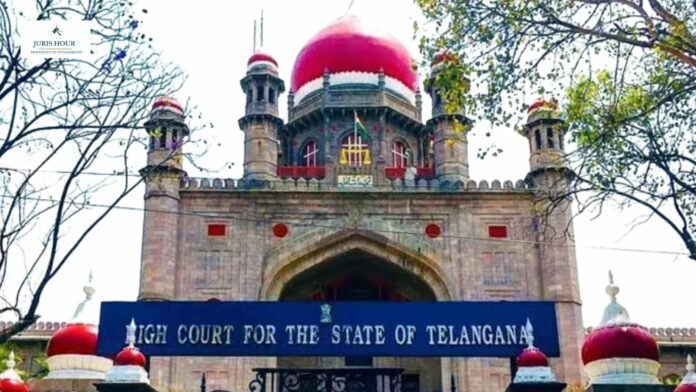
The Telangana High Court has allowed three income-tax appeals and restored the matters before the Income Tax Appellate Tribunal (ITAT), Hyderabad, after finding that the appeals had been dismissed for default primarily because the memoranda of appeal were unsigned.
The Division Bench comprising Justice P. Sam Koshy and Justice Narsing Rao Nandikonda held that the defect was curable and, in the circumstances of the case, relatively trivial, particularly when dismissal would result in the assessee being denied an adjudication of the substantive issues on merits.
The dispute before the High Court arose after the assessee had preferred three appeals before the ITAT against orders passed by the Commissioner of Income Tax (Appeals) for the respective assessment years.
Buy Now: 80+ Income Tax Judgments | E-Magazine July 2026
When the matters came up before the Tribunal, certain defects were noticed in the memoranda of appeal. One of the defects specifically recorded by the High Court was that the memoranda had been filed unsigned. The Tribunal issued notices calling upon the assessee to rectify the defects and granted time for compliance. However, the defects were not cured within the time granted. The Tribunal consequently dismissed the appeals for default.
The ITAT’s order therefore did not examine the substantive tax disputes raised in the appeals. Instead, the matters came to an end at the procedural stage because of the defects in the filing.
The High Court admitted the three appeals on a common substantial question of law concerning whether the ITAT’s order should be set aside when the assessee had allegedly not been afforded an opportunity of having the appeals considered on merits and the appeals had been rejected on technical grounds by treating them as defective.
The central issue before the High Court was therefore not the merits of the underlying income-tax disputes, but whether a procedural defect in the filing of the appeals justified shutting out the assessee from a substantive hearing before the Tribunal.
The assessee argued that the three appeals had never been adjudicated on merits and had only been dismissed for default. It was therefore requested that the matters be remanded to the Tribunal with appropriate conditions so that the appeals could be considered and decided in accordance with law.
It was also submitted that the assessee had been unwell during the relevant period. Medical certificates were placed before the Court in support of the submission. According to the assessee, the health-related circumstances had prevented her from effectively pursuing the proceedings before the Tribunal and from appearing to cure the defects. On that basis, restoration of the appeals and reasonable time to rectify the defects were sought.
The department opposed the appeals, arguing that the lapses were attributable to the assessee. According to the Department, the memoranda of appeal had been filed unsigned and, despite the Tribunal pointing out the defects and issuing notices for rectification, the assessee neither appeared personally nor through an authorised representative to cure them.
The Department therefore maintained that the Tribunal had no other option but to dismiss the appeals for default and that its order did not warrant interference by the High Court.
After considering the rival submissions and examining the record, the High Court noted that the ITAT had dismissed the appeals for default and that the defect specifically highlighted was the filing of unsigned memoranda of appeal.
The Bench observed that the defect was “curable” and, in the facts of the case, a “relatively trivial defect.” At the same time, the Court made it clear that the assessee should have exercised greater vigilance while filing the appeals and should have ensured that the memoranda were properly filed. The Court also observed that once the defects were pointed out during scrutiny, prompt steps ought to have been taken to rectify them within the time granted by the Tribunal.
Thus, the High Court did not treat the assessee’s procedural lapse as justified. Rather, it balanced the lapse against the larger consequence of permanently denying consideration of the appeals on their substantive merits.
A significant factor influencing the High Court was that the appeals had not been adjudicated on merits. The Court observed that if the matters were not remanded to the Tribunal, the assessee would be deprived of an opportunity to have the appeals considered on merits, while the Tribunal’s orders would attain finality without the issues raised by the assessee ever being adjudicated substantively.
The Court accordingly concluded that restoration was warranted in the factual circumstances of the case. The decision effectively prioritises substantive adjudication where a procedural defect is capable of being cured and where dismissal would permanently foreclose examination of the underlying dispute.
the High Court imposed a condition. The assessee was directed to deposit costs of ₹10,000 in each of the three appeals with the State Legal Services Authority within 10 days from the date of the judgment.
The assessee was granted a further period of 15 days to rectify and cure all defects pointed out by the Tribunal. Once the defects were cured, the Tribunal was directed to hear and decide the appeals on their own merits and in accordance with law.
Membership Required to Access Case Details & Order Copy
To view the complete Case Details and Download Order Copy, you must have an active membership. Please subscribe to continue.

