
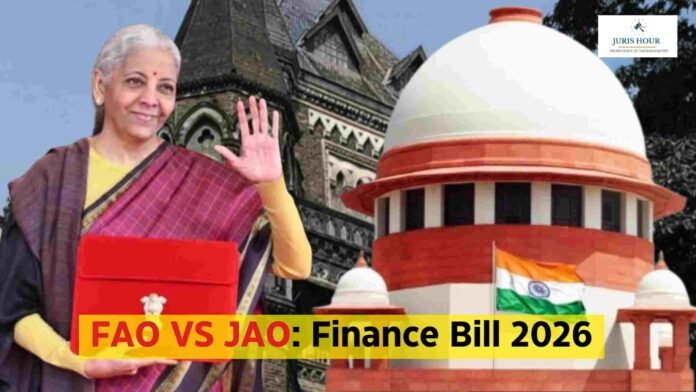
The Supreme Court has disposed of a batch of cases relating to the jurisdictional overlap between Jurisdictional Assessing Officers (JAO) and Faceless Assessing Officers (FAO), directing the parties to pursue their remedies before the respective High Courts.
Finance Bill, 2026 Retrospective Clarifications Shape Judicial Course
A Bench led by Justice B.V. Nagarathna took note of the retrospective clarifications introduced through the Finance Bill, 2026, which have a direct bearing on the controversy surrounding the validity of assessments framed by FAOs where jurisdictional objections had been raised.
Also Read : FAO Vs JAO | S. 147A Of Finance Bill 2026 Seeks to Nullify Bombay HC’s Hexaware Verdict
Background of the Dispute
The batch of matters before the Supreme Court arose from challenges to income tax assessments on the ground that they were issued by Faceless Assessing Officers without proper jurisdiction, allegedly bypassing the role of Jurisdictional Assessing Officers. Several High Courts across the country had delivered divergent rulings on the issue, leading to uncertainty and a flood of litigation.
Taxpayers had argued that the absence of a valid jurisdictional transfer rendered such assessments void ab initio, while the Revenue maintained that the faceless assessment framework permitted such actions under the Income-tax Act.
Impact of Finance Bill, 2026
While considering the batch of cases, the Supreme Court took cognisance of the amendments and clarifications introduced by the Finance Bill, 2026, which seek to retrospectively validate the actions of Faceless Assessing Officers and address technical challenges relating to jurisdiction.
In view of these legislative changes, the Court refrained from adjudicating the merits of the jurisdictional dispute at the apex level.
Liberty Granted to Approach High Courts
The Bench disposed of the batch by granting liberty to the parties to approach their respective High Courts, where the matters can be examined afresh in light of the retrospective statutory clarifications.
By doing so, the Supreme Court effectively restored the disputes to the High Court level, allowing constitutional courts to test the validity, scope, and impact of the Finance Bill, 2026 amendments in individual cases.
Read More: No Arbitration If Arbitration Agreement Is Disputed as Forged: Supreme Court

