
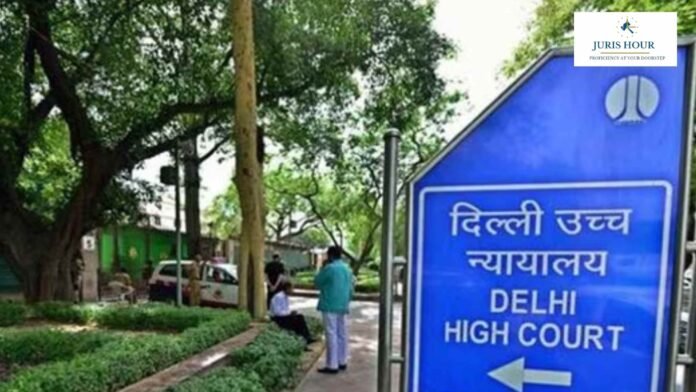
The Delhi High Court has held that the failure to serve hearing notice violated Rule 20 of ITAT Rules and resulted in manifest failure of justice.
The bench of Justice Dinesh Mehta and Justice Rajneesh Kumar Gupta has observed that the Tribunal committed a serious procedural irregularity by deciding the appeal on merits without first ensuring that notice of the hearing had been issued and served upon the appellant.
The proceedings arose from an appeal filed by the Petitioner/assessee against an order dated February 2, 2026, passed by ITAT Delhi Bench.
Buy Now: 80+ Income Tax Judgments | E-Magazine July 2026
Before the High Court, the assessee contended that the Tribunal had committed two errors: it had proceeded ex-parte and thereafter rejected the appeal on merits, despite the appellant allegedly not having received notice of the hearing.
The assessee took the Court through the ordersheets to demonstrate the sequence of adjournments. The matter had been listed on September 8, 2025, but the Bench did not assemble and the matter was adjourned by the Tribunal office to October 30, 2025. The Bench again did not function on October 30, following which the matter was listed for December 24, 2025. On that date too, the Tribunal did not function and the matter was ultimately fixed for February 2, 2026.
The appellant maintained that it did not receive any notice for the February 2, 2026 hearing and therefore the Tribunal ought not to have proceeded to hear and decide the appeal on merits in its absence.
The department argued that since the Tribunal had already decided the appeal on merits, the High Court should itself consider the substantive issues involved in the appeal.
The High Court, however, focused on the fundamental procedural question of whether the appellant had been properly notified of the hearing before the Tribunal proceeded to decide the matter.
After examining the impugned order and the ordersheets placed on record, the Division Bench found that the ITAT order had indeed been passed ex-parte and without hearing the appellant.
The Court specifically noted that the Tribunal had not functioned on three earlier dates—September 8, October 30 and December 24, 2025—and that the matter had been adjourned or dates had been assigned by the Tribunal office on those occasions.
The crucial issue arose when the matter was listed for February 2, 2026. The High Court found that, as contended by the appellant, no notice of hearing had been issued before the matter was taken up and decided on merits.
The Court held that the Tribunal should have first ascertained whether notice of the hearing had been issued and duly served upon the appellant before proceeding with the appeal.
A central aspect of the High Court’s reasoning was Rule 20 of the Income Tax (Appellate Tribunal) Rules, 1963.
The Court specifically referred to the rule, which provides that the date and place of hearing of an appeal must be fixed with reference to the Tribunal’s business and the time required for service of notice, so as to provide the parties with sufficient opportunity to appear and be heard.
The High Court emphasised that the requirement is not merely a technical formality. Proper communication of the hearing date is fundamental to the opportunity of a litigant to participate in judicial proceedings and defend its case.
The Division Bench came down firmly on the failure to comply with Rule 20.
The Court held that in the absence of service of notice upon the appellant, there was complete non-compliance with Rule 20 of the 1963 Rules, resulting in what it described as a “manifest failure of justice.”
On that basis, the High Court concluded that the ITAT’s order dated February 2, 2026 was contrary to law.
The finding is significant because the High Court did not enter into the merits of the underlying income-tax dispute. Instead, it held that the procedural defect preceding the Tribunal’s decision was sufficiently fundamental to require the order itself to be set aside.
The Delhi High Court set aside the ITAT’s February 2, 2026 order and restored the appeal to the Tribunal for fresh consideration.
The Tribunal has been directed to intimate a fresh date of hearing to both parties and thereafter adjudicate the appeal in accordance with law. Importantly, the High Court directed that the Tribunal should decide the matter afresh without being influenced by the previous order passed in absentia.
The appeal before the High Court was accordingly allowed, while all pending applications were disposed of.
Membership Required to Access Case Details & Order Copy
To view the complete Case Details and Download Order Copy, you must have an active membership. Please subscribe to continue.
Read More: Pending GST Proceedings Lapsed After Repeal of Rules 89(4B) and 96(10): Punjab & Haryana HC

