
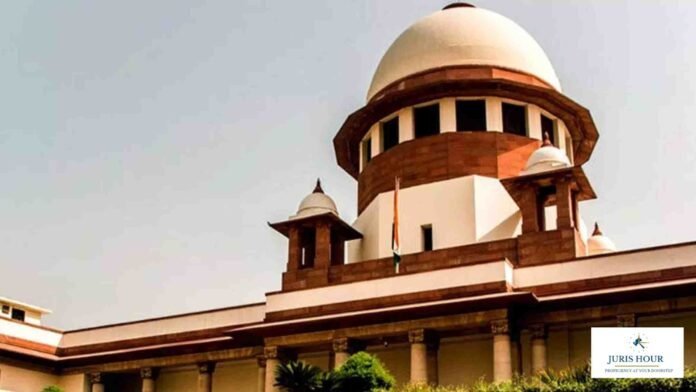
The Supreme Court has held that an application filed under Section 7 of the Code beyond the prescribed limitation period is not maintainable, and that mere admission of a claim by a Resolution Professional (RP) does not constitute acknowledgment of debt under the Limitation Act, 1963.
The bench of Justice Pamidighantam Sri Narasimha and Justice Alok Aradhe allowed the appeal and quashed the orders of the National Company Law Appellate Tribunal (NCLAT) and National Company Law Tribunal (NCLT), which had earlier admitted the insolvency plea against the corporate debtor.
The dispute arose from loan facilities granted in 2014 to corporate entities, which were subsequently classified as Non-Performing Assets (NPAs) on 6 December 2016. The debt was later assigned to Omkara Asset Reconstruction Pvt. Ltd., which filed an application under Section 7 of the IBC on 23 September 2024 seeking initiation of Corporate Insolvency Resolution Process (CIRP).
The NCLT admitted the petition, holding it to be within limitation, a view that was upheld by the NCLAT. The appellate tribunal had relied on the admission of the creditor’s claim by the RP in an earlier CIRP as a valid acknowledgment extending limitation.
Buy Now: E-Compilation of Supreme Court Judgements – March 2026
The Supreme Court, however, disagreed with the approach of the tribunals and undertook a detailed examination of limitation principles under Article 137 of the Limitation Act.
The Court reiterated that the limitation period for filing a Section 7 application is three years from the date of default, which in this case was 6 December 2016 (date of NPA). Even after accounting for exclusions such as moratorium periods under Section 60(6) of the IBC and COVID-19 extensions, the limitation period expired shortly after July 2024. Since the application was filed on 23 September 2024, it was clearly beyond limitation.
A crucial legal issue addressed by the Court was whether admission of a claim by an Interim Resolution Professional (IRP) or RP could amount to acknowledgment of liability under Section 18 of the Limitation Act.
Rejecting this contention, the Court held the RP performs administrative and clerical functions, including collation of claims, and does not adjudicate liability. Admission of a claim is merely an entry or record of debt, and does not reflect any conscious acknowledgment of liability by the corporate debtor. Therefore, such admission cannot extend limitation under Section 18 of the Limitation Act.
The Court emphasized that a valid acknowledgment must be made by the debtor or an authorized person and must indicate a clear intention to admit subsisting liability—conditions not satisfied by RP’s actions.
The Supreme Court set aside the orders of the NCLAT and NCLT and held that the insolvency application was barred by limitation.
Case Details
Case Title: Shankar Khandelwal Versus Omkara Asset Reconstruction Pvt. Ltd & Anr.
Citation: JURISHOUR-1012-SC-2026
Case No.: Civil Appeal No(S). 13158-13159 Of 2025
Date: 29/04/2026
Read More: Fake Ministry of Finance Order on Fuel Price Hike Circulates Online

