
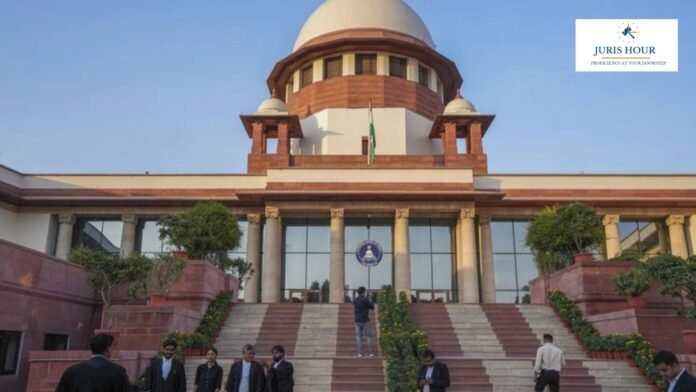
The Supreme Court has held that a Successful Resolution Applicant (SRA) cannot withdraw from or delay implementation of a Committee of Creditors (CoC)-approved resolution plan by alleging that the Letter of Intent (LoI) contained “conditional” clauses.
The bench of Justice K.V. Viswanathan and Justice Vipul M. Pancholi ruled that once a resolution plan is approved by the CoC, the successful resolution applicant is bound by it and cannot subsequently attempt to renegotiate or indirectly evade implementation obligations. The Court emphasized that permitting such conduct would undermine the time-bound insolvency framework envisaged under the IBC.
The dispute arose from the Corporate Insolvency Resolution Process (CIRP) of Oracle Home Textiles Limited. The CIRP commenced on 9 August 2018 and the appellant, who was also the promoter/director of the corporate debtor, submitted a resolution plan after obtaining permission from the National Company Law Tribunal (NCLT). The Committee of Creditors approved the appellant’s plan on 10 May 2021 with an overwhelming voting share of 99.90%.
However, at the time the resolution plan was under consideration, applications filed by prospective resolution applicants seeking permission to submit competing plans were pending before the NCLT. The Resolution Professional issued a Letter of Intent to the appellant on 23 May 2021 stating that the approval of the plan would remain subject to the outcome of those pending proceedings. The appellant argued that such stipulations rendered the LoI “conditional” and therefore unacceptable.
The appellant also objected to another clause in the LoI which provided that any liabilities arising from litigation initiated by workers or employees would have to be borne by the successful resolution applicant. According to the appellant, these clauses imposed additional burdens not contemplated under the original plan.
The Resolution Professional thereafter issued subsequent LoIs after the appellant repeatedly failed to provide unconditional acceptance. Eventually, the earnest money deposit of Rs. 1 crore was forfeited on account of non-acceptance of the LoI and non-submission of the performance guarantee within the stipulated time.
When the CIRP period expired without a validly implemented resolution plan, the CoC voted with 99.61% majority to liquidate the corporate debtor under Section 33 of the IBC. The NCLT approved the liquidation and dismissed the appellant’s challenges. The National Company Law Appellate Tribunal (NCLAT) also rejected the appeals, leading to the matter reaching the Supreme Court.
Before the Supreme Court, the appellant contended that the LoIs were impermissibly conditional because they subjected the plan to the outcome of third-party litigation and imposed additional obligations relating to employee claims. The appellant further argued that although the CoC had initially granted 45 days for submission of the performance guarantee, the final LoI reduced the period to seven days contrary to earlier decisions.
Rejecting these submissions, the Supreme Court held that merely stating that the LoI would be subject to pending judicial proceedings did not make it conditional in a manner permitting the applicant to withdraw. The Court observed that judicial outcomes would bind the parties irrespective of whether such a stipulation was expressly incorporated.
The Court noted that the appellant had full knowledge of the pending litigation and had participated in several CoC meetings where these issues were discussed extensively. The minutes of the meetings demonstrated that the appellant was aware of the conditions and had not objected to them at the relevant stage.
The bench further observed that the appellant had expressly agreed during CoC discussions that employee-related litigation risks would be borne by the resolution applicant. Having accepted those terms earlier, the appellant could not later challenge them after the plan was approved.
Invoking the doctrines of acquiescence and approbate-and-reprobate, the Supreme Court held that the appellant could not accept benefits under the process and later reject the same terms to escape obligations. The Court relied upon earlier judgments including Chairman, SBI v. M.J. James, Nagubai Ammal v. B. Shama Rao, and Rajasthan State Industrial Development & Investment Corporation v. Diamond & Gem Development Corporation Ltd. to reiterate that parties cannot “blow hot and cold” simultaneously.
The Court also relied heavily on the judgment in Ebix Singapore Pvt. Ltd. v. Committee of Creditors of Educomp Solutions Ltd., reiterating that once a resolution plan is approved by the CoC and submitted to the adjudicating authority, there is no scope under the IBC for withdrawal, renegotiation, or modification at the behest of the successful resolution applicant.
According to the Court, the appellant’s conduct amounted to a deliberate attempt to delay implementation of the resolution plan. Such attempts, the Court warned, would defeat the object of the IBC by prolonging insolvency proceedings and eroding asset value.
On the issue of forfeiture of the earnest money deposit, the Court held that the Request for Resolution Plan (RFRP) specifically permitted forfeiture where the successful applicant failed to submit the performance guarantee or otherwise failed to comply with the plan process. Since the appellant had refused to accept the LoI and failed to fulfil obligations, forfeiture of the Rs. 1 crore EMD was upheld as valid and lawful.
The Supreme Court further held that the CoC’s decision to liquidate the corporate debtor was a commercial decision entitled to judicial deference. Referring to Section 33 of the IBC and precedents such as Manish Kumar v. Union of Indiaand K. Sashidhar v. Indian Overseas Bank, the Court reiterated that the “commercial wisdom” of the CoC is generally non-justiciable.
The Supreme Court dismissed the appeals and directed the liquidator to continue with the liquidation process in accordance with law. The Court also vacated all interim orders operating in favour of the appellant.
The Court dismissed appeals filed by Sanjay Dave and upheld the liquidation of Oracle Home Textiles Limited under the Insolvency and Bankruptcy Code, 2016 (IBC).
Case Details
Case Title: Sanjay Dave Versus Andhra Bank Ltd. & Ors.
Citation: JURISHOUR-1456-SC-2026
Case No.: Civil Appeal Nos.12264-12266 Of 2024
Date: 28/05/2026
Read More: S. 138 NI Act Proceedings Continue Despite Personal Insolvency Moratorium Under IBC: Supreme Court

