
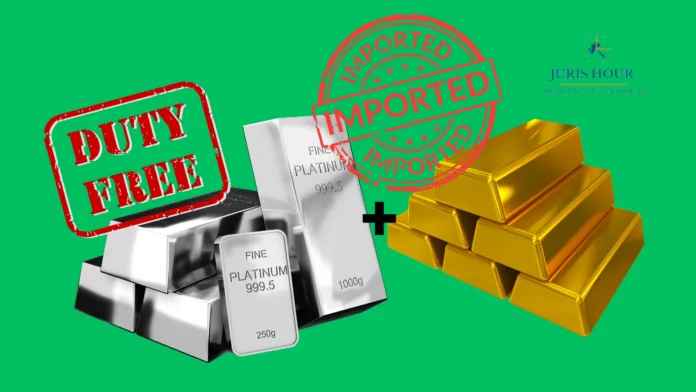
Importers in India have discovered a clever legal avenue to circumvent the high import duties on gold. By importing gold as a platinum alloy from countries such as Thailand, Indonesia, and Tanzania, they exploit favorable trade agreements and tariff classifications to significantly reduce or eliminate duties.
The Legal Loophole
According to sources familiar with the matter, importers are bringing in alloys that contain more than two percent platinum, with the remainder being predominantly gold. This composition qualifies the material as a platinum alloy under the Customs Tariff Act, thus benefiting from lower import duties.
Tax Structure
Platinum alloy imports are taxed at 5% when sourced from the UAE, comprising 0.5% customs duty and 4.5% Agriculture Infrastructure and Development Cess. However, under the India-ASEAN Free Trade Agreement and India’s Duty-Free Tariff Preference Scheme for Least Developed Countries, imports from Thailand, Indonesia, and Tanzania attract zero duty.
Gold Import Duty
In comparison, gold imports face a higher duty of 6%, making the alloy route an attractive alternative for importers seeking cost efficiency.
Implications of the Practice
The practice raises questions about the intent and integrity of existing tariff regulations:
Revenue Concerns
By avoiding the 6% duty on gold, this approach reduces the government’s revenue, potentially impacting the national economy.
Market Dynamics
The use of platinum alloys as a conduit for gold disrupts fair competition among importers, particularly those adhering to traditional import channels.
Regulatory Oversight
The strategy exposes gaps in the tariff framework and highlights the need for tighter scrutiny of alloy imports.
Calls for Policy Revision
Industry observers and policymakers suggest several measures to address this issue:
Refining Classification Criteria
Updating the definition of platinum alloys to better align with the economic intent of tariffs.
Enhanced Monitoring
Increasing vigilance over the composition and origins of imported alloys to ensure compliance with trade regulations.
Revisiting Trade Agreements
Amending provisions in free trade agreements and preferential schemes to prevent exploitation.
Conclusion
While the import of gold disguised as platinum alloys is legally compliant, it challenges the fairness and efficiency of the trade system. The government faces the dual task of preserving legitimate trade benefits while closing loopholes that undermine revenue and market equity. A recalibration of policies is essential to address this evolving scenario.
Read More: List Of Goods And Services Not Eligible For Input Tax Credit Under GST

