
Ask Jurishour AI

Generic selectors
Exact matches only
Search in title
Search in content
Post Type Selectors
tdb_templates
saswp_reviews
saswp-collections
saswp_rvs_location
tdc-review-email
web-story-font
web-story
googlesitekit_email
tds_locker
tds_email
saswp
mailpoet_page
mailpoet_email
tdcpt_tunes
tdc-review
pronamic_payment
pronamic_gateway
pronamic_pay_subscr
wpcode
HomeColumnsNew ITR Filing Rules Explained: Which Form Should You Choose for AY...

New ITR Filing Rules Explained: Which Form Should You Choose for AY 2024-25?

Published on

🚀 Stay Connected With JurisHour

WhatsApp X Telegram

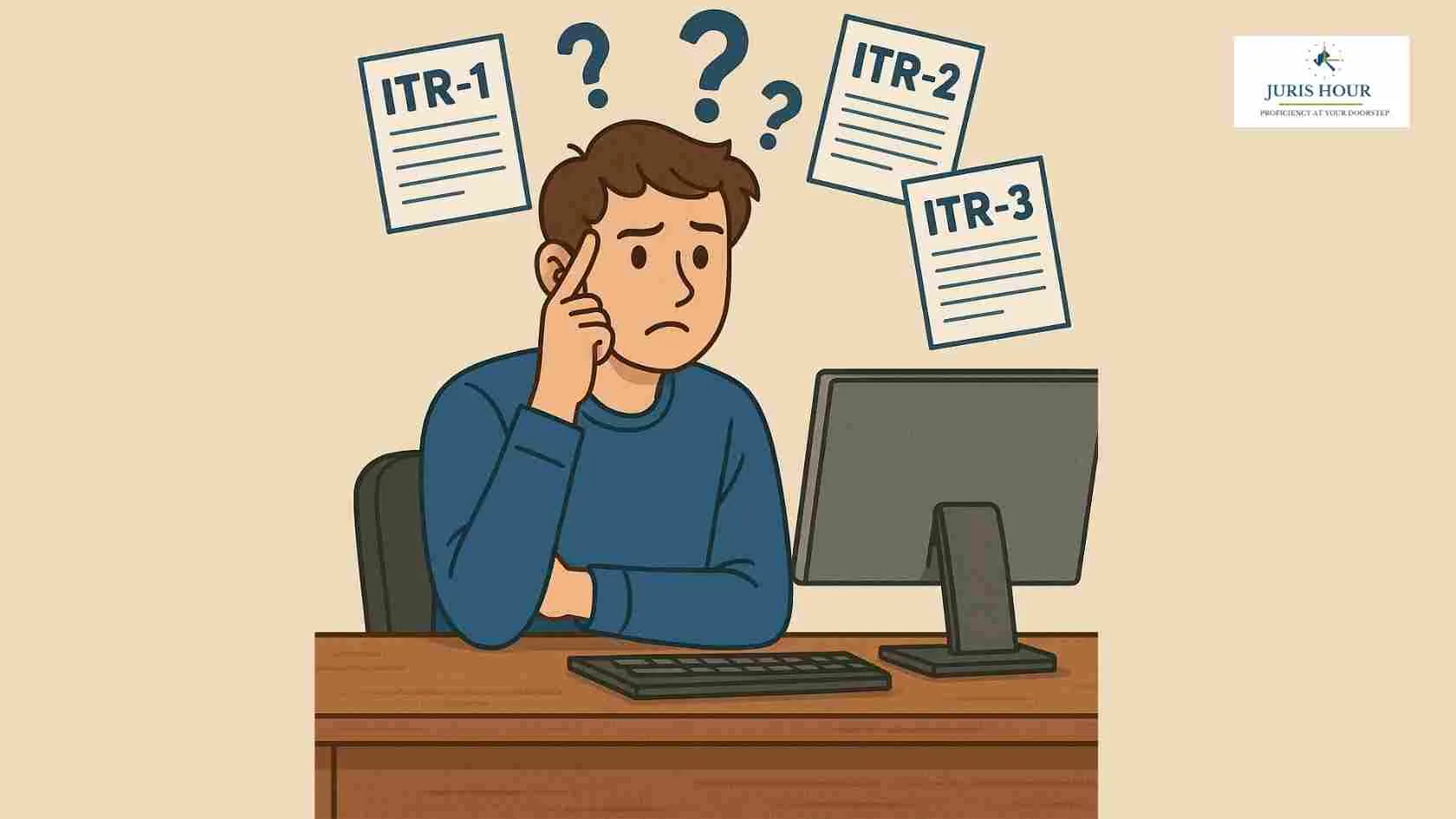
As the income tax return (ITR) filing season gains momentum for Assessment Year 2024-25, taxpayers need to be mindful of the updated norms and disclosures. A recent infographic published by Mint offers a concise guide on the appropriate ITR forms for individuals, including key updates and simplification measures introduced by the Income Tax Department.

ITR Form Eligibility Snapshot

ITR 1 (Sahaj): Suitable for individuals earning up to ₹50 lakh annually from salary, pension, one house property, and other sources. Also covers long-term capital gains (LTCG) up to ₹1.25 lakh from listed stocks or equity mutual funds under Section 112A.

ITR 2: Meant for those with income exceeding ₹50 lakh from any ITR-1 source, LTCG over ₹1.25 lakh, short-term capital gains, multiple house properties, foreign income, crypto holdings, or foreign assets/directorships.

ITR 3: Applicable for individuals earning income from business/profession or as a partner in a firm, along with any sources mentioned under ITR-2.

ITR 4 (Sugam): Designed for presumptive income taxpayers earning up to ₹50 lakh from sources listed under ITR-1.

Note: Hindu Undivided Families (HUFs) are ineligible for ITR-1 and must opt for ITR-2, 3, or 4.

Key Changes to Watch Out For

1. More Disclosures Required:

Deductions & Exemptions: Full disclosure now mandated for all claims under Section 80C, HRA, loan interests, and donations.

TDS Details on Other Income: Pre-filled details from AIS and Form 26AS will now include TDS on dividends, interest, and other income.

Capital Gains Reporting: Capital gains made on or after July 23, 2024, must be reported separately.

2. Simplified Provisions Introduced:

Capital Gains Simplicity: Taxpayers with up to ₹1.25 lakh LTCG from listed equity can use ITR-1 or ITR-4.

Expanded AL Threshold: Schedule AL (Assets & Liabilities) is now mandatory for income exceeding ₹1 crore, up from the earlier ₹50 lakh.

Share Buyback Reporting: Buyback income post-October 1, 2024, must be reported as dividend under “other sources.”

With these changes, the Income Tax Department aims to enhance transparency, ensure accurate reporting, and simplify compliance for honest taxpayers. As the July 31 filing deadline approaches, understanding the applicable ITR form and new reporting rules is crucial to avoid scrutiny or penalties.

Read More: Gold Smuggling Bid Foiled at IGI Airport; Over 1.48 Kg of Gold Recovered from Passenger Arriving from Sharjah

Mariya Paliwala
Mariya Paliwalahttps://www.jurishour.in/
Mariya is the Senior Editor at Juris Hour. She has 7+ years of experience on covering tax litigation stories from the Supreme Court, High Courts and various tribunals including CESTAT, ITAT, NCLAT, NCLT, etc. Mariya graduated from MLSU Law College, Udaipur (Raj.) with B.A.LL.B. and also holds an LL.M. She started her career as a freelance tax reporter in the leading online legal news companies.

Latest articles

E-Way Bills Required Even Without a Sale: ICAI Handbook Highlights Crucial GST Compliance Rules

The Institute of Chartered Accountants of India (ICAI), through its GST & Indirect Taxes...

JURISHOUR | TAX LAW DAILY BULLETIN : 5 OCTOBER, 2026

Here’s the Tax Law Daily Bulletin for October 5, 2026.GSTRS. 3.15 CRORE GST REFUND...

Vague Dowry Allegations Can’t Justify Trial Against In-Laws: Supreme Court Quashes Criminal Proceedings

The Supreme Court has quashed criminal proceedings against a woman’s parents-in-law, holding that general...

Property Sold To Another Buyer Doesn’t Establish Cheating Without Initial Deception: Supreme Court

The Supreme Court has quashed criminal proceedings arising from a disputed land sale, holding...

More like this

E-Way Bills Required Even Without a Sale: ICAI Handbook Highlights Crucial GST Compliance Rules

The Institute of Chartered Accountants of India (ICAI), through its GST & Indirect Taxes...

JURISHOUR | TAX LAW DAILY BULLETIN : 5 OCTOBER, 2026

Here’s the Tax Law Daily Bulletin for October 5, 2026.GSTRS. 3.15 CRORE GST REFUND...

Vague Dowry Allegations Can’t Justify Trial Against In-Laws: Supreme Court Quashes Criminal Proceedings

The Supreme Court has quashed criminal proceedings against a woman’s parents-in-law, holding that general...