
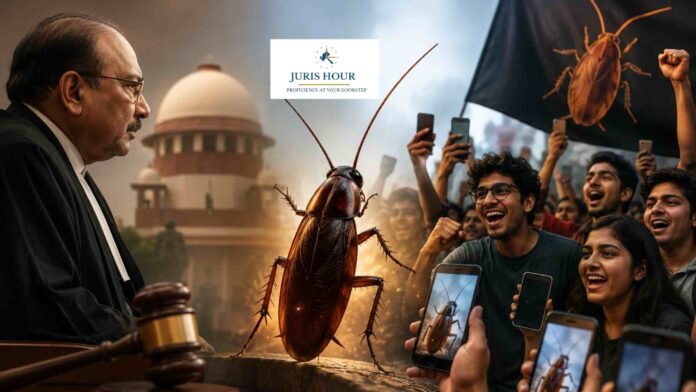
A satirical online movement called the “Cockroach Janta Party” (CJP) has unexpectedly become one of India’s biggest social media stories, turning a controversial judicial remark into a viral youth movement. Within days of its launch, the platform reportedly crossed the Instagram following of the Bharatiya Janata Party (BJP), sparking debates around youth frustration, unemployment, digital politics and the power of memes in shaping public discourse.
The movement traces its origins to remarks made by Chief Justice of India Surya Kant during a hearing where references to “cockroaches” and “parasites” generated widespread controversy and criticism online. The observations triggered strong reactions across social media, with many users interpreting them as reflecting broader frustrations surrounding unemployed and politically disillusioned youth. The Chief Justice later reportedly clarified concerns surrounding the comments, but by then the term had already acquired a life of its own in the digital ecosystem.
Political strategist Abhijeet Dipke then transformed the controversy into a satirical campaign named “Cockroach Janta Party.” Rather than functioning as a traditional political organisation, the initiative adopted humour, memes and absurdity as tools of political commentary. Branding itself as the “Voice of Lazy and Unemployed,” the page began posting content on unemployment, inflation, education pressures and youth concerns in a language that resonated strongly with Gen Z audiences.
The most surprising aspect of the phenomenon has been its explosive growth on Instagram. Reports indicate that the page accumulated millions of followers in less than a week, overtaking BJP’s Instagram presence. Various reports placed the numbers between around 10 million and over 15 million followers within a matter of days, with some later estimates placing the number even higher as momentum continued.
The immediate question that emerged was: How can a newly created satirical page attract more followers than the country’s largest political party?
The answer appears to lie less in formal politics and more in internet culture. Unlike conventional political communication, CJP relied heavily on meme formats, humour-driven criticism and participatory online trends. Young users did not necessarily join because they viewed it as a genuine political alternative. Instead, many treated it as a symbol of collective frustration and digital rebellion. Social media experts suggest that followers often join viral movements because they become part of a larger online conversation rather than because of ideological alignment.
Broader socioeconomic conditions may also explain the rapid traction. Reports indicate that India’s younger population continues to face concerns relating to employment opportunities and financial stress. Surveys referenced in coverage of the phenomenon suggest that many young people are delaying major life decisions due to economic pressures. The movement appears to have tapped into those sentiments through humour rather than conventional activism.
The rise of CJP has also generated controversy. Reports suggest that its X account was withheld in India shortly after its rapid rise, while allegations also surfaced regarding attempts to compromise its social media presence. Those developments further amplified public attention and generated discussions around online expression and digital spaces.
Whether the Cockroach Janta Party remains a temporary viral phenomenon or evolves into something more substantial remains uncertain. However, its rise has demonstrated a significant shift in how political conversations can emerge in India. A remark made in a courtroom has now become a nationwide social media discussion, illustrating how internet culture can transform controversy into mass engagement almost overnight.

