
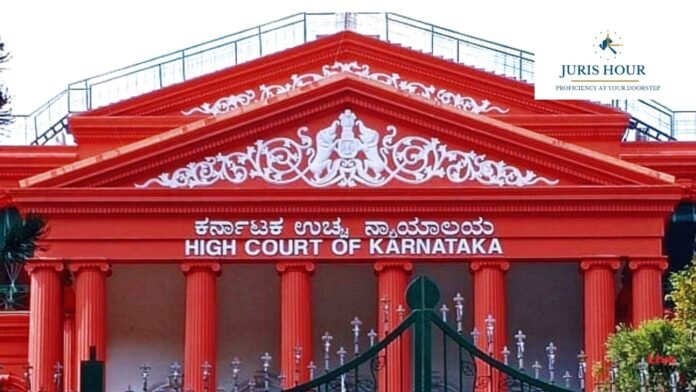
The Karnataka High Court has declined to entertain an additional director’s personal challenge to the authorisation for an income tax search against a company, observing that such a grievance must be raised by the affected person.
The bench of Justice B. M. Shyam Prasad found considerable force in the department’s argument that a search against the company should be challenged by the company rather than by an additional director claiming a personal cause.
The petition challenged search authorisations issued under Section 247 of the Income-tax Act, 2025, and the searches conducted pursuant to them at premises in Bengaluru, Chennai and Hiriyur.
Buy Now: Direct tax (Income Tax) E-Magazine September 2026
The authorisations identified in the petition were dated September 24 and 25, 2026. The petitioner also questioned related prohibitory orders, panchnamas and summons issued by the income tax authorities.
He sought a declaration that the searches and seizures were conducted without legal authority and violated statutory requirements as well as constitutional protections under Articles 14, 19(1)(g), 21 and 300A.
The petition contained several additional prayers concerning the conduct of the investigation. These included production before the Court of the recorded satisfaction and material supporting the search authorisations, safeguards during examination, restrictions on accessing seized digital material, and protection against coercive action.
These were reliefs requested by the petitioner; the Court’s operative order did not grant them.
The petitioner challenged the basis on which the search had been authorised. The authorisation could have been issued only if summons had first been issued and the petitioner had failed to respond, and if there were reasons to believe that he possessed assets connected with proceedings under the relevant enactments.
The assessee relied on Section 247(1), including its provisions dealing with failure to produce books, documents or electronic information, the anticipated non-production of relevant material, and possession of assets or information concerning assets representing undisclosed income or property.
Alongside the challenge to the search authorisation, the petitioner sought interim accommodation to respond to the summons. He was allowed a reasonable period to appear before the authorities.
Additional Solicitor General Arvind Kamath opposed the petition, submitting that the search and seizure action concerned Attica Gold Private Limited.
He argued that, even according to the petitioner’s own account, the petitioner was only an additional director. Consequently, any grievance concerning a search against the company had to be raised by the company itself, and the petitioner could not maintain the challenge on the basis of a personal cause.
The High Court found considerable force in the department’s objection concerning the petitioner’s entitlement to challenge the action.
It observed that a grievance concerning a search and seizure, or the manner in which it was authorised, must be brought by the affected person seeking to invoke the Court’s jurisdiction. On the facts presented, the Court held that the petitioner could not be treated as that person.
The order therefore turned on the petitioner’s ability to bring the challenge in his personal capacity. It did not provide a detailed determination of the competing interpretations of Section 247 or an examination of the underlying material supporting the search authorisations.
The Court separately considered the request for additional time to appear.
On instructions, the Additional Solicitor General stated that the authorities were willing to treat the recent summons as requiring appearance on a reasonable date indicated before the Court.
The petitioner submitted that he could appear on any day after seven days from the date of the hearing. Following further instructions, the Revenue agreed that he could appear on October 14, 2026, pursuant to the last summons dated September 30, 2026.
The Court accordingly disposed of the petition by permitting appearance on that date at 11 a.m. It expressly preserved the authorities’ ability to take lawful measures in the event of non-compliance.
Membership Required to Access Case Details & Order Copy
To view the complete Case Details and Download Order Copy, you must have an active membership. Please subscribe to continue.

