
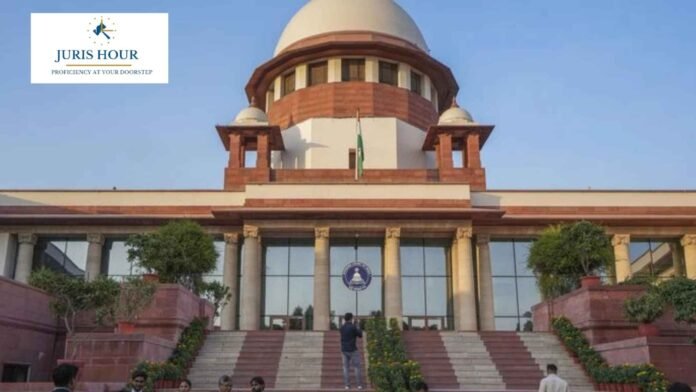
The Supreme Court has held that private individuals can file criminal complaints against elected candidates for allegedly furnishing false information in their election nomination papers or affidavits under Section 125-A of the Representation of the People Act, 1951. Such complaints are not barred by Section 195 of the Code of Criminal Procedure, 1973, which requires complaints by public servants for certain specified offences.
A Bench of Justice Dipankar Datta and Justice Sheel Nagu ruled that the Karnataka High Court had incorrectly held that only the Election Commission could initiate a complaint for an offence under Section 125-A.
Buy Now: 90+ Supreme Court Judgments – September 2026
However, the Supreme Court did not revive the criminal proceedings in the particular case. It upheld the closure of the complaint on separate factual grounds, observing that the allegation had been effectively rebutted at the preliminary stage and the possibility of conviction was remote.
The judgment arose from a complaint filed by Sri. Rajkumar Madki against Dr. Shailendra Beldale, who was elected to the Karnataka Legislative Assembly from the Bidar constituency in 2023.
Madki lodged a private complaint under Section 200 of the CrPC on August 21, 2023, alleging that Beldale had falsely disclosed his residential address in the affidavit accompanying his nomination paper. The complaint alleged an offence punishable under Section 125-A of the Representation of the People Act.
The Karnataka High Court, by its judgment dated March 7, 2025, quashed the complaint. It reasoned that Section 125-A should be subject to the restrictions under Section 195(1) of the CrPC and that the offence could be complained of only by the Election Commission.
The High Court also took the view that a voter’s remedy was to file an election petition, rather than initiate a private criminal complaint of this nature.
Madki challenged that decision before the Supreme Court.
The Supreme Court identified the substantial question of law as whether a private person could file a complaint under Section 200 of the CrPC against a returned candidate for an offence under Section 125-A, or whether the restrictions under Section 195(1) prevented such a complaint.
Section 125-A penalises specified failures to furnish information, knowingly providing false information, or concealing information in nomination papers or the prescribed affidavit, with the intent of being elected. The provision prescribes imprisonment extending to six months, a fine, or both.
Section 195(1)(a) of the CrPC, meanwhile, restricts courts from taking cognisance of offences punishable under Sections 172 to 188 of the Indian Penal Code, and certain related offences, except upon a written complaint by the public servant concerned or another public servant to whom that officer is administratively subordinate.
The Supreme Court held that the statutory language was clear: Section 195(1)(a) does not include an offence under Section 125-A of the Representation of the People Act.
The Bench declined to read an additional restriction into the provision when Parliament had not expressly included it.
It noted that Section 125-A was inserted with effect from August 24, 2002, while Section 195 of the CrPC was subsequently amended in April 2006. Despite that later amendment, Parliament did not bring Section 125-A within the restriction.
According to the Court, the legislature must be presumed to have been aware of the election law provision. Its omission from Section 195 was therefore deliberate.
The Bench also found no provision in any enactment requiring that a complaint under Section 125-A be lodged exclusively by a public servant.
Its interpretation was further supported by the overriding language in Section 125-A, which makes the prescribed penalty applicable notwithstanding anything contained in another law.
The respondent argued that allowing private complaints could encourage political opponents to initiate frivolous proceedings against elected candidates through other individuals.
It was also contended that the allegation concerned false information furnished to a public servant and could attract Section 177 of the IPC, thereby bringing the restrictions under Section 195 into play.
The Supreme Court nevertheless held that those restrictions could not be extended to a complaint alleging an offence under Section 125-A merely by interpretation.
Addressing the possibility of harassment, the Bench observed that competent magistrates already possess sufficient powers under the law to deal with frivolous complaints and pass appropriate orders according to the circumstances of each case.
The judgment also addressed reliance on Election Commission communications concerning complaints about false election affidavits.
The Bench said its conclusion followed from a plain interpretation of the statutory provisions, making it unnecessary to rely on those clarifications.
While recognising the Election Commission’s authority within its own sphere, the Court emphasised that interpreting statutes is primarily the responsibility of courts. Guidelines and press notes reflecting the Commission’s understanding of the law do not bind the judiciary.
The Supreme Court found no justification for allowing this particular prosecution to continue.
Having considered the documents placed on record, the Bench observed that the allegation of a false residential declaration had, prima facie, been more than effectively rebutted. It considered the possibility of conviction remote and held that continuing the proceedings would consume precious judicial time.
The Court therefore upheld the High Court’s decision to close the proceedings, but for reasons different from those given by the High Court.
Membership Required to Access Case Details & Order Copy
To view the complete Case Details and Download Order Copy, you must have an active membership. Please subscribe to continue.
Read More: JURISHOUR | TAX LAW DAILY BULLETIN : 16 OCTOBER, 2026

