
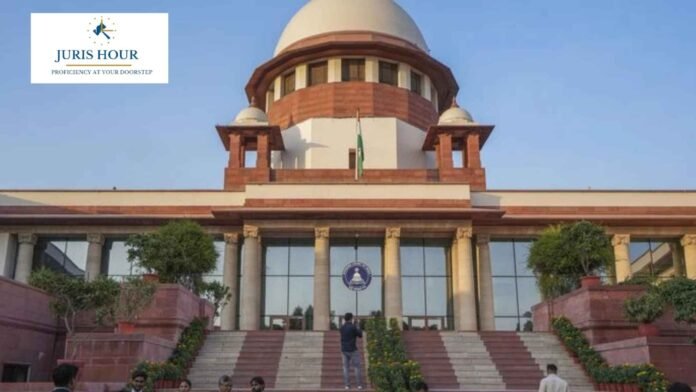
The Supreme Court has set aside three orders granting anticipatory bail and regular bail in a case concerning a fatal shooting during the 2024 Lok Sabha election period in Bihar, holding that the Patna High Court failed to adequately consider video footage of the incident and witness statements identifying the accused.
The Bench of Justice Dipankar Datta and Justice Sheel Nagu remitted the bail applications to the High Court for fresh consideration. It emphasised that merely recording the submissions of the parties, without independently assessing material evidence, is not a proper approach to deciding bail applications.
Buy Now: 90+ Supreme Court Judgments – September 2026
The bench directed that the three accused would continue on interim bail under the conditions previously imposed by the High Court until their applications are decided afresh. The ruling, delivered on October 16, 2026, arose from appeals filed by Nagendra Ray, the father of deceased Chandan Ram.
According to the prosecution, an altercation took place on May 20, 2024, during the Lok Sabha elections, when certain persons allegedly abused, misbehaved with and attempted to attack supporters of an RJD candidate. An FIR was registered concerning that incident.
The prosecution alleged that, out of resentment over the previous day’s events, a group of approximately 40–50 persons armed with deadly weapons surrounded Chandan Ram and others at Bhikhari Chowk at around 7 a.m. on May 21, 2024.
Ramakant Solanki, also known as Ramakant Singh, allegedly shot Chandan Ram in the chest, while Ram Pratap Singh, also known as Ravi Kant Singh, allegedly shot Manoj Ram in the head. Two others, Deepak Kumar and Guddu Kumar, were allegedly shot at by other assailants.
The deceased’s father and others rushed to the spot after hearing gunshots and screams. The assailants allegedly fled while firing indiscriminately. Chandan Ram was declared dead at the hospital, while the injured required medical attention.
FIR was registered at Town Police Station, Chhapra Nagar, in Saran district, invoking provisions of the Indian Penal Code relating to rioting, unlawful assembly, attempted murder, murder and criminal conspiracy, among other offences, along with Section 27 of the Arms Act.
A chargesheet was subsequently filed on August 17, 2024, against the three accused and other co-accused under various IPC and Arms Act provisions. A supplementary chargesheet concerning other accused was filed on April 10, 2025. The trial against the accused involved in these appeals remains pending.
Before approaching the High Court, Kamakhya Singh, also known as Deepu Singh, had sought anticipatory bail before the sessions court. Ram Pratap Singh and Ramakant Solanki had separately sought regular bail.
The sessions court rejected Kamakhya Singh’s anticipatory bail application and Ram Pratap Singh’s regular bail application on August 7, 2024. Ramakant Solanki’s regular bail application was rejected on September 23, 2024.
One of the critical considerations underlying those decisions was video footage obtained by the police showing the accused at the scene. In Ram Pratap Singh’s case, the sessions court specifically recorded that he could be seen holding a rifle.
The High Court subsequently granted anticipatory bail to Kamakhya Singh on October 23, 2024, regular bail to Ram Pratap Singh on December 20, 2024, and regular bail to Ramakant Solanki on January 10, 2025.
Examining the High Court’s orders, the Supreme Court found that the orders concerning Kamakhya Singh and Ram Pratap Singh completely omitted consideration of the video footage, despite its express mention in the sessions court’s decisions.
The Bench also found that all three orders failed to consider statements recorded under Section 161 of the Code of Criminal Procedure, in which witnesses had identified the relevant accused after being shown the footage.
In Ramakant Solanki’s case, the High Court had recorded the investigating officer’s submission concerning the video. However, it had not independently analysed whether that material adversely affected his request for bail.
The Supreme Court explained that a bail order must demonstrate application of mind through reference to relevant material, even if the discussion is concise. Simply reproducing the rival submissions does not fulfil that requirement.
Emphasising the importance of reasoned adjudication, the Bench observed that “‘the reasons’ … form the backbone of all judicial decisions.”
It relied on Assistant Commissioner, Commercial Tax Department v. Shukla and Brothers, (2010) 4 SCC 785, which explains that judicial orders must disclose what weighed with the court in granting or refusing relief.
Drawing on that precedent, the Bench reiterated that reasons promote certainty, enable scrutiny by higher courts and explain the basis of a judicial conclusion. Even a concise order must contain the court’s own assessment of the claim and the material relevant to it.
The defect identified in the present case was therefore not merely the brevity of the bail orders, but their failure to address significant evidence and explain its bearing on the accused persons’ requests for relief.
Allowing the appeals, the Supreme Court set aside the three High Court orders and restored the corresponding anticipatory bail and regular bail applications for fresh adjudication.
The High Court must reconsider the applications after hearing the accused, the complainant and the police. Subject to its convenience, it may hear the three applications together.
Despite setting aside the original bail orders, the Supreme Court expressly continued interim bail for Kamakhya Singh, Ram Pratap Singh and Ramakant Solanki on the conditions already imposed by the High Court until the fresh decisions.
The Bench also clarified that its observations must not be treated as findings on the merits of the criminal case. All contentions and objections on merits remain open.
Membership Required to Access Case Details & Order Copy
To view the complete Case Details and Download Order Copy, you must have an active membership. Please subscribe to continue.
Read More: Married Daughters Can Keep Jewellery at Parental Home: ITAT Deletes Additions

