
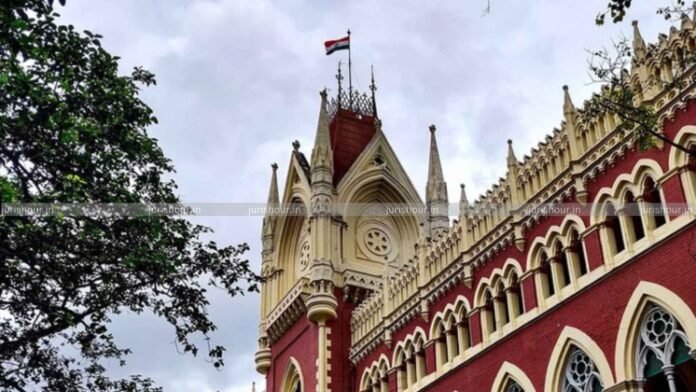
The Calcutta High Court has granted conditional interim protection in a challenge to a consolidated GST show cause notice proposing a tax/input tax credit demand of ₹5.34 crore, along with interest and penalty, for four financial years.
The bench of Justice Smita Das De found that the petitioners had made out a prima facie case warranting interference at this stage. However, the Court directed them to respond to the notice by October 29, 2026, making compliance with that deadline a condition for continuing the interim protection.
Buy Now: 160+ GST E-Magazine September 2026
The proceedings raise questions concerning the invocation of Section 74 of the Central Goods and Services Tax Act, 2017, the consolidation of multiple financial years into a single notice, and compliance with statutory audit timelines. The Court has not finally decided these issues.
The petitioners challenged a show cause-cum-demand notice dated August 25, 2026, issued by the Additional Commissioner, CGST & CX, Kolkata Audit-I Commissionerate, together with its summary in Form GST DRC-01.
Issued under Section 74(1) of the CGST Act, the notice proposed a consolidated demand of ₹5,34,45,242 towards tax/input tax credit, besides interest and penalty. It covered financial years 2020–21, 2021–22, 2022–23 and 2023–24 and followed an audit purportedly conducted under Section 65 of the Act.
The petitioners questioned both the basis for invoking Section 74 and the procedure adopted in issuing the notice.
The petitioners submitted that, for financial years 2020–21 and 2021–22, the notice had been issued after a lapse of three years without disclosing foundational facts constituting fraud, wilful misstatement or suppression of facts to evade tax.
They argued that the existence of such circumstances was a necessary condition for invoking the extended period under Section 74(1). Their challenge therefore concerned whether the notice adequately disclosed the factual basis required to proceed under that provision.
The petitioners also contended that the underlying audit under Section 65 had exceeded the statutorily prescribed period. These submissions remain to be adjudicated.
Another principal objection concerned the inclusion of four financial years in one composite notice.
According to the petitioners, each financial year carried an independent limitation period. They argued that combining the years into a single notice was legally impermissible and exceeded the authority’s jurisdiction.
They further alleged that the proceedings had been conducted arbitrarily and in a predetermined manner. In relation to financial year 2020–21, they complained that the audit report, the intimation in Form GST DRC-01A and the notice under Section 74(1) had been issued within a span of five days, in disregard of the principles of natural justice.
The GST authorities raised an objection to the maintainability of the writ petition.
Their counsel submitted that the petitioners had failed to reply to the show cause notice despite repeated reminders. The authorities maintained that questions of jurisdiction and limitation could be raised before the adjudicating authority itself. M:s. J. Thomas & Co. Pvt. Ltd. …
The Court found a prima facie case for intervention. It also took judicial notice of the documents annexed to the petition, including the show cause notices and reminder letters.
Granting a final opportunity, the Court directed the petitioners to file their reply before the authority concerned on or before October 29, 2026.
The order expressly states that failure to meet this deadline will result in the interim protection standing vacated without any further reference to the Court. In that event, the authorities will be free to proceed in accordance with law.
The Court restrained the authorities from giving effect to the demand raised in the impugned notices until the decision contemplated in its order attains finality. The relief is therefore conditional: the notice has not been quashed, and the objections concerning limitation, jurisdiction, audit procedure and consolidation of financial years have not been finally determined.
Membership Required to Access Case Details & Order Copy
To view the complete Case Details and Download Order Copy, you must have an active membership. Please subscribe to continue.

