
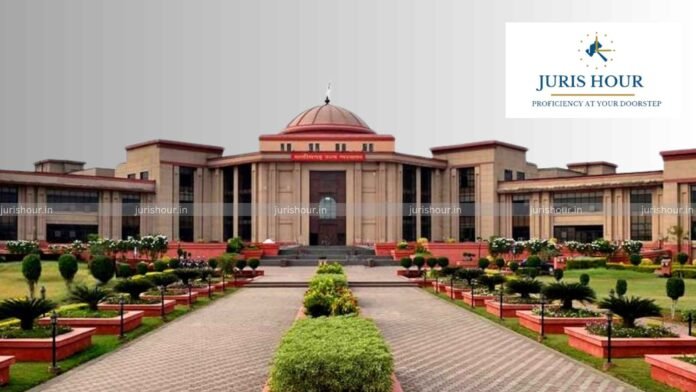
The Chhattisgarh High Court has dismissed a writ petition challenging a GST show cause notice (SCN) issued by Directorate General of GST Intelligence (DGGI) proposing penalties, holding that judicial interference at the notice stage is ordinarily unwarranted unless a jurisdictional error is alleged or the issuing authority’s competence is challenged.
The bench of Justice Narendra Kumar Vyas observed that the petitioner had approached the Court without submitting a reply to the notice or allowing the statutory adjudication process to conclude.
Buy Now: 160+ GST E-Magazine September 2026
The bench referred to the appellate remedy available under Section 107 of the GST legislation against an adjudicating authority’s decision or order.
The bench directed the authorities to comply with the GST Act and provide the petitioner an opportunity of hearing before determining his liability.
The petitioner/assessee challenged a show cause notice issued by the Joint Director of the Directorate General of GST Intelligence, Raipur Zonal Unit. He also challenged a corrigendum issued on August 27, 2026.
The notice, issued under Section 74 of the State GST Act read with the Central GST Act, called upon several persons, including Rathi, to explain why penalties should not be imposed for the acts of omission and commission described in it.
The proposed penalties were under Sections 122(1A), 122(3) and 125 of the CGST Act, read with Section 20 of the IGST Act.
The petitioner contended that the notice had been issued without giving him an opportunity of hearing. He argued that this violated the principles of natural justice and fair play, as well as the requirements of the GST legislation.
The GST department submitted that the impugned communication was only a show cause notice and that the petitioner had been given an opportunity to respond and present his defence.
The notice required the petitioner to produce the evidence on which he intended to rely. It also asked him to indicate in his reply whether he wished to be heard personally before adjudication.
The department pointed out that the notice warned of an ex parte decision based on the available evidence if the petitioner failed to respond or appear when the matter was listed for hearing. The records relied upon by the investigating agency were listed in an addendum accompanying the notice.
The department argued that the challenge was premature. They also submitted that an adverse adjudication order could be challenged before the Appellate Authority under Section 107.
The High Court examined Section 107, which provides an appeal against a decision or order passed by an adjudicating authority under the GST legislation.
The Court held that the petitioner could not bypass the statutory process by challenging the show cause notice without first replying to it and allowing the authority to adjudicate the matter. It also emphasised the availability of the appellate forum following adjudication.
The ruling concerns interference at the show cause notice stage. The appellate remedy discussed by the Court relates to a subsequent adjudication decision or order; the Court did not direct the petitioner to file an appeal against the notice itself.
The High Court relied on the Supreme Court’s decision in The Assistant Commissioner of State Tax and Others v. M/s Commercial Steel Limited, reported in (2022) 16 SCC 447.
As reproduced in the judgment, the Supreme Court had clarified that an alternative statutory remedy does not create an absolute bar to a writ petition under Article 226. Intervention may be justified in exceptional circumstances involving a breach of fundamental rights, violation of natural justice, excess of jurisdiction, or a challenge to the validity of a statute or delegated legislation.
Applying the legal position to the proceedings before it, the High Court held that a writ petition against a show cause notice is ordinarily not maintainable unless a jurisdictional error is alleged or the competence of the authority issuing the notice is questioned.
The Court consequently declined to interfere with the notice.
The Court also referred to a Ministry of Finance circular amending Circular No. 31/05/2018 concerning the powers of Central Tax officers in Audit Commissionerates and DGGI.
The provision reproduced in the order distinguishes the power to issue show cause notices from the power to adjudicate them. For cases concerning a single executive Central Tax Commissionerate, it provides for adjudication by the competent officer of the executive Commissionerate having jurisdiction over the registered noticee.
After considering the circular, the Court stated that the grievance relating to jurisdiction stood redressed and that no further adjudication on that aspect was warranted at the stage before it.
The Court expressly directed the respondents to follow the GST Act “in its letter and spirit” and afford the petitioner an opportunity of hearing before determining his tax liability.
The petitioner was also directed to cooperate with the proceedings, avoid unnecessary adjournments and refrain from delaying adjudication.
Membership Required to Access Case Details & Order Copy
To view the complete Case Details and Download Order Copy, you must have an active membership. Please subscribe to continue.
Read More: Service Tax Demand Quashed Over Unproven Construction And Rental Claims: CESTAT

