
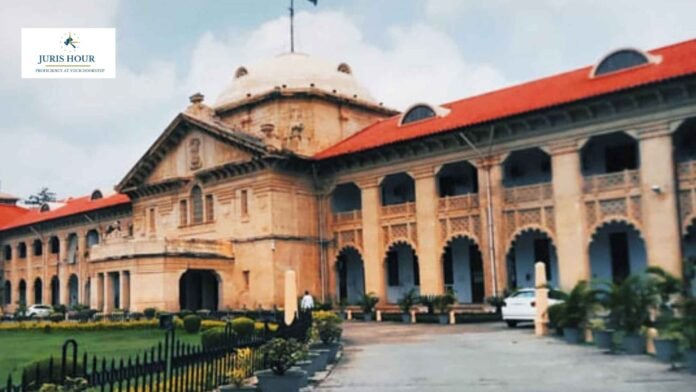
The Allahabad High Court has dismissed two Income Tax Department appeals involving a tax difference of approximately ₹7 lakh, observing that an exception to the monetary-limit policy for proceedings under Section 263 of the Income Tax Act, 1961 does not mean that the tax effect can be overlooked in every case.
The Bench of Justice Saumitra Dayal Singh and Justice Swarupama Chaturvedi noted that the Union government’s general litigation policy restricts revenue appeals before High Courts to disputes involving tax exceeding ₹2 crore. Considering the small tax effect and the absence of any allegation of recurring transactions or multiplicity of proceedings, the court declined to examine the legal questions raised by the department. It left those questions open for consideration in an appropriate case involving a substantial dispute.
Buy Now: 160+ GST E-Magazine September 2026
The appeals arose from an Income Tax Appellate Tribunal order concerning assessee’s assessments for assessment years 2010–11 and 2011–12.
The Tribunal had allowed the assessee’s appeals against the Principal Commissioner of Income Tax, Ghaziabad’s order dated March 8, 2021, passed under Section 263 of the Income Tax Act.
The dispute concerned the valuation of land as on April 1, 1981, and its bearing on the computation of income. In the assessment proceedings following an earlier Tribunal order, the Assessing Officer had accepted a valuation report furnished by the assessee. The assessment order under Sections 143(3) and 254 was passed on December 24, 2018.
The Principal Commissioner subsequently exercised revisionary jurisdiction under Section 263. The department’s case was that the Assessing Officer had accepted new material and completed the assessment without proper application of mind, resulting in an order that was both erroneous and prejudicial to the interests of the revenue.
The Tribunal examined the valuation material and the circumstances in which the Assessing Officer had accepted the assessee’s report.
It noted that the income declared in the original return had not been supported by the valuation report subsequently considered in the assessment proceedings. According to the Tribunal, the Assessing Officer had the opportunity in those proceedings to examine the valuation for determining income under the heads of capital gains and business income.
The Tribunal also discussed Section 55A(a) and the decision in Anil Kripalani concerning a reference to the Departmental Valuation Officer for determining a value lower than that shown by the assessee.
It observed that the competing valuation reports adopted substantially different estimates of the property’s historical value. The valuation exercise related to April 1, 1981, rather than the property’s present value, and necessarily involved estimation.
On the facts before it, the Tribunal concluded that the assessment order might be prejudicial to the revenue but was not erroneous. It therefore set aside the Section 263 order and allowed the assessee’s appeals for both assessment years.
Before the High Court, the department raised two proposed questions of law.
The first concerned whether an assessment below the income originally returned by the assessee, after entertaining new facts, rendered the assessment erroneous and prejudicial to the revenue when allegedly made without application of mind.
The second challenged the Tribunal’s decision to set aside the Section 263 order despite the Principal Commissioner’s findings concerning the Assessing Officer’s alleged failure to apply his mind and the conditions under Explanation 2 to Section 263.
The department also claimed that the appeals fell within an exception to the circular governing revenue appeals because the proceedings arose under Section 263.
The High Court noted the Tribunal’s reasoning that the assessee’s valuation was supported by an approved valuer’s report. That provided a basis for the Tribunal’s distinction between an assessment prejudicial to the revenue and one that was also erroneous.
However, the Bench expressly left that issue aside and considered the quantum of the dispute. It recorded that, against a loss return of ₹2,29,920, acceptance of the Departmental Valuation Officer’s report would produce a tax difference of approximately ₹7 lakh.
The court recognised that, as a matter of principle, the revenue could claim an exception to the monetary-limit circular in proceedings arising under Section 263. Nevertheless, it observed that the exception could not have been intended to permit the tax effect to be disregarded in every case.
The Bench emphasised that the amount involved remained relevant in light of the Union government’s general policy against pursuing High Court litigation in tax disputes below ₹2 crore.
The court further noted that there was no allegation of repeated transactions or an issue involving multiplicity of proceedings.
It described land-sale transactions as inherently standalone and observed that agricultural land previously owned by the assessee might have been converted and sold after plotting following a change in land use.
In that factual setting, the Bench considered the revenue dispute small and the tax effect too insignificant to warrant examination under the government’s general litigation policy.
The court accordingly dismissed both appeals as below the monetary limit.
Membership Required to Access Case Details & Order Copy
To view the complete Case Details and Download Order Copy, you must have an active membership. Please subscribe to continue.
Read More: DGGI SCN Can’t Be Challenged Before Reply And Adjudication: Chhattisgarh High Court

