
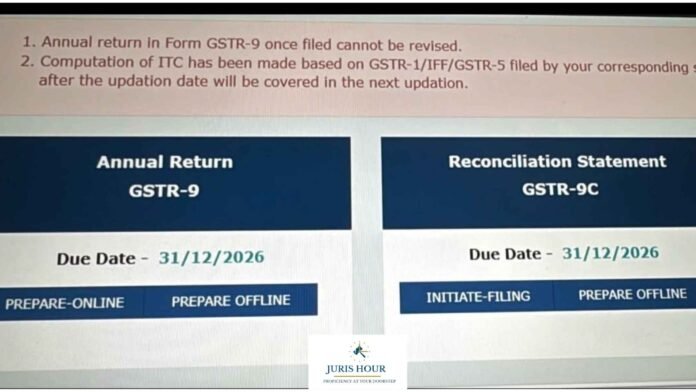
The GST portal has enabled the annual return in Form GSTR-9 and the reconciliation statement in Form GSTR-9C for the financial year 2025-26, according to the portal screenshot shared. Both filing panels display December 31, 2026, as the due date, giving eligible taxpayers an opportunity to begin their annual GST reconciliation and filing preparations.
The screenshot shows “Prepare Online” and “Prepare Offline” options for GSTR-9, while the GSTR-9C panel displays “Initiate Filing” and “Prepare Offline” options. The availability of these facilities allows taxpayers to start reviewing their annual disclosures and preparing the reconciliation statement wherever applicable.
The displayed deadline follows the ordinary timeline under Rule 80 of the Central Goods and Services Tax Rules, 2017, which requires annual filing by December 31 following the end of the relevant financial year. For FY 2025-26, which ended on March 31, 2026, that date is December 31, 2026, subject to any subsequent notified extension.
Buy Now: Legal & Taxation Combo – 4 Premium E-Magazines
What GSTR-9 And GSTR-9C Cover
GSTR-9 consolidates annual GST information, including outward and inward supplies, input tax credit and tax payments. Its preparation requires taxpayers to bring together the figures reported during the year and examine their consistency with the underlying accounting records.
GSTR-9C serves a separate reconciliation function. It reconciles the value of supplies declared in the annual return with the audited annual financial statements and records the relevant differences and explanations.
Under Rule 80(3), eligible registered persons whose aggregate turnover during the financial year exceeds ₹5 crore are required to furnish a self-certified reconciliation statement in GSTR-9C along with their annual return. The requirement remains subject to the exclusions prescribed under the law.
The availability of both forms on the portal should therefore not be understood as making both forms compulsory for every taxpayer. Businesses must determine their filing obligations by reference to their registration category, aggregate turnover and applicable exemptions.
Portal Warns That GSTR-9 Cannot Be Revised
A significant warning visible in the screenshot states that an annual return in Form GSTR-9, once filed, cannot be revised.
This makes the review before submission particularly important. Taxpayers should check turnover, tax liability, input tax credit, reversals, credit notes, debit notes and other adjustments against their books and filed returns before completing the filing process.
Where differences arise, businesses should identify whether they reflect timing differences, accounting adjustments, reporting errors or an additional tax liability. Supporting reconciliation records should explain how the final annual figures have been arrived at.
Input Tax Credit Data Requires Careful Review
The screenshot also carries a notice referring to the computation of input tax credit on the basis of suppliers’ filings in GSTR-1, the Invoice Furnishing Facility and GSTR-5. It indicates that filings made after the relevant update date will be covered in a subsequent update.
Taxpayers should examine the latest data available in their own filing dashboard and compare it with their purchase records and ITC workings. A mismatch should be investigated before submission, with attention to the relevant financial year, supplier reporting and any credit already claimed or reversed.
The portal data should be reviewed alongside the taxpayer’s records so that differences can be identified and explained rather than carried into the annual return without examination.
Reconciliation Should Begin Before The Deadline
Businesses preparing their annual filings should bring together their financial statements, sales and purchase registers, periodic GST returns, credit and debit notes, tax payment records and input tax credit workings.
The exercise should focus on consistency between the books of account and GST disclosures. Particular attention is needed where transactions were amended, reported in a later period, subject to reverse charge or affected by ITC reversals.
For taxpayers required to file GSTR-9C, the reconciliation should also establish the reasons for differences between the annual return and audited financial statements. The statement is self-certified under the present framework, placing responsibility on the taxpayer for the accuracy of the disclosures.
With December 31, 2026, displayed as the filing deadline, eligible taxpayers can use the available period to resolve discrepancies, complete their annual workings and review the forms before submission.

