
The Rajasthan High Court has set aside a faceless income tax assessment order involving an addition of over ₹6.9 crore after finding that the taxpayer was given less than three days to respond and that its reply and supporting documents were ignored despite being acknowledged by the National Faceless Assessment Centre.
The bench of Chief Justice Sanjay K. Agrawal and Justice Baljinder Singh Sandhu held that the assessment was passed in clear violation of the principles of natural justice. It remanded the matter to the Assessing Authority for a fresh decision after providing a reasonable opportunity of hearing and considering the material already submitted.
Buy Now: Direct tax (Income Tax) E-Magazine September 2026
The dispute arose from a notice proposing variation under the faceless assessment procedure prescribed by Section 144B of the Income Tax Act, 1961.
The Assessment Unit issued the notice on March 11, 2024, at 5:16:18 p.m. and required the company to submit its response by 10 a.m. on March 14, 2024.
The company argued that this provided less than three days to address a substantial proposed addition. It also submitted that the applicable Standing Order required a reasonable response period of at least one week.
Examining the notice and the amount involved, the High Court found that the time granted did not constitute a reasonable opportunity to respond.
“Such an extremely short time cannot be said to be a reasonable opportunity for submitting a response to the notice,” the bench observed.
According to the company, it prepared its reply and attempted to upload it on the Income Tax Department’s e-filing portal before the deadline. However, the “Submit Response” button did not open, preventing submission through the portal.
Its authorised representative lodged a grievance with the department’s helpdesk on March 14, 2024, which was registered as Grievance No. 16423754.
The company subsequently emailed its detailed written submissions and supporting documents at 5:48 p.m. that day, requesting that they be forwarded to the Assessment Unit.
On March 15, 2024, the National Faceless Assessment Centre confirmed by email that the information and documents had been forwarded. The company also submitted a physical copy to the jurisdictional Assessing Officer on the same date, requesting that it be uploaded to the portal.
Despite these submissions, the Assessment Unit passed the assessment order on March 21, 2024, recording that the company had not complied with the notice.
Finding Of Non-Compliance Was Contrary To The Record
The High Court noted that the transmission of the reply by email and its subsequent acknowledgment by the National Faceless Assessment Centre were undisputed.
It found that the assessment order nevertheless proceeded on the incorrect premise that the taxpayer had neither complied with the notice nor filed a reply.
The bench further recorded that the portal had prevented the company from uploading its response and that neither the emailed documents nor the physical submission had been considered.
Accordingly, the findings of “no compliance” and “no proper compliance” in the assessment order were held to be contrary to the record. The court concluded that making a substantial addition without considering the available reply and supporting documents had caused serious prejudice to the taxpayer.
Statutory Appeal Did Not Prevent Writ Relief In These Circumstances
The Income Tax Department opposed the petition on the ground that the assessment order was appealable and that the company should pursue the statutory remedy.
The High Court acknowledged the availability of an appeal. However, it noted that a coordinate bench had already entertained the writ petition on April 23, 2024, principally because of the alleged violation of natural justice, and had granted interim protection.
In those circumstances, the bench declined to dismiss the petition at that stage on the ground of an alternative remedy.
The bench relied on the Supreme Court’s decision in Canara Bank & Ors. v. Debasis Das & Ors., (2003) 4 SCC 557.
Drawing upon that ruling, the High Court explained that authorities deciding disputes or taking administrative action involving civil consequences must comply with the requirement of a fair hearing. A notice must clearly communicate the case to be answered, and the recipient must receive adequate time to make a representation.
Applying these principles, the bench held that the combination of inadequate response time, inability to upload the reply and failure to consider the documents actually received vitiated the assessment.
The High Court set aside the assessment order dated March 21, 2024, and directed the Assessing Authority to pass a fresh order in accordance with law after giving the company a reasonable opportunity of hearing and duly considering its existing reply and documents.
The bench expressly clarified that it had not expressed any opinion on the merits. The relief therefore requires reconsideration of the assessment; it does not determine whether the disputed addition is substantively justified.
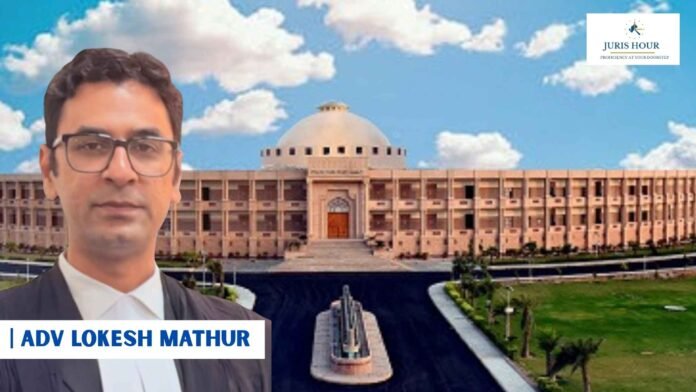
Advocates Lokesh Mathur, Prashant Kumar Balout and Sakshi Mody appeared for the company. Advocate K.K. Bissa appeared for the respondents.
Membership Required to Access Case Details & Order Copy
To view the complete Case Details and Download Order Copy, you must have an active membership. Please subscribe to continue.
Read More: SOP For GSTAT Reply Filing

