
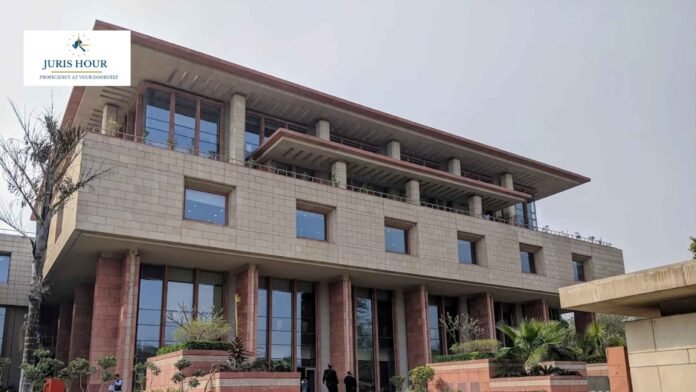
The Delhi High Court has held that an Assessing Officer should not require a taxpayer to produce “negative evidence” to prove that no appeal has been filed against an assessment order. A declaration from the taxpayer can be taken for that purpose, the court said while setting aside an order that rejected the assessee’s application for immunity from income tax penalty proceedings.
The bench of Justice Dinesh Mehta and Justice Rajneesh Kumar Gupta found that the company had submitted a reply to the officer’s notice, although the rejection order stated that no reply had been filed. The court directed the officer to reconsider the application under Section 270AA of the Income Tax Act, 1961, and pass a fresh order by October 15, 2026.
Buy Now: Think Before You Pay Cash: 50+ Landmark Rulings on Section 40A(3) Of The Income Tax Act, 1961
The appellant/assessee is engaged in letting out immovable property, declared income of ₹5,43,52,210 for assessment year 2024–25 under the head “profits and gains of business or profession.” In an assessment order dated March 27, 2026, the Assessing Officer treated the income as “income from house property” and assessed it at ₹6,68,07,690. The officer also initiated penalty proceedings under Section 270A, alleging under-reporting of income.
According to the court’s order, the company paid the resulting demand of ₹37,99,340 on April 22, 2026, before its April 26 due date. It then filed Form 68 on April 27, seeking immunity from penalty proceedings under Section 270AA.
On July 28, the officer asked why the immunity request should not be rejected. The notice said the company had failed to establish payment of the tax and interest payable and had not supplied documentary evidence that it had filed no appeal against the assessment order. The company replied on July 29, but the officer rejected its application the following day, recording, among other things, that no reply had been filed.
Before the High Court, the company produced an acknowledgement bearing a reference ID for its July 29 response. Its counsel also argued that the company had paid the demand, had not appealed the assessment, and had applied for immunity within time. Counsel for the tax authorities was unable to contradict the factual position presented by the company, the court recorded.
The Bench questioned how a taxpayer could furnish documentary proof of an event that had not occurred—filing an appeal. It directed Assessing Officers not to ask for such negative evidence.
The officer could, at most, obtain a declaration that the taxpayer had not appealed the assessment, the court said. It noted that the company’s Form 68 already contained the relevant details and declaration, and described the additional notice on that point as an empty formality.
The court also found a separate defect in the rejection order: the company’s reply had been filed, yet the officer passed the order without considering it. On that ground, it set aside the July 30 order and directed a fresh decision in accordance with law, taking account of the material on record.
The High Court directed the Assessing Officer to decide the Section 270AA application by October 15, 2026. Until that decision is made, the Faceless Assessing Officer cannot proceed further on the notice proposing a penalty under Section 270A.
The court did not itself grant immunity. The company’s eligibility remains for the Assessing Officer to decide afresh.
Membership Required to Access Case Details & Order Copy
To view the complete Case Details and Download Order Copy, you must have an active membership. Please subscribe to continue.
Read More: September Salary and Pension May Be Paid on September 25 Ahead of Proposed Bank Strike

