
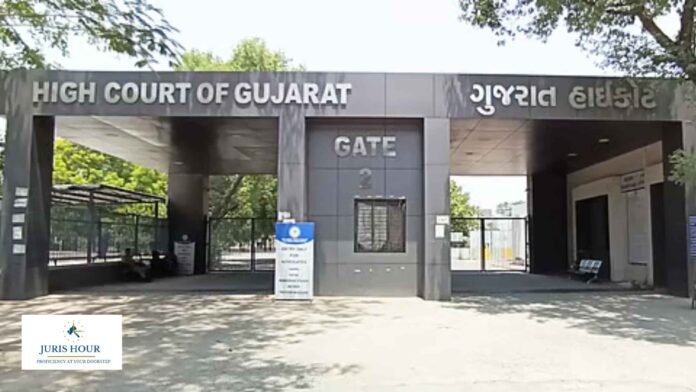
The Gujarat High Court has quashed a show-cause notice and the consequential order issued against an exporter under Rule 96(10) of the Central Goods and Services Tax Rules, 2017, observing that the proceedings were initiated after the disputed provision had already been omitted.
The Bench of Justice A.S. Supehia and Justice Vaibhavi D. Nanavati relied upon the Supreme Court’s decision in Goodluck India Limited and Another v. Union of India and Others, which settled the legal effect of the omission of Rule 96(10).
Buy Now: E-Magazine: Top 100 GST ITC Judgements (2024–25)
The Court noted that Rule 96(10) was omitted through Notification No. 20/2024-Central Tax with effect from October 8, 2024, without incorporating any saving clause or sunset clause to preserve pending or future proceedings based on the omitted provision.
In the present case, the show-cause notice was issued on March 26, 2025—several months after Rule 96(10) had ceased to form part of the CGST Rules. A consequential adjudication order was subsequently passed on June 9, 2025.
The petitioner approached the High Court seeking the quashing of both the show-cause notice and the adjudication order on the grounds that they were arbitrary, illegal, excessive and wholly without jurisdiction.
The controversy concerned the restriction previously imposed by Rule 96(10) on the refund of integrated tax paid on goods or services exported out of India.
Broadly, the provision restricted exporters from claiming a refund of IGST paid on exports where specified concessional tax benefits had been availed in relation to the inputs or procurements used for such exports. The provision generated considerable litigation over its scope, application and the consequences of its eventual omission.
Before the Gujarat High Court, counsel for the petitioner submitted that the issue was no longer open for adjudication following the Supreme Court’s ruling in Goodluck India Limited. The counsel appearing for the Union of India and the GST authorities was unable to dispute that the Supreme Court had already interpreted the legal effect of the omission of Rule 96(10).
The High Court reproduced the relevant findings of the Supreme Court, which had observed that Rule 96(10) was omitted because it was causing unnecessary complications without serving its intended purpose.
Significantly, the Supreme Court had noted that the rule-making authority did not introduce any saving clause or sunset clause while omitting the provision. Consequently, there was no legal mechanism preserving the omitted restriction for pending proceedings.
The Supreme Court had further clarified that a recommendation suggesting prospective omission was merely advisory and could not bind the rule-making authority. The actual notification omitted Rule 96(10) without saving its application to earlier transactions or pending cases.
According to the Supreme Court, the omission was intended to bring the unnecessary complications associated with Rule 96(10) to an end “once and for all.” Its purpose could not be interpreted as keeping those complications alive for proceedings that were still pending.
The Supreme Court had also expressed the expectation that its ruling would bring closure to the numerous cases concerning Rule 96(10) pending before different High Courts.
Applying the Supreme Court’s ruling, the Gujarat High Court highlighted that the impugned show-cause notice was issued on March 26, 2025, whereas Rule 96(10) had already been omitted with effect from October 8, 2024.
Therefore, when the authorities initiated the proceedings, the provision on which the action was founded was no longer part of the statutory framework.
The absence of a saving clause assumed further significance because the proceedings were not merely pending on the date of omission. They were initiated only after the omission had become effective.
The High Court accordingly allowed the writ petition and quashed the show-cause notice dated March 26, 2025, as well as the consequential adjudication order dated June 9, 2025.
Membership Required to Access Case Details & Order Copy
To view the complete Case Details and Download Order Copy, you must have an active membership. Please subscribe to continue.
Read More: Over 80% Professionals Complete Only 10–30% Tax Audits, Poll Fuels Demand for Deadline Extension

