
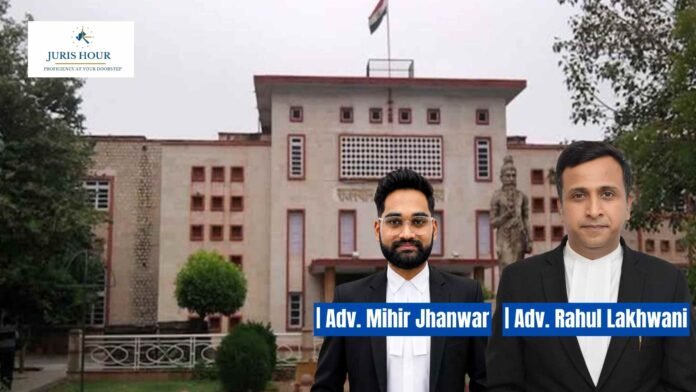
The Rajasthan High Court at Jaipur while questioning the director’s nexus with GST ITC fraud after resignation has granted interim protection from arrest to a former company director in a case arising out of alleged GST and Input Tax Credit (ITC) fraud.
The bench of Justice Bipin Gupta has permitted the petitioner to appear before the Investigating Officer for interrogation while directing that he shall not be arrested in connection with the ongoing proceedings.
The principal issue before the High Court was whether a former director could be subjected to arrest and custodial interrogation in connection with alleged bogus firms and fraudulent GST/ITC transactions that, according to the petitioner, occurred substantially after he had resigned from the company.
Buy Now: E-Magazine: 1000+ Landmark GST Judgments (2017–2026)
Mr. Rahul Lakhwani, on behalf of the petitioner contended that he had resigned as director on July 12, 2024, whereas the alleged bogus firms and transactions came into existence only from October 2025 onwards. On this basis, he argued that there was no factual or chronological nexus connecting him with the alleged offences.
He further submitted that his resignation had been uploaded on the website of the Registrar of Companies as well as on the GST portal on the same date. He also claimed that he had transferred all his shares in the company and had no relationship with the company after July 17, 2024.
The petitioner argued that he had neither been arrayed as an accused nor made a noticee in any show-cause notice. According to his submissions, he had only been summoned under Section 70 of the Central Goods and Services Tax Act, 2017 for purposes of investigation.
He maintained that the department’s case was based primarily on documentary and digital material, including invoices, e-way bills, banking records and GST portal data. Since these materials were already in the possession of the investigating agency, the petitioner argued that his custodial interrogation was unnecessary.
The petitioner also disputed the allegation that he had failed to cooperate with the investigation. He submitted that he had appeared through authorised counsel on June 19, 2026, sought two weeks’ time and communicated the request through email along with his vakalatnama. He stated that no further summons had subsequently been issued to him.
A significant part of the petitioner’s argument concerned Section 137 of the CGST Act, which deals with offences committed by companies and the liability of persons who were in charge of, and responsible for, the conduct of the company’s business at the relevant time.
The petitioner argued that because he had resigned before the alleged transactions took place, the statutory requirement of being in charge of and responsible for the company’s business during the relevant period was not satisfied.
Reliance was placed on the Supreme Court’s decision in Harshendra Kumar D. v. Rebatilata Koley, (2011) 3 SCC 351, which was cited for the proposition that a director who had resigned before the alleged acts of a company could not be held liable for subsequent acts merely by virtue of having previously been a director.
The petitioner additionally raised an important statutory argument concerning the relationship between Sections 69, 122(1A), 132 and 137 of the CGST Act.
According to the petitioner’s submissions, the provisions invoked against him were Sections 122(1A) and 137 rather than Section 132. He argued that Section 122(1A) concerns penalty, while Section 137 is an attributive liability provision and does not independently create an offence.
On that basis, he contended that the power of arrest under Section 69 could not be mechanically exercised in the absence of an offence falling within Section 132 of the CGST Act. He also submitted that the alleged wrongful ITC had neither been quantified nor adjudicated against him under Sections 73 or 74, and that the departmental show-cause notices did not array him as a noticee.
During the proceedings, the petitioner undertook to cooperate with the investigation and to appear before the department whenever required. He further undertook not to tamper with evidence or influence witnesses.
He reiterated that, given the documentary nature of the evidence, arrest and custodial interrogation would serve no useful purpose. On these grounds, he sought protection through anticipatory bail.
Another factor placed before the High Court was that the alleged main accused, Deepak Singhal, had already been granted regular bail by the Trial Court.
When the Court asked the complainant/respondent when the alleged offence had actually been committed and whether it occurred during the period when the petitioner was a director or shareholder of the company, counsel for the respondent sought time to file a reply to the query as well as to the bail application.
The respondent’s counsel also submitted that, under the notices issued to the petitioner, no arrest could be made and that the petitioner was required to appear for interrogation.
After considering the submissions, the High Court adopted an interim course that allowed the investigation to proceed while protecting the petitioner from arrest.
The Court permitted the petitioner to appear before the Investigating Officer and directed that the officer could interrogate him in terms of the notice issued to him. However, the Court expressly directed that the petitioner shall not be arrested.
The Court also granted the respondent time to file its reply and directed that the matter be listed after one week.
Membership Required to Access Case Details & Order Copy
To view the complete Case Details and Download Order Copy, you must have an active membership. Please subscribe to continue.
Read More: JURISHOUR | TAX LAW DAILY BULLETIN : 27 AUGUST, 2026

