
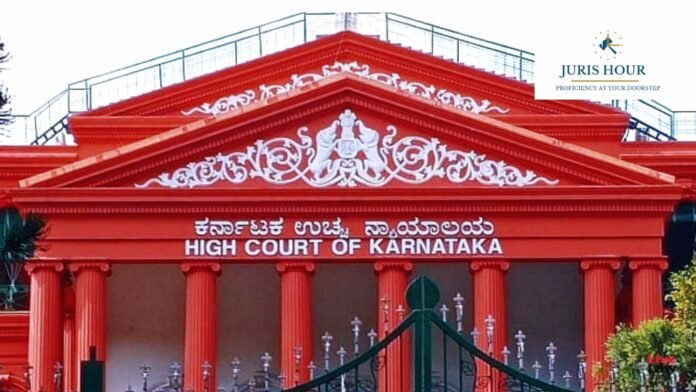
The Karnataka High Court has quashed the service tax demand on irrigation works and held that sale of goods component not taxable as service.
The bench of Justice S.R. Krishna Kumar has observed that the value attributable to the sale of goods cannot be subjected to service tax and that the extended period of limitation cannot be invoked in the absence of established wilful suppression or an intention to evade tax.
The appellant/assessee is a joint venture between IVRCL and DRN Infra formed to participate in tenders and execute works contracts relating to lift irrigation projects. Karnataka Neeravari Nigam Limited (KNNL), through a tender, awarded the JV a contract for the Tubchi-Bableshwar lift irrigation project. The project involved survey, investigation, design and construction of civil works, including an intake forebay and pump house, attendant electrical works, and operation and maintenance for five years on a turnkey basis.
Buy Now: 70+ Judgements Indirect Tax – July 2026 | E-Magazine
The tax department initiated proceedings after examining information available through Form 26AS and income-tax returns for 2015-16 and 2016-17. A show-cause notice dated April 27, 2021 proposed a service-tax demand of ₹71,52,52,117 for the two assessment years. The JV challenged the proposed levy, contending that the relevant portions of its works contract were exempt and that the department could not simply rely on income-tax data without determining the actual nature and composition of the receipts.
The JV further argued that there had been no suppression of facts and therefore the extended period of limitation could not be invoked. It also relied on Notification No. 25/2012-ST dated June 20, 2012, under which specified services relating to irrigation works provided to the Government or qualifying governmental authorities were exempt.
The connected petition concerned Asian Infra, formerly known as Asian Pumps, a manufacturer and trader of submersible pumps and accessories. The company had received contracts and work orders from Government institutions for the supply and installation of pump sets for irrigation purposes under the Ganga Kalyana scheme.
For FY 2015-16, Asian Infra treated the transactions as sales of goods, disclosed them in its Karnataka VAT returns and paid applicable VAT. The company maintained that the same transactions were also reflected transparently in its financial and income-tax records.
A show-cause notice dated April 27, 2021 was subsequently issued based on Form 26AS, proposing service tax on income attributed to the transactions. The department later passed an Order-in-Original dated December 23, 2024 demanding service tax. This followed an earlier High Court order dated July 3, 2024, by which an earlier adjudication order had been set aside and the matter remanded for fresh consideration.
Despite the remand, the company contended that the authorities had failed to properly consider its VAT returns, service-tax returns, invoices and reconciliation statements demonstrating that VAT had been paid on the goods component and service tax on the service component wherever applicable.
A central issue before the Court was whether the goods component of the transactions could be brought within the service-tax net merely because the transactions formed part of works contracts.
The Court examined Section 65B(44) of the Finance Act, 1994, which defined “service” while expressly excluding an activity constituting merely a transfer of title in goods, including transactions deemed to be sales under Article 366(29A) of the Constitution. It also considered Section 66E(h), under which the service portion in the execution of a works contract was treated as a declared service.
The Court noted that the Service Tax (Determination of Value) Rules, 2006 specifically provided for determination of the service portion after excluding the value of goods transferred in execution of the works contract. This statutory mechanism, the Court observed, was intended to ensure that the value of goods was not subjected to service tax.
Relying on the Supreme Court’s jurisprudence, including Bharat Sanchar Nigam Ltd. v. Union of India, the Court emphasised the constitutional separation between the Union’s power to tax services and the States’ power concerning the sale of goods.
The Court found that the project involved a lift-irrigation works contract and that sales tax had been paid in relation to the execution of the project. It concluded that the relevant works fell outside the service-tax levy insofar as the transactions represented sale of goods and that the works were wholly exempt from service tax in the circumstances of the case.
In Asian Infra’s case, the Court found that documentary records showed payment of sales tax on the sale value and service tax on the service value. The Court also noted that reconciliation between ST-3 returns, VAT returns and Form 26AS demonstrated payment of the respective taxes.
The Court separately examined whether the lift-irrigation project undertaken by assessee qualified for exemption under Notification No. 25/2012-ST dated June 20, 2012.
The notification covered services provided to the Government, a local authority or a governmental authority in connection with construction, erection, commissioning, installation, completion, fitting out, repair, maintenance, renovation or alteration of a canal, dam or other irrigation works.
The dispute principally concerned the meaning of “governmental authority” and whether the functions undertaken through the lift-irrigation project could be regarded as functions entrusted to municipalities under Article 243W of the Constitution.
The Revenue argued that KNNL could not be treated as satisfying the exemption conditions merely because it was a government company and contended that the exemption had to be strictly construed.
The High Court, however, held that the notification did not require the concerned governmental body itself to be a municipality in the strict constitutional sense. It was sufficient to examine whether the body was established by the Government with the requisite participation or control and whether it performed functions entrusted to municipalities under Article 243W.
The Court found that the lift-irrigation project was intended to promote economic and social development in the concerned area. It therefore fell within the scope of Article 243W and the relevant matters in the Twelfth Schedule, including planning for economic and social development and water supply. On this basis, the Court held that the project was entitled to exemption under Notification No. 25/2012-ST.
The Court stressed that the extended period under Section 73 of the Finance Act, 1994 could not be invoked merely by alleging suppression. Such an extended period requires the statutory ingredients—such as fraud, collusion, wilful misstatement or suppression of facts with the requisite intent—to be established.
The Court relied on Supreme Court decisions holding that suppression must involve a deliberate and wilful act intended to evade tax. A mere failure to declare information, particularly where the relevant facts were known to the department, would not by itself constitute wilful suppression.
The Court further held that where facts were within the knowledge of both the taxpayer and Revenue, an omission could not automatically be characterised as suppression. It placed the burden on Revenue to establish the factual basis for invoking the extended limitation period.
In the present case, the Court found that the allegation of suppression had neither been admitted nor established. With respect to Asian Infra, the original show-cause proceedings had been based substantially on the Form 26AS information, and the matter had already been remanded for fresh consideration. The Court held that, once the relevant VAT and service-tax records were considered, there was no basis to invoke the extended limitation period.
The Court therefore answered the limitation issue in favour of the petitioners.
The Court’s reasoning was anchored in a series of Supreme Court decisions dealing with the distinction between sale of goods and services and the requirements for invoking extended limitation.
Among the principles highlighted was that the extended limitation provision requires a positive act of fraud, collusion, wilful misstatement or suppression. Mere inaction or failure to pay tax is insufficient unless accompanied by the legally required circumstances.
The Court also referred to the Supreme Court’s decision in Cosmic Dye Chemical, underlining that “wilful” suppression necessarily involves an intention to evade tax.
It further relied on the principle that an exemption claim involving an interpretational issue cannot, by itself, be treated as suppression, fraud or wilful misstatement with an intention to evade tax.
The Court held that the impugned orders and consequential proceedings deserved to be set aside.
Membership Required to Access Case Details & Order Copy
To view the complete Case Details and Download Order Copy, you must have an active membership. Please subscribe to continue.
Read More: Search Conducted After 1 April 2021 Triggers S. 148 Procedure: ITAT

