
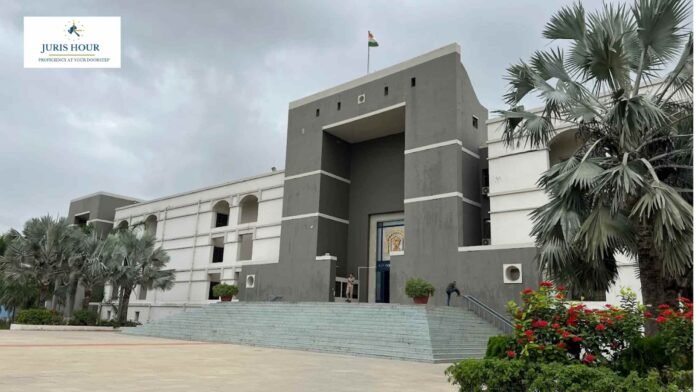
The Gujarat High Court has held that an appeal filed within the extended timeline prescribed under the Central Government’s special procedure notification cannot be rejected solely on the ground of limitation without examining the benefit granted by the notification.
The bench of Justice A.S. Supehia and Justice Vaibhavi D. Nanavati emphasized that the relief notification issued following the recommendations of the GST Council was intended to benefit taxpayers who had missed the statutory limitation period and must be applied in a purposive manner.
The petition was filed by Adinath Rice Mill and another, challenging an appellate order dated June 11, 2024, whereby the GST appellate authority had dismissed their appeal as time-barred under Section 107 of the Central Goods and Services Tax (CGST) Act, 2017.
Buy Now: 130 GST Judgments – E-Magazine July 2026
The dispute originated from a show cause notice issued on September 7, 2021, under Section 74 of the CGST Act alleging tax evasion. The taxpayers responded that the matter merely involved delayed filing of GST returns for five months. They asserted that the returns had subsequently been filed along with the applicable tax, interest, and penalty, leaving no basis for allegations of tax evasion or further penal consequences. Nevertheless, an Order-in-Original was passed on January 27, 2023.
Although the appeal against the adjudication order was filed on December 28, 2023, the appellate authority rejected it on the ground that it lacked the statutory power to condone delays beyond 120 days under Section 107 read with Rule 108 of the CGST Rules.
The petitioners argued that Notification No. 53/2023-Central Tax dated November 2, 2023, issued pursuant to the recommendations of the 52nd GST Council Meeting, had created a special mechanism permitting eligible taxpayers to file delayed appeals up to January 31, 2024, subject to specified conditions.
The petitioners contended that they had fulfilled all the conditions stipulated under the notification, including payment requirements, and therefore their appeal filed on December 28, 2023, ought to have been decided on merits instead of being dismissed as time-barred. They further argued that the notification was intended not only to revive previously rejected appeals but also to protect appeals filed before the extended cut-off date.
The department argued that the notification was meant only for taxpayers whose appeals had already been rejected on limitation before issuance of the notification. Since the petitioners’ appeal itself was filed after the notification came into force and had not previously been rejected, the Department contended that the notification was inapplicable.
The Division Bench carefully examined the minutes of the 52nd GST Council Meeting held on October 7, 2023. It observed that the Council had acknowledged that numerous taxpayers were losing their statutory right of appeal because demand orders were often received after expiry of the prescribed limitation period.
The Court noted that the Council was conscious of the limited statutory power available with appellate authorities for condoning delay and therefore recommended issuance of a special notification to provide one-time relief so that deserving taxpayers could pursue their appeals after making the prescribed pre-deposit. Those recommendations ultimately resulted in Notification No. 53/2023 dated November 2, 2023.
The High Court held that taxpayers who filed their appeals before the extended deadline of January 31, 2024, cannot be placed in a worse position than those whose appeals had already been rejected on limitation.
The Bench observed that accepting the Department’s interpretation would defeat the very object of the notification and create an irrational distinction between similarly situated taxpayers.
The Court analysed the notification and concluded that it covered multiple categories of taxpayers, including taxpayers who could not file appeals within the normal limitation period; taxpayers whose appeals had already been rejected on limitation; appeals pending before appellate authorities before issuance of the notification; and appeals filed before the extended cut-off date of January 31, 2024, provided the prescribed payment conditions were satisfied.
The High Court found that the petitioners had admittedly complied with the payment conditions prescribed in the notification. Despite this, the appellate authority completely failed to consider the notification while rejecting the appeal.
The Bench made a pointed observation that appellate authorities cannot remain oblivious to binding notifications issued by the Central Government regulating appellate procedures under the GST law. It remarked that the authority ought to have taken judicial notice of the notification instead of expecting taxpayers to specifically point it out during proceedings.
The Gujarat High Court quashed the appellate order rejecting the appeal on limitation and remanded the matter to the appellate authority for fresh consideration on merits. The Court directed that the appeal be decided in accordance with law within twelve weeks from the date of receipt of the High Court’s order.
Membership Required to Access Case Details & Order Copy
To view the complete Case Details and Download Order Copy, you must have an active membership. Please subscribe to continue.

