
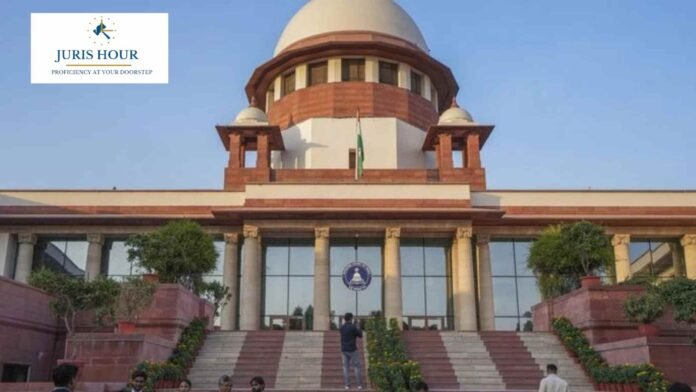
The Supreme Court has reaffirmed that High Courts cannot quash First Information Reports (FIRs) in corruption cases by evaluating the sufficiency of evidence or conducting what effectively amounts to a “mini-trial” during the investigation stage.
Setting aside a series of Karnataka High Court orders that had quashed multiple FIRs against senior police officers, the bench of Justice Sanjay Karol and Justice Nongmeikapam Kotiswar Singh has observed that issues such as delay in filing the FIR, absence of recovery of illegal gratification, or alleged inconsistencies in the prosecution case are matters to be tested during trial and cannot form the basis for quashing criminal proceedings at the threshold.
The case arose from six FIRs registered against senior officers of the Central Crime Branch, Bengaluru, including an Assistant Commissioner of Police and a Police Inspector. The allegations involved offences under Sections 7(a), 13(1)(a) read with Section 13(2) of the Prevention of Corruption Act, 1988, as well as Section 384 read with Section 34 of the Indian Penal Code. The FIRs related to allegations of illegal gratification and extortion during the COVID-19 lockdown period.
Buy Now: Supreme court Judgements E-Compilation – JUNE 2026
The accused officers approached the Karnataka High Court under Section 482 of the Code of Criminal Procedure seeking quashing of the FIRs. The High Court accepted their plea and quashed all the FIRs, holding, among other things, that there was no prima facie material, the FIRs suffered from unexplained delay, there was no proof of demand or acceptance of bribe, some FIRs amounted to impermissible second FIRs, and the proceedings appeared to be motivated by departmental infighting and mala fides.
Before the Supreme Court, the State argued that every FIR disclosed cognizable offences and that none of the exceptional grounds warranting quashing under the principles laid down in State of Haryana v. Bhajan Lal were attracted.
The State further contended that the High Court had travelled beyond the limited jurisdiction under Section 482 CrPC by examining the truthfulness of allegations, assessing evidence, and effectively conducting a trial before any investigation had concluded.
On the other hand, the respondents defended the High Court’s decision, arguing that there were serious inconsistencies in the complaints, that one of the accused had already been exonerated in departmental proceedings, and that the criminal cases were a consequence of political pressure and departmental rivalry arising from investigations conducted during the lockdown.
Allowing the State’s appeals, the Supreme Court reiterated that the power to quash an FIR is an extraordinary jurisdiction that must be exercised sparingly.
The Bench observed that, while considering a petition for quashing, the Court is only required to determine whether the allegations in the FIR, if accepted at face value, disclose the commission of a cognizable offence. It cannot weigh evidence, test credibility, or evaluate the likely success of the prosecution.
According to the Court, the Karnataka High Court exceeded these limits by examining the absence of recovery, delay in lodging the FIR, and other evidentiary issues, all of which fall within the domain of the trial court.
One of the principal reasons relied upon by the High Court was that there was no proof of demand or acceptance of illegal gratification.
Rejecting this reasoning, the Supreme Court held that such questions relate to appreciation of evidence and may become relevant during discharge proceedings or trial, but cannot justify quashing an FIR at the investigation stage.
The Court relied upon its recent decision in State v. K. Rangayya, reiterating that courts exercising jurisdiction under Section 482 CrPC cannot sift evidence or undertake an assessment of the prosecution case before investigation is completed.
The High Court had also observed that no money was directly paid to one of the accused officers.
The Supreme Court disagreed, holding that under the Prevention of Corruption Act, an attempt to obtain an undue advantage for another person can itself constitute an offence. Whether illegal gratification was routed through intermediaries or subordinate officials is a matter for investigation and trial and cannot justify quashing the FIR at the threshold.
The Court also rejected the High Court’s reliance on delay in registration of the FIRs.
It observed that delay in lodging an FIR, by itself, cannot justify termination of criminal proceedings. Whether the delay has been satisfactorily explained is a question that can only be examined after evidence is recorded during trial.
The Bench relied upon its earlier decision in Punit Beriwala v. State of NCT of Delhi, reiterating that delay alone is insufficient to quash an FIR involving serious offences.
Another important issue concerned the High Court’s finding that some corruption FIRs amounted to prohibited “second FIRs” because earlier cases under the IPC had already been registered.
The Supreme Court rejected this conclusion, holding that the corruption cases were wider in scope and involved distinct allegations requiring independent investigation. Relying on State of Rajasthan v. Surendra Singh Rathore, the Court observed that a subsequent FIR addressing larger allegations of corruption does not automatically become invalid merely because an earlier FIR existed regarding a related incident.
The Bench reiterated the principles laid down in State of Chhattisgarh v. Aman Kumar Singh, emphasizing that constitutional courts should adopt a cautious approach before interfering in corruption investigations.
The Court observed that although innocent public servants must be protected from malicious prosecutions, corruption cases generally deserve to be investigated to their logical conclusion, and premature judicial interference should remain an exception reserved for the rarest cases where absolutely no material exists supporting even a reasonable suspicion.
The Supreme Court allowed all the appeals filed by the State of Karnataka and set aside the Karnataka High Court’s orders quashing the FIRs.
The Bench restored the criminal proceedings while clarifying that the accused remain free to pursue all remedies available under law at the appropriate stage, including discharge or other statutory remedies, which shall be decided independently and without being influenced by the observations made in the judgment.
Membership Required to Access Case Details & Order Copy
To view the complete Case Details and Download Order Copy, you must have an active membership. Please subscribe to continue.

