
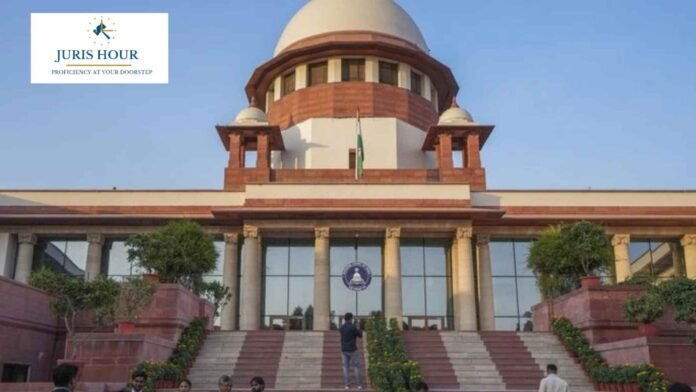
The Supreme Court has held that a litigant cannot circumvent the doctrine of res judicata by seeking the same substantive relief under a different provision of the Code of Civil Procedure (CPC).
While partly allowing an appeal, the bench of Justice Sanjay Karol and Justice Augustine George Masih ruled that an earlier order rejecting impleadment of subsequent purchasers in a pending appeal had attained finality and could not be reopened through a fresh application under Order XXII Rule 10 CPC based on the same sale transaction. However, the Court upheld the impleadment of the purchasers in the cross-objections, noting that a subsequent change in circumstances had created a distinct cause of action.
The dispute arose out of a long-pending property litigation concerning properties belonging to the late Girdhari Lal. The original plaintiff, Bhagwan Dai, one of his widows, had sought declarations regarding ownership over portions of the suit properties. After her death, Sanjiv Kumar claimed to be her adopted son and pursued the litigation.
Buy Now: Supreme court Judgements E-Compilation – JUNE 2026
The Trial Court dismissed the suit, holding that Sanjiv Kumar failed to establish his adoption and recognizing a Will executed in favour of another branch of the family. However, the First Appellate Court reversed significant findings by holding Sanjiv Kumar to be the validly adopted son of Bhagwan Dai and declaring Bhagwan Dai’s ownership over a portion of the property that had been in her possession prior to the execution of the Will. The appellate court also restrained the defendants from alienating that specific property.
Aggrieved by this judgment, the original defendants filed a Regular Second Appeal before the Punjab and Haryana High Court, while Sanjiv Kumar filed cross-objections seeking declaration over the entire suit property.
During the pendency of the proceedings, Respondents 3 and 4 purchased another portion of the property through a registered sale deed. They sought impleadment in the second appeal under Order I Rule 10 CPC.
Their application was dismissed by the High Court in 2000. The Court then held that the purchasers had acquired the property during the pendency of litigation and were not entitled to be impleaded.
Years later, both the second appeal and the cross-objections were dismissed for non-prosecution. While the cross-objections were restored at the instance of Sanjiv Kumar, the original appellants did not seek restoration of their appeal. The subsequent purchasers then approached the High Court by filing fresh applications seeking condonation of a delay of over 2,100 days, restoration of the second appeal, and impleadment under Order XXII Rule 10 CPC.
The High Court allowed these applications, restored the appeal, condoned the delay, and impleaded the purchasers in both the appeal and the cross-objections. This order was challenged before the Supreme Court.
The principal issue before the Supreme Court was whether an earlier judicial order rejecting impleadment, though allegedly based on an erroneous factual premise, could be disregarded and the same relief granted through another procedural provision.
The Court reiterated that the doctrine of res judicata applies not only between separate proceedings but also at different stages of the same litigation. It emphasized that a judicial determination remains binding upon the parties even if it is erroneous on facts or law, unless it is set aside through appropriate legal proceedings. An erroneous decision does not lose its binding character merely because a subsequent court considers it incorrect.
The Bench observed that the High Court erred in treating its earlier order as non-binding merely because it believed the earlier factual understanding to be incorrect.
The Supreme Court explained the distinction between the two procedural provisions.
Order I Rule 10 concerns addition or deletion of necessary and proper parties, whereas Order XXII Rule 10 deals specifically with assignment or devolution of interest during the pendency of litigation. Although both provisions may ultimately result in impleadment, they operate in different legal contexts.
However, the Court clarified that where a party has already sought impleadment on the basis of the very same sale transaction and the issue has been adjudicated on merits, filing another application under Order XXII Rule 10 for identical relief amounts to re-agitating the same controversy. Merely invoking a different statutory provision does not create a fresh cause of action.
Applying these principles, the Supreme Court found that the subsequent purchasers had earlier sought impleadment in the second appeal on the strength of the same registered sale deed.
Since that application had been decided on merits and had attained finality, the subsequent application under Order XXII Rule 10 was barred by the doctrine of res judicata. Consequently, the High Court was not justified in restoring the main appeal or impleading the purchasers therein.
The Court also noted that the purchasers themselves had never claimed any interest in the specific property forming the subject matter of the main appeal, further weakening the justification for restoration.
The Supreme Court, however, reached a different conclusion regarding the cross-objections.
It observed that the earlier impleadment application had never been filed in the cross-objections. Moreover, after dismissal of the main appeal for non-prosecution, only the cross-objections stood restored. The original owners failed to pursue the appeal despite requests from the purchasers, creating a genuine apprehension that their interests could be prejudiced.
The Court held that these developments constituted a fresh cause of action that had not existed when the earlier impleadment application was decided. Relying upon earlier precedents concerning transferees pendente lite, the Bench observed that such purchasers are entitled to participate where their predecessors lose interest in defending the litigation or where there is a possibility of collusion adversely affecting their rights.
Partly allowing the appeal, the Supreme Court set aside the High Court’s order insofar as it restored the main appeal and impleaded the subsequent purchasers therein.
At the same time, it upheld the High Court’s direction permitting the purchasers to be impleaded as respondents in the pending cross-objections, holding that the changed circumstances justified their participation to protect their interests.
Membership Required to Access Case Details & Order Copy
To view the complete Case Details and Download Order Copy, you must have an active membership. Please subscribe to continue.

