
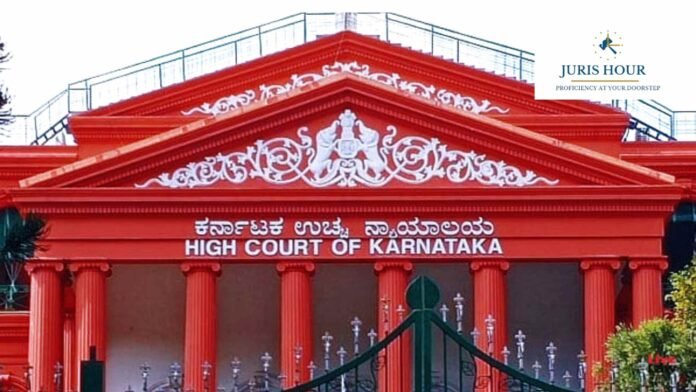
The Karnataka High Court has granted interim protection to a taxpayer challenging a GST adjudication order passed under Section 74 of the Central Goods and Services Tax Act, 2017, after observing that the absence of the statutory approval required for an adjudication order passed by an Additional Commissioner could warrant judicial interference.
Pending clarification from the tax authorities, the bench of Justice B M Shyam Prasad directed the department not to take any precipitate action against the petitioner.
The case arose from a writ petition which challenged the adjudication order dated 31 March 2026 passed under Section 74 of the CGST/KGST Act. The petitioner raised two principal objections to the validity of the proceedings. First, it contended that a single show cause notice had been issued covering multiple tax periods. Secondly, and more significantly, it argued that while the show cause notice had been issued by the Joint Commissioner (AE), the final adjudication order had been passed by the Additional Commissioner without the approval mandated under the GST law. According to the petitioner, the impugned order was completely silent regarding the existence of such approval.
Buy Now: GST Judgements E-Compilation – June 2026
During the hearing, counsel appearing for the Revenue submitted that the first issue concerning a single show cause notice covering multiple tax periods was already settled in favour of the department by a Division Bench judgment in Writ Appeal.
However, with respect to the second issue relating to statutory approval, the Revenue stated, on tentative instructions, that the necessary approval had indeed been obtained, although additional time was required to secure definite instructions and place the relevant records before the Court.
Justice B. M. Shyam Prasad found the issue regarding statutory approval significant enough to require further examination. The Court observed that if the adjudication order had indeed been passed by the Additional Commissioner without the approval contemplated under the GST Act, there could be a valid ground for judicial interference. On the other hand, if such approval was available, the petitioner might have to pursue the ordinary appellate remedy instead of invoking the writ jurisdiction.
Recognising that the existence or absence of approval would have a direct bearing on the maintainability of the challenge, the Court directed the Revenue to place on record complete details of the approval, if any, before the next date of hearing. Until then, the High Court restrained the authorities from taking any precipitate or coercive action against the petitioner.
The writ petition has been directed to be listed again on 15 July 2026, when the Court will consider the approval records to determine whether the adjudication order satisfies the statutory requirements under the GST framework.
Membership Required to Access Case Details & Order Copy
To view the complete Case Details and Download Order Copy, you must have an active membership. Please subscribe to continue.

