
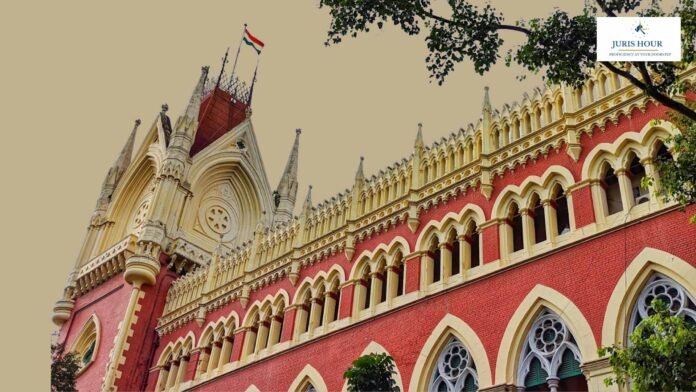
The Calcutta High Court has held that a creditor who unsuccessfully pursued insolvency proceedings before the National Company Law Tribunal (NCLT) due to a pre-existing dispute is entitled to exclude that period while computing limitations for filing a civil recovery suit.
The bench of Justice Aniruddha Roy ruled that dismissal of a Section 9 IBC application on the ground of a pre-existing dispute amounts to a failure on account of a “defect of jurisdiction or other cause of like nature” under Section 14(1) of the Limitation Act, 1963. Consequently, the time spent before the NCLT could be excluded, allowing the commercial suit to proceed.
The plaintiff claimed that it had rendered services to the defendant company but had not received payment for its professional fees.
Buy Now: GST Judgements E-Compilation – June 2026
After issuing a demand notice under Section 8 of the IBC in November 2019, the plaintiff initiated insolvency proceedings before the NCLT under Section 9 of the IBC in July 2020.
However, in September 2023, the NCLT dismissed the insolvency application after finding that a pre-existing dispute existed between the parties. Importantly, while rejecting the insolvency petition, the NCLT expressly observed that the operational creditor remained free to pursue remedies under any other law.
Subsequently, the plaintiff instituted a commercial civil suit seeking recovery of its dues and invoked Section 14 of the Limitation Act to exclude the period spent prosecuting the insolvency proceedings.
The principal question before the High Court was: Can the period spent pursuing an unsuccessful Section 9 IBC proceeding before the NCLT be excluded under Section 14(1) of the Limitation Act while calculating limitation for a subsequent civil recovery suit?
The plaintiff contended that the NCLT had not adjudicated the merits of its monetary claim. The insolvency petition failed solely because the IBC bars admission where a pre-existing dispute exists. Such dismissal represents a jurisdictional inability to entertain the proceeding rather than a decision on merits. Since both proceedings concerned the same underlying unpaid debt, the requirements of Section 14(1) stood satisfied. The plaintiff had acted diligently and in good faith throughout the litigation process.
The plaintiff also relied upon several Supreme Court judgments, including Sesh Nath Singh v. Baidyabati Sheoraphuli Cooperative Bank, M.P. Steel Corporation, Roshanlal Kuthalia, and West Coast Paper Mills, besides a recent Delhi High Court judgment in Seitz GmbH v. Simran Technologies.
The court undertook a detailed examination of Section 14 of the Limitation Act and distinguished between sub-sections (1) and (2).
The Court observed that Section 14(1) applies where the subsequent proceeding is a suit; both proceedings involve the same parties; they relate to the same matter in issue; the earlier proceeding failed because the forum could not entertain it due to jurisdictional defect or another similar legal impediment; and the earlier proceeding was prosecuted in good faith with due diligence.
The Court emphasized that under Section 9 of the IBC, once a pre-existing dispute is established, the NCLT is statutorily required to reject the insolvency application without examining the merits of the underlying debt.
According to the Court, such rejection is not a determination of liability but a statutory bar preventing the tribunal from entertaining the application.
Therefore, dismissal on this ground falls within the expression “defect of jurisdiction or other cause of like nature” contained in Section 14(1) of the Limitation Act.
The High Court reiterated that Section 14 is a beneficial provision intended to advance justice rather than defeat legitimate claims on technical grounds.
Relying heavily upon Supreme Court precedents, the Court held that the phrase “other cause of like nature” extends beyond strict jurisdictional defects and includes any legal circumstance that prevents adjudication of a dispute on merits.
The judgment further observed that tribunals such as the NCLT fall within the expression “Court” for the purposes of Section 14, enabling litigants to seek exclusion of time spent before such forums.
Rejecting any distinction based on the nature of proceedings, the Court noted that although the objectives of insolvency proceedings and civil suits differ, the central factual issue in both proceedings remained identical.
In both forums, the decisive question was whether the defendant had defaulted in making payment to the plaintiff.
Accordingly, the Court concluded that the requirement of “same matter in issue” under Section 14(1) was fully satisfied.
The High Court also found that the plaintiff had prosecuted the insolvency proceedings diligently and in good faith.
Immediately after dismissal of the NCLT proceedings, the plaintiff initiated the commercial suit without unnecessary delay. There was no evidence of negligence or lack of bona fides.
Consequently, the Court held that the plaintiff deserved the statutory protection available under Section 14.
Allowing the plaintiff’s plea, the Calcutta High Court held that the time during which the Section 9 IBC proceedings remained pending before the NCLT must be excluded while computing limitation; the commercial suit satisfied all the requirements of Section 14(1) of the Limitation Act; and the plaint was liable to be admitted and proceed for further scrutiny.
Membership Required to Access Case Details & Order Copy
To view the complete Case Details and Download Order Copy, you must have an active membership. Please subscribe to continue.
Read More: SGST Officer Passes GST Order Despite Interim Stay: Bombay High Court Quashes Order

