
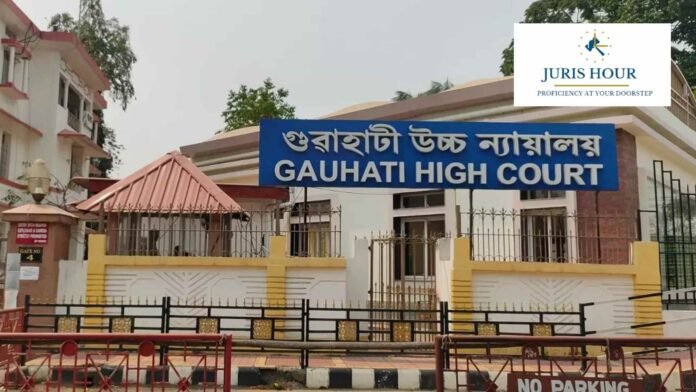
The Gauhati High Court has held that a GST appellate authority cannot mechanically reject an appeal filed within the condonable period merely because the appellant did not file a separate application seeking condonation of delay.
The bench of Justice Manish Choudhury ruled that before dismissing an appeal as barred by limitation, the appellate authority is duty-bound to provide the appellant at least one opportunity to explain the delay and file an application for condonation.
The writ petition was filed by a registered GST dealer challenging the dismissal of his statutory appeal by the Commissioner (Appeals). The High Court set aside the appellate order and remanded the matter for fresh consideration.
Buy Now: GST Judgements E-Compilation – June 2026
The petitioner, proprietor of a pharmaceutical business in Assam, was subjected to scrutiny by the GST department for the financial year 2020-21. The department alleged that the taxpayer had availed excess Input Tax Credit (ITC) due to mismatch between GSTR-3B and GSTR-2A returns. Following issuance of ASMT-10, notices under Section 73 of the CGST Act and a show cause notice, the adjudicating authority passed an Order-in-Original on 3 January 2025confirming recovery of excess ITC of approximately ₹90,948, along with interest and a penalty of ₹20,000.
The taxpayer contended that the mismatch arose because suppliers had filed their GST returns belatedly and that the ITC had subsequently appeared in the following financial year. According to the petitioner, there was no fraudulent intent and the discrepancy was purely procedural.
Instead of immediately filing an appeal, the taxpayer filed a rectification application under Section 161 of the CGST Act seeking correction of the adjudication order. The application was rejected on 24 April 2025. Thereafter, the statutory appeal under Section 107 was filed on 23 May 2025.
The Commissioner (Appeals) dismissed the appeal solely on the ground that it had been filed beyond the prescribed period of three months plus the additional one-month condonable period under Section 107(4) of the CGST Act.
The High Court reiterated that Section 107 of the CGST Act prescribes a statutory limitation of three months for filing an appeal, extendable by one additional month upon showing sufficient cause. Since the CGST Act is a special statute, the provisions of Section 5 of the Limitation Act enabling broader condonation of delay do not apply beyond this statutory outer limit.
The Court referred to several Supreme Court decisions, including: Singh Enterprises v. Commissioner of Central Excise; Assistant Commissioner (CT) v. Glaxo Smith Kline Consumer Health Care Ltd.; and Oil and Natural Gas Corporation Ltd. v. Gujarat Energy Transmission Corporation Ltd. These judgments affirm that courts cannot extend limitation beyond the maximum period specifically permitted under special statutes.
The petitioner argued that since a rectification application had been filed bona fide within the statutory period, the time spent in pursuing those proceedings ought to be excluded while calculating limitation for filing the appeal.
The High Court extensively discussed the principles governing exclusion of time under Section 14 of the Limitation Act and the Supreme Court’s rulings in Consolidated Engineering Enterprises and M.P. Steel Corporation. The Court observed that although Section 14 may not directly apply, its equitable principles can apply where a litigant has bona fide pursued another statutory remedy with due diligence.
After analysing the chronology, the Court concluded that if the period spent in rectification proceedings was excluded, the appeal filed on 23 May 2025 actually fell within the extended condonable period, making it eligible for consideration on merits after examining the explanation for delay.
The High Court laid down an important procedural safeguard under the GST appellate framework.
It held that if an appeal is filed beyond the normal limitation period but still within the statutory condonable period, and the appellant has not filed a separate application explaining the delay, the appellate authority should not reject the appeal outright.
Instead, the authority must issue notice and provide at least one opportunity to the appellant to submit an application for condonation of delay and explain the reasons for late filing. Only if the appellant fails to avail such opportunity, or if the explanation is ultimately found unsatisfactory, can the appeal be dismissed as time-barred.
The Court relied upon the Supreme Court’s decision in State of Madhya Pradesh v. Pradeep Kumar, observing that failure to accompany an appeal with a delay-condonation application is a curable procedural defect and should not automatically shut the doors of justice.
Accordingly, the Gauhati High Court set aside the Commissioner (Appeals)’ order dated 19 February 2026; restored the appeal before the appellate authority; directed the appellate authority to issue notice to the petitioner; directed that the petitioner be given a reasonable opportunity to file an application for condonation of delay; and directed the appellate authority to decide both the condonation application and, if allowed, the appeal on merits in accordance with law.
Membership Required to Access Case Details & Order Copy
To view the complete Case Details and Download Order Copy, you must have an active membership. Please subscribe to continue.

