
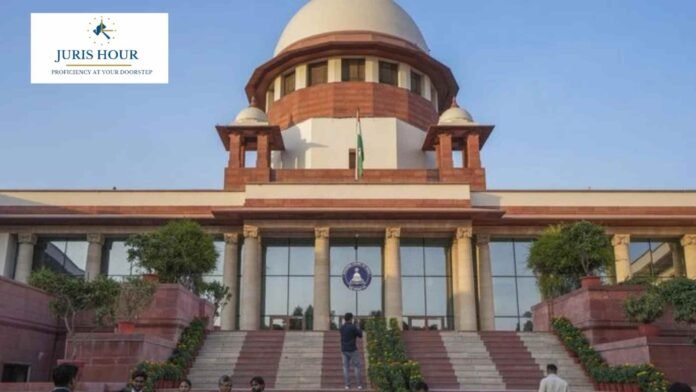
The Supreme Court has issued a set of significant directions to strengthen enforcement against the use of black money and other inducements during elections, mandating authorities to report seizures of cash or other assets within 24 hours, requiring investigating officers to endeavour to complete election-related investigations within one year, and making prior approval of the concerned High Court mandatory for withdrawal of cases against election candidates.
The bench of Justice Sanjay Karol and Justice Nongmeikapam Kotiswar Singh has observed that assigning a unique identification number to each seizure could allow interested persons to track the stage at which the seizure proceedings stood. However, rather than immediately imposing an across-the-board implementation mandate, the Court indicated that such a system could initially be developed as a private project and subsequently expanded in stages, taking into account logistical requirements for maintaining a live electronic ledger.
The case traces back to the 2014 Lok Sabha bye-election in Bellary constituency. During the election period, an Election Commission flying squad raided the residence and business premises of the respondent after receiving an anonymous allegation concerning possession of currency allegedly intended for distribution among voters.
Buy Now: 50+ Supreme Court Judgments – July 2026
During the raid, the authorities seized a laptop, cheque books, loose cheque leaves, a pen drive and ₹20,48,355 in cash. An FIR, Crime No. 0107 of 2014, was registered on April 11, 2014 under Sections 171-E and 188 of the IPC, alleging possession of money intended to be used for paying voters.
The respondent approached the Karnataka High Court seeking quashing of the FIR. The High Court, by order dated February 12, 2015, quashed the FIR on the reasoning that the complaint did not specify whom the accused intended to bribe or the precise manner in which the alleged bribery was to be carried out. The State of Karnataka challenged that order before the Supreme Court.
The proceedings subsequently developed into a wider examination of the mechanisms available for detecting and prosecuting electoral offences. The Supreme Court sought information from the Election Commission, Union Government, States and Union Territories concerning election-related seizures, FIRs, investigations and prosecutions.
The Supreme Court emphasised that the integrity of the electoral process cannot be separated from the constitutional concept of democracy. It observed that the voter’s choice can be compromised when external influences, particularly money and material inducements, interfere with the decision-making process.
The Court noted that ill-gotten and undeclared money is one of the principal forms through which such external influence can operate. According to the judgment, when the voter’s decision is influenced by such external factors, the choice ceases to be entirely free and instead becomes a choice imposed through outside influence.
The Court linked the concepts of democracy, rule of law and electoral integrity, holding that compromise of one necessarily affects the others. It treated the use of black money in elections as an issue capable of undermining the fairness of the electoral process itself.
The judgment also referred to earlier constitutional decisions recognising free and fair elections as an essential feature of democracy and stressed that electoral participation must take place on an equal footing, without financial strength giving an unfair advantage to one candidate or political party over another.
The Supreme Court examined the constitutional position of the Election Commission under Article 324 of the Constitution. Article 324 vests the superintendence, direction and control of elections, including preparation of electoral rolls and conduct of elections to Parliament and State Legislatures, in the Election Commission.
The Court, however, clarified that the Commission’s powers, though wide, are not unlimited. Where Parliament or a State Legislature has enacted valid legislation covering a particular area, the Commission must act consistently with that legislation. Where the law is silent, Article 324 can operate as a source of residuary power enabling the Commission to issue directions necessary for ensuring free and fair elections.
The Court noted that the Commission’s responsibilities include maintaining electoral integrity and controlling the distribution of inducements such as cash, liquor and free food. It also highlighted the Commission’s role in enforcing the Model Code of Conduct and supervising other aspects of the electoral process.
The Supreme Court considered the Election Commission’s Standard Operating Procedures concerning Flying Squads and Static Surveillance Teams.
The SOPs provide that seizure of cash should be founded upon circumstances indicating a suspected electoral offence. The procedures also contemplate preparation of seizure documents, recording of statements and video recording of proceedings. In the case of Static Surveillance Teams, checks are required to be conducted in the presence of an Executive Magistrate and the process is to be video-recorded.
The Court observed that these safeguards demonstrate that the power to seize cash cannot operate entirely on an unexplained subjective satisfaction. Where seizure is undertaken, the reasons for believing that the money is likely to be used for an improper electoral purpose must be recorded.
The recording of reasons, according to the Court, is important not only for accountability but also for protecting ordinary citizens from unnecessary hardship.
One of the most important directions issued by the Court concerns seizure of cash and other assets during elections.
The Court directed that whenever cash or other assets are seized, the authority making the seizure must report the seizure within 24 hours to the District Magistrate, Additional District Magistrate or competent court, accompanied by written reasons showing the prima facie nexus between the seized property and the suspected electoral offence.
This direction seeks to introduce an additional layer of accountability into the seizure process. It requires the enforcement authority not merely to seize property but also to contemporaneously explain why the property is connected with a suspected electoral offence.
The Supreme Court has also sought to address prolonged investigation of election-related criminal cases.
It directed that an Investigation Officer entrusted with an FIR relating to an electoral offence should make every possible endeavour to complete the investigation within one year from registration of the FIR.
If the investigation extends beyond one year, the reasons for the delay must be recorded and communicated to the Election Commission of India.
The Court further directed investigating officers to submit quarterly status reports concerning such investigations to the Election Commission through the designated Nodal Officer, after approval by the Senior Superintendent of Police or Deputy Commissioner of Police of the concerned district.
The Court additionally directed that when Static Surveillance Teams detect cash exceeding ₹10 lakh during checks, information regarding the seizure must be forwarded to the Income Tax authorities.
The direction creates a specific channel of coordination between election enforcement machinery and tax authorities where substantial cash is detected during election-period surveillance.
Another major aspect of the judgment concerns withdrawal of criminal cases instituted against election candidates.
The Supreme Court noted the Election Commission’s concern that election-related prosecutions may sometimes be withdrawn after elections, particularly following a change in the political dispensation. The Court regarded such a practice as inconsistent with an unbiased criminal justice system.
Referring to the principles governing withdrawal of prosecution under Section 321 of the CrPC, the Court emphasised that withdrawal is not an unrestricted executive power. The Public Prosecutor must form an independent opinion, and judicial consent is necessary. The court considering withdrawal must examine whether the request is made in good faith, serves public justice and does not interfere with the normal course of law.
The Court further referred to its earlier decision in Ashwini Kumar Upadhyay v. Union of India, under which cases concerning sitting MPs and MLAs could be withdrawn only with the leave of the High Court.
Extending the principle to candidates, the Supreme Court directed that withdrawal of cases against candidates in a particular election cycle shall require mandatory approval of the concerned High Court.
The Court also addressed the substantial pendency of election-related criminal cases.
It directed that all efforts should be made for the expeditious disposal of cases against candidates, sitting MPs and MLAs, keeping in view the recurring nature of elections. The High Courts may, following their respective procedures, designate courts for prompt hearing and disposal of such cases.
The Court further observed that the Election Commission’s data showed a substantial percentage of pending cases arising from the 2024 Lok Sabha elections and Assembly elections conducted between 2019 and 2025. The concerned courts were directed to make every effort to bring such proceedings to their logical conclusion expeditiously.
The judgment records significant data placed before the Court by the Election Commission.
For Assembly elections conducted between 2019 and 2025, the material before the Court recorded 144,030 FIRs, of which 1,348 cases were under investigation, 26,990 closure reports had been filed, 37,215 convictions had been recorded, 44,387 cases were pending trial and 36,312 resulted in acquittals.
The Court-recorded figures indicate a conviction rate of approximately 25.8 per cent and a pendency rate of approximately 30.8 per cent for these cases.
For the 2024 Lok Sabha elections, the Election Commission’s data recorded 387,430 FIRs, including 7,930 cases under investigation, 76,987 closure reports, 166,044 convictions, 106,841 cases pending trial and 24,950 acquittals.
For State Legislative Assembly elections held between 2019 and 2025, the Court was informed that 201,894 FIRs had been registered. Of these, 4,665 cases were under investigation, 53,126 closure reports had been filed, 40,155 convictions had been recorded, 79,148 cases were pending trial and 25,980 had resulted in acquittals.
The data prompted the Supreme Court to stress that election-related offences cannot simply remain pending for years because electoral cycles are recurrent.
The Court took particular note of the Election Commission’s longstanding position against withdrawal of electoral offence cases merely because of subsequent political developments.
The Commission had earlier informed the State Governments and Union Territories that cases arising from election-period violations should be pursued to their logical conclusion. It had expressed concern that cases could sometimes be withdrawn after elections, particularly where accused persons were leaders or supporters of the ruling political formation.
The Supreme Court found that allowing electoral offence prosecutions to disappear through political or administrative decisions could undermine public confidence in the electoral process. Its requirement of High Court approval for withdrawal is therefore designed to place the decision under judicial scrutiny.
The Court also considered a proposal for real-time digital tracking of seizures made by election authorities.
The Supreme Court has fixed a concrete compliance mechanism for its directions.
The Election Commission of India and the respective State Governments have been directed to file a compliance report on or before November 18, 2026.
Membership Required to Access Case Details & Order Copy
To view the complete Case Details and Download Order Copy, you must have an active membership. Please subscribe to continue.

