
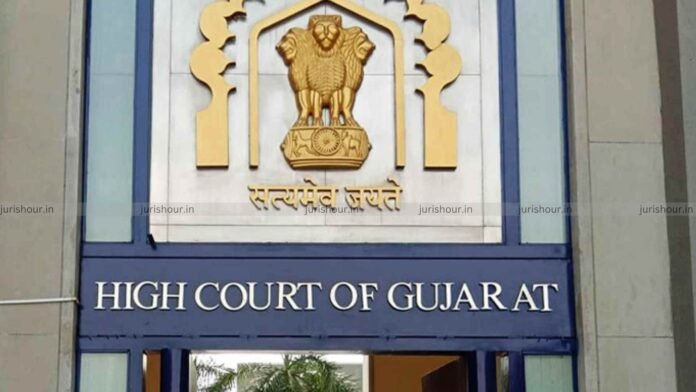
The Gujarat High Court has quashed a reassessment notice issued under Section 148 and the consequential order passed under Section 148A(d), holding that the notice was issued beyond the permissible limitation period or the “surviving time” under Taxation and Other Laws (Relaxation of Certain Provisions) Ordinance, 2020 (TOLA).
The Bench of Justice A.S. Supehia and Justice Vaibhavi D. Nanavati has observed that reassessment notices under the new regime must be issued within the time limit surviving under the Income-tax Act read with TOLA, and any notice issued beyond such surviving period would be liable to be set aside.
The controversy arose from an original notice issued on June 24, 2021 under the erstwhile Section 148 of the Income-tax Act during the extended limitation period available under the Taxation and Other Laws (Relaxation and Amendment of Certain Provisions) Act, 2020 (TOLA). Following the Supreme Court’s landmark judgment in Union of India v. Ashish Agarwal, such notices were deemed to be show-cause notices under the newly introduced Section 148A(b) regime.
Subsequently, the Assessing Officer supplied information to the assessee on May 25, 2022 and later passed an order under Section 148A(d) along with a fresh reassessment notice under Section 148 on July 29, 2022. The assessee challenged these proceedings before the High Court, contending that the notice had been issued beyond the permissible limitation period.
The High Court relied heavily on the Supreme Court’s decisions in Ashish Agarwal and Union of India v. Rajeev Bansal, which clarified how reassessment notices issued during the TOLA period should be treated after the introduction of the new reassessment regime from April 1, 2021.
The Court noted that under Rajeev Bansal, the validity of such reassessment notices depends upon the “surviving time” available for issuance of a fresh notice after excluding the period during which proceedings remained deemed to be stayed.
The Bench also referred to its earlier judgment in Dhanraj Govindram Kella v. ITO, where it had examined the concept of “surviving time” in detail and held that notices issued beyond the remaining limitation period would be invalid.
Examining the facts of the present case, the Court observed that the original Section 148 notice had been issued on June 24, 2021. After applying the principles laid down by the Supreme Court in Ashish Agarwal and Rajeev Bansal, the Court calculated that the last permissible date for issuance of a valid reassessment notice under the new regime was June 16, 2022.
However, the Assessing Officer issued the order under Section 148A(d) and the consequential Section 148 notice only on July 29, 2022—well after the expiry of the surviving limitation period. Significantly, the Revenue’s counsel verified the relevant dates before the Court and was unable to dispute the calculation.
The Bench therefore concluded that the reassessment notice had been issued beyond the surviving period recognized by the Supreme Court and was consequently barred by limitation.
Holding that the impugned notice failed this test, the Bench ruled that both the order under Section 148A(d) and the notice under Section 148 were invalid. Consequently, all subsequent reassessment proceedings initiated pursuant to those notices were also quashed.
The Gujarat High Court quashed and set aside the order dated July 29, 2022 passed under Section 148A(d) of the Income-tax Act; the reassessment notice dated July 29, 2022 issued under Section 148; and all consequential proceedings arising from the impugned notice.
Membership Required to Access Case Details & Order Copy
To view the complete Case Details and Download Order Copy, you must have an active membership. Please subscribe to continue.

