
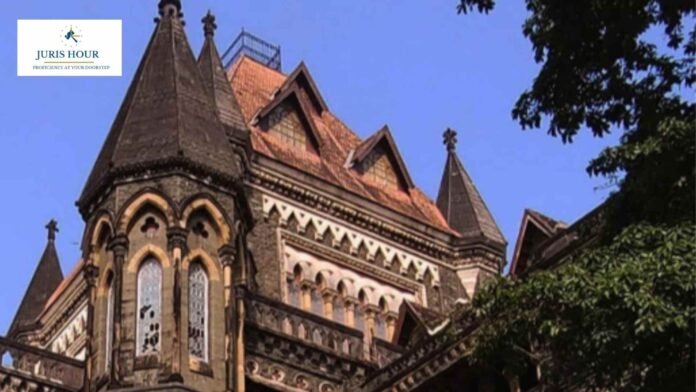
The Bombay High Court has held that the requirement of pre-deposit under Section 18 of the Securitisation and Reconstruction of Financial Assets and Enforcement of Security Interest (SARFAESI) Act, 2002, does not automatically apply to appeals arising from purely procedural orders passed by the Debts Recovery Tribunal (DRT).
The bench of Justice B. P. Colabawalla and Justice Somasekhar Sundaresan has observed that the DRT order under challenge merely dealt with impleadment of parties, amendment of pleadings, and condonation of delay. It questioned whether every order passed by the DRT, including procedural orders, should automatically attract the mandatory pre-deposit requirement. The Court therefore set aside the earlier Bombay High Court judgment and remanded the matter for fresh consideration.
The issue raised was whether an appeal against a DRT order rejecting applications for impleadment, amendment, and condonation of delay could be subjected to the stringent pre-deposit requirement.
The dispute relates to a large redevelopment project situated at Gundavali, Andheri (East), Mumbai. Sunshine Builders was appointed as the developer of a slum rehabilitation project and subsequently entered into co-development arrangements with another developer. Various agreements and powers of attorney were executed between the parties, following which mortgage deeds were created in favour of HDFC Bank as security for financial facilities extended to the co-developer.
Sunshine Builders later claimed that it had neither authorized nor consented to the mortgage of its interests and challenged the validity of the mortgage transactions. The dispute eventually led to proceedings under the SARFAESI Act after the borrower defaulted on repayment obligations.
HDFC Bank initiated recovery proceedings, took possession of the property, and eventually sold it through auction. The property was purchased by an auction purchaser, who later entered into a development arrangement with another developer.
While Sunshine Builders had already filed a securitisation application under Section 17 of the SARFAESI Act challenging the recovery measures, it later sought to bring on record subsequent developments, including the auction sale. For this purpose, it filed applications before the DRT seeking: Impleadment of the auction purchaser; amendment of the pending securitisation application to challenge subsequent measures; and condonation of delay in filing those applications.
The DRT dismissed these applications by a common order dated 7 October 2022. Sunshine Builders challenged that order before the Debts Recovery Appellate Tribunal (DRAT).
While entertaining the appeal, the DRAT held that Sunshine Builders was required to comply with Section 18 of the SARFAESI Act and directed it to deposit ₹125 crore as a condition precedent for hearing the appeal. The amount was ordered to be deposited in instalments.
The DRAT reasoned that Sunshine Builders fell within the definition of “borrower” because it was shown as a mortgagor in the mortgage documents and, therefore, the statutory pre-deposit requirement applied.
When the matter first reached the Bombay High Court in 2024, the Court upheld the DRAT’s view and observed that even a mortgagor would fall within the definition of “borrower” under Section 2(1)(f) of the SARFAESI Act. Consequently, the Court refused to interfere with the ₹125 crore pre-deposit order.
The matter then reached the Supreme Court. The apex court found that the High Court had primarily focused on whether Sunshine Builders was a borrower or mortgagor but had failed to address a more fundamental question—whether the appeal itself arose from a procedural order requiring compliance with Section 18’s pre-deposit condition.
Upon remand, the principal question before the Bombay High Court was whether an appeal challenging a procedural order of the DRT could be treated on the same footing as an appeal challenging a final adjudicatory order determining liability.
Sunshine Builders argued that the DRT’s order merely rejected applications for impleadment, amendment and condonation of delay and did not decide any substantive rights or liabilities. Therefore, the mandatory pre-deposit mechanism under Section 18 should not apply.
On the other hand, HDFC Bank and other respondents contended that Section 18 uses the expression “any order” and therefore covers all orders passed by the DRT, whether procedural or substantive.
The High Court undertook a detailed examination of Section 18 of the SARFAESI Act and the legislative purpose behind the pre-deposit requirement.
The Court observed that the pre-deposit provision is intended to secure recovery of debts while permitting appeals against substantive determinations affecting liabilities. It examined whether a procedural order that merely regulates the conduct of proceedings can be equated with an adjudication determining rights and liabilities.
The Court also considered the Supreme Court’s observations that the expression “any order” in Section 18 should receive a meaningful interpretation and cannot be mechanically extended to every procedural direction issued by the DRT.
Membership Required to Access Case Details & Order Copy
To view the complete Case Details and Download Order Copy, you must have an active membership. Please subscribe to continue.

