
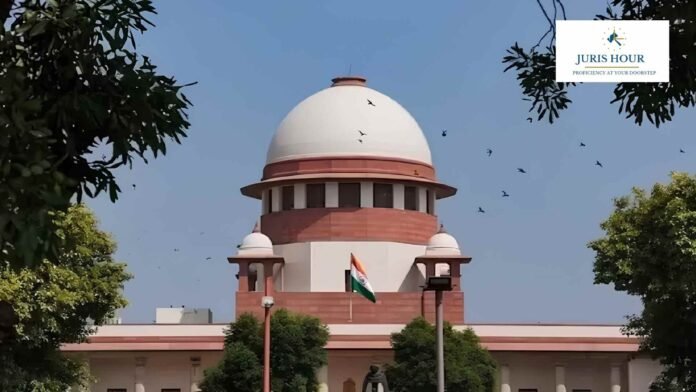
The Supreme Court has held that a violation of a recruitment rule does not automatically render appointments invalid when the selected employees are not responsible for the procedural lapse.
The bench of Justice Nongmeikapam Kotiswar Singh emphasized that candidates who entered service through a duly advertised and competitive selection process should not lose their livelihoods merely because the recruiting authority failed to comply with certain procedural requirements.
The controversy originated when the cooperative society sought permission to fill vacant posts and subsequently issued a public advertisement inviting applications from eligible candidates. Interviews were conducted and the selected candidates were appointed on a regular basis in August 2014.
Several years later, members of the cooperative society challenged the recruitment process before the Registrar of Cooperative Societies. The principal allegation was that the appointments had been approved by the Board of Directors without the mandatory presence and concurrence of certain officials, namely the Assistant Registrar Cooperative Societies, Inspector Cooperative Societies, and District Manager of HAFED, as required under Rule 3 of the Primary Cooperative Marketing-cum-Processing Societies Ltd. Staff Service Rules, 2003.
The complainants also alleged certain procedural irregularities relating to reservation compliance, publication of advertisements, sanctioned strength of posts, and medical fitness certificates. However, there was no allegation that the selected candidates lacked qualifications, obtained appointments through fraud, or manipulated the selection process.
The Additional Registrar Cooperative Societies and the Additional Chief Secretary, Cooperation Department, accepted the challenge and held that the appointments were contrary to the mandatory provisions of Rule 3. The Punjab and Haryana High Court subsequently affirmed those findings.
The High Court concluded that since the prescribed officials were absent from the meeting in which the appointments were approved, the appointments were not made by a competent authority in accordance with the statutory rules. Although the employees had remained in service for more than ten years, the High Court held that continuation in service could not cure an appointment made in violation of mandatory recruitment provisions.
The employees were eventually relieved from service following the High Court’s decision.
Before the Supreme Court, the employees argued that they had participated in a duly advertised recruitment process, had been selected on merit, and had no role in the composition of the Board meeting or compliance with internal procedural requirements.
The Court noted that public employment generally involves three critical stages: Advertisement of vacancies and invitation of applications; Conduct of the selection process; and Formal approval and appointment by the competent authority.
After examining the record, the Court found that the first two stages of recruitment did not suffer from any fundamental illegality. Vacancies had been publicly advertised in newspapers, eligible candidates had applied, and interviews had been conducted. There was no allegation that the process was manipulated, fraudulent, or designed to favour ineligible candidates.
The Court observed that the only defect identified by the authorities related to the third stage, namely the absence of certain officials from the Board meeting that approved the appointments.
The Supreme Court drew a distinction between defects that strike at the root of a recruitment process and procedural irregularities that are capable of being rectified.
According to the Court, if vacancies are not properly advertised or if the selection process is tainted by fraud, manipulation, or favouritism, such defects would undermine the constitutional guarantee of equal opportunity in public employment and could invalidate the entire recruitment exercise.
However, the Court found that the absence of certain officials from the meeting approving appointments did not affect the fairness of the advertisement or the conduct of interviews. The role of those officials was largely supervisory and intended to ensure compliance with recruitment norms.
The Bench held that such a defect was curable and did not warrant cancellation of appointments that had resulted from an otherwise valid recruitment process.
A key aspect of the judgment was the Court’s recognition that the employees themselves had no role in the alleged violation.
The Bench observed that candidates cannot be penalized for procedural lapses committed by recruiting authorities. Once candidates participate in a lawful selection process and are found eligible and meritorious, they acquire certain equitable considerations, particularly after rendering long years of service without blemish.
The Court stressed that fairness and proportionality require authorities to distinguish between institutional errors and misconduct attributable to employees.
Instead of sustaining the cancellation of appointments, the Supreme Court directed the cooperative society to reconvene a meeting of the Board of Directors with the participation of all required officials.
The Board has been asked to reconsider the recommendations made by the selection committee and verify whether:
- The appointees possessed the requisite qualifications;
- They were not disqualified under the applicable rules;
- Their selection was genuinely based on the interview process; and
- No more meritorious candidate had been improperly ignored.
Importantly, the Court clarified that the Board cannot reopen issues relating to advertisement of vacancies or the conduct of interviews, as no defects were found in those stages of recruitment.
The Supreme Court further directed that if the employees are found eligible upon reconsideration, they must be reappointed to their respective posts.
The Court ordered that their past service shall be counted for all purposes, thereby protecting their continuity and service-related benefits. However, they will not be entitled to salary arrears for the period during which they remained out of service following their removal.
Membership Required to Access Case Details & Order Copy
To view the complete Case Details and Download Order Copy, you must have an active membership. Please subscribe to continue.
Read More: RBI Revises FEMA Rules for NRI, OCI Investments and Internationally Listed Indian Shares

