
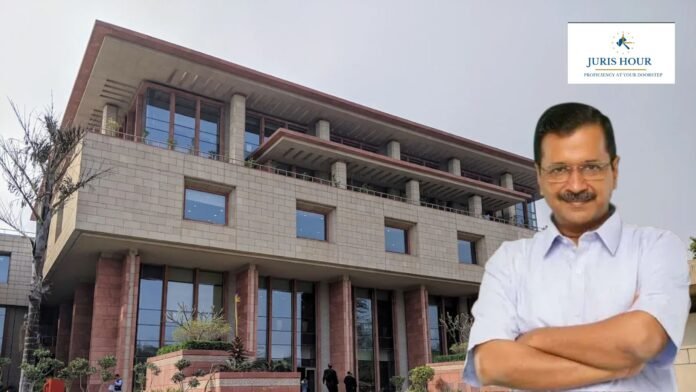
A fresh development has emerged in the Delhi excise policy litigation, with senior leaders of the Aam Aadmi Party (AAP), including Arvind Kejriwal, Manish Sisodia and Durgesh Pathak deciding to participate in the proceedings before the Delhi High Court now being heard by Justice Manoj Jain. The decision marks a significant shift in the position earlier adopted by the three leaders, who had refrained from participating when the matter was listed before Justice Swarana Kanta Sharma.
The case witnessed a procedural turn after Justice Swarana Kanta Sharma recused herself from hearing the matter on May 14. Her decision came after she initiated contempt proceedings against Kejriwal and several other AAP leaders over remarks allegedly made against her, which were viewed as defamatory and aimed at undermining the dignity of the Court. Following her withdrawal from the case, the matter was reassigned to Justice Manoj Jain.
During Monday’s proceedings, Justice Jain noted that vakalatnamas had been filed on behalf of Kejriwal, Sisodia and Pathak, formally indicating their intention to participate in the proceedings before the new bench. The Court observed that all parties would be heard and a hearing framework would be determined at the next date of listing.
While taking note of the fresh filings, Justice Jain remarked that since the parties had now entered appearance, the Court would proceed to establish a schedule for hearing the matter. The proceedings were subsequently adjourned to July 16 for further consideration.
The litigation originates from a trial court order dated February 27, which had discharged Kejriwal and 22 others in relation to the Delhi excise policy matter. The discharge order was challenged before the Delhi High Court by the Central Bureau of Investigation (CBI), which sought judicial scrutiny of the trial court’s findings.
When the matter had previously come up before Justice Swarana Kanta Sharma, notice was issued in the challenge petition. The Court had also stayed directions of the trial court that sought departmental proceedings against the CBI officer who conducted the investigation. Justice Sharma had further made prima facie observations indicating that certain findings recorded by the trial court appeared to suffer from legal infirmities. She had additionally directed the trial court to defer proceedings under the Prevention of Money Laundering Act (PMLA) connected to the CBI case.
Subsequently, Kejriwal and several co-accused, including Sisodia, Pathak, Vijay Nair, Arun Pillai and Chanpreet Singh Rayat, sought Justice Sharma’s recusal from the proceedings. The applications alleged possible conflict of interest and raised concerns regarding perceived bias. Among the grounds cited were claims relating to her children’s association with panels representing the Central Government and her participation in events organised by Adhivakta Parishad.
Justice Sharma initially rejected the recusal applications and indicated that she would continue hearing the matter. Following this, Kejriwal, Sisodia and Pathak chose not to participate in the proceedings before her bench.
The situation later intensified after Justice Sharma decided to initiate contempt proceedings concerning statements allegedly made against her by the AAP leaders and others. Thereafter, she ultimately stepped aside from the matter, resulting in its transfer to Justice Manoj Jain.
Read More: Service Tax | 67% Abatement Can’t Be Denied for Procedural Lapses: CESTAT

