
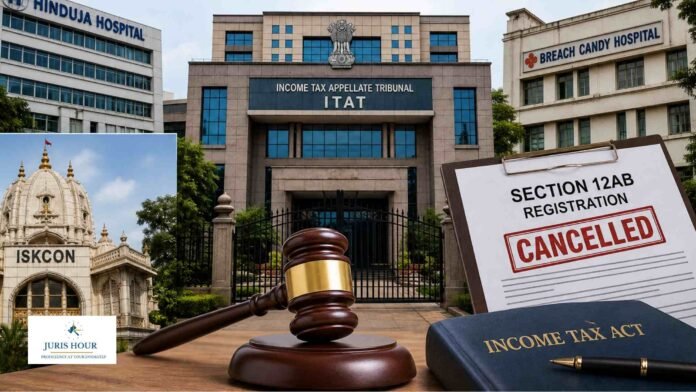
A major charitable trust operating a leading hospital in Mumbai, along with organisations such as ISKCON, Hinduja Hospital, and Breach Candy Hospital, has approached or is preparing to approach the Income Tax Appellate Tribunal (ITAT) challenging the Income Tax Department’s move to cancel or deny renewal of registration under Section 12AB of the Income-tax Act. The dispute arises from allegations that these entities have been engaged in “commercial activities,” a ground increasingly being invoked by tax authorities to deny or withdraw tax exemptions available to non-profit institutions.
The trust managing the prominent multi-speciality hospital and research centre has specifically contested the cancellation after its application for renewal of registration was rejected in March 2026. Registration under Section 12AB is a statutory prerequisite for charitable and religious institutions to claim tax exemptions, and its denial can have significant financial implications.
During the hearing of the trust’s stay application, the ITAT indicated that the matter raises substantial legal questions requiring early adjudication on merits. The tribunal observed that the controversy is such that it warrants expedited consideration rather than interim intervention, noting that granting interim relief at this stage could potentially pre-empt the final outcome of the appeal. The bench suggested that the ends of justice would be better served if the appeal itself is heard on priority.
The development is part of a broader trend, with several well-known charitable organisations in Mumbai facing similar scrutiny. Tax authorities have reportedly denied or questioned renewals of registrations on the basis that such entities are carrying out activities with a commercial character, thereby allegedly deviating from their charitable objectives.
Entities associated with Breach Candy Hospital Trust and the non-profit managing PD Hinduja Hospital are also understood to be exploring or initiating appellate proceedings before the ITAT. These organisations have been long-standing beneficiaries of charitable status and tax exemptions.
The issue has also extended to religious bodies. The International Society for Krishna Consciousness (ISKCON), through one of its trusts, is said to be facing comparable concerns, reportedly linked to revenue-generating activities such as affiliated establishments. The organisation has defended its position, stating that it has been engaged in charitable work for decades and that any surplus generated is utilised strictly for furthering its philanthropic objectives.
Experts point out that the Income-tax law permits charitable organisations to undertake incidental commercial activities, subject to conditions. Under the statutory framework, a limited portion of receipts from such activities is allowed, provided the primary objective remains charitable and the surplus is applied towards those purposes. The current disputes, therefore, are likely to centre on whether the scale and nature of such activities cross permissible thresholds or alter the fundamental character of the institutions.
Tax professionals have also raised concerns about the scope of inquiry at the stage of registration or renewal. According to legal experts, the law restricts authorities to examining whether the objects of the trust are genuinely charitable and whether its activities are bona fide. Any deeper probe into alleged violations or commercial conduct, they argue, may fall outside the permissible scope at this stage and should instead be addressed through separate proceedings, if warranted.
Organisations affected by the cancellations have termed the actions as unjustified and inconsistent with long-standing recognition of their charitable status. Many of these entities have held tax-exempt registrations for decades without interruption, and the recent shift in approach by the tax department has triggered uncertainty across the non-profit sector.
With multiple appeals expected before the ITAT, the issue is likely to assume significance in determining the contours of “charitable purpose” in the context of modern institutions that combine service delivery with financial sustainability. The tribunal’s eventual ruling could have far-reaching implications for hospitals, educational institutions, and religious organisations operating under the charitable framework in India.

