
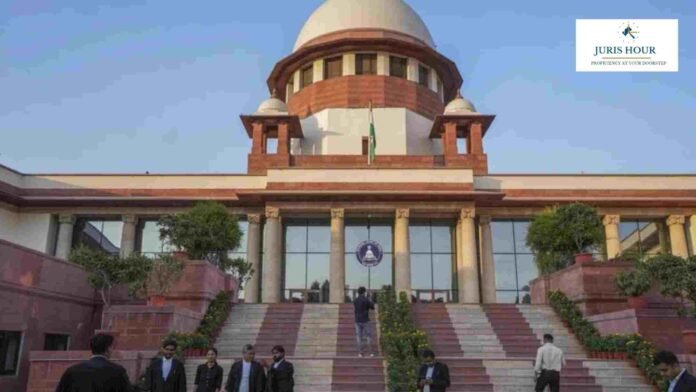
The Supreme Court has directed the regularisation of gang labourers engaged at the Mahendragiri unit of the Indian Space Research Organisation (ISRO), holding that the State failed to comply with binding judicial directions mandating creation of permanent posts.
The Bench of Justice Vikram Nath and Justice Sandeep Mehta observed that it fundamentally deviated from the Tribunal’s mandate. The Court clarified that the earlier directions were not merely procedural but required a structural shift from ad hoc engagement to a formal system backed by sanctioned posts. Any scheme that failed to provide for such post creation, the Court held, could not be regarded as compliant with judicial directions.
The case arose from a prolonged dispute spanning over three decades, wherein the appellants—engaged as daily-wage labourers between 1991 and 1997—sought regularisation of their services. The Court set aside the “Gang Labourers (Employment for Sporadic Types of Work) Scheme, 2012,” terming it inconsistent with earlier judicial directions and inadequate to address the workers’ long-standing grievances.
The controversy originated from a 2010 order of the Central Administrative Tribunal (CAT), which had directed the authorities to frame a scheme by creating posts to engage such workers on a permanent basis. This direction had attained finality after being upheld by the High Court and the Supreme Court in earlier proceedings. However, instead of creating permanent posts, the authorities introduced a scheme in 2012 that continued engagement of labourers on a temporary, daily-wage basis until the age of 60, without guaranteeing regularisation.
Rejecting the findings of the Madras High Court, which had relied on principles laid down in Umadevi to deny regularisation, the Supreme Court held that the High Court had exceeded its jurisdiction by revisiting issues already settled in earlier rounds of litigation. The Court emphasized that once directions had attained finality, the scope of subsequent proceedings was limited to examining compliance, not re-adjudicating entitlement to regularisation.
The Court also took note of the peculiar nature of work performed by the labourers and the sensitive environment of the ISRO facility, which is classified as a prohibited area under the Official Secrets Act. While acknowledging security concerns, the Court highlighted that the Tribunal had already balanced these considerations by directing the creation of structured employment mechanisms.
The Court criticised the conduct of the State as an employer, reiterating that it must act as a “model employer” and uphold principles of fairness and non-arbitrariness under Article 14 of the Constitution. It underscored that prolonged engagement of workers without granting them service security or recognition amounted to systemic unfairness.
The Court drew attention to the often-overlooked contributions of support staff in India’s space programme, noting that large-scale scientific achievements are sustained not only by scientists but also by workers performing ancillary and logistical roles. Denying such workers dignified employment status, the Court observed, undermines the collective ethos of national progress.
Allowing the appeal, the Supreme Court directed the respondents to regularise the services of the appellants and grant them permanent status with effect from September 9, 2010—the deadline originally fixed by the Tribunal for framing the scheme. The exercise has been ordered to be completed within four weeks.
The Court further held that the benefit of the ruling would extend to all similarly situated workers engaged under the impugned scheme, thereby potentially impacting a broader class of employees working under comparable arrangements.
Case Details
Case Title: R. Iyyappan & Ors. Versus Union Of India & Ors.
Citation: JURISHOUR-1013-SC-2026
Case No.: Special Leave Petition (Civil) No. 7138 Of 2025
Date: 29/04/2026

