
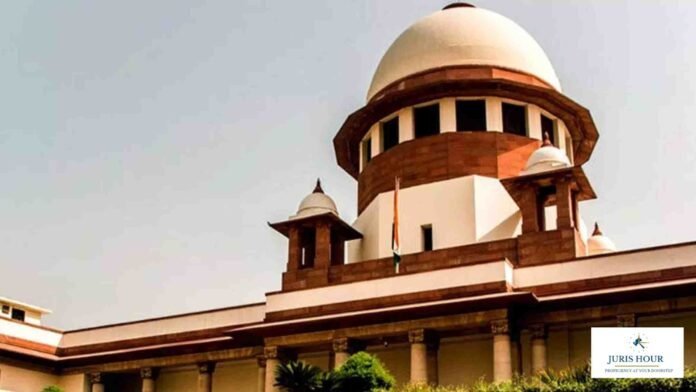
The Supreme Court has granted bail to a former Minister, Anosh Ekka from Jharkhand in a disproportionate assets case, while observing that overlapping allegations arising from split charge sheets merit deeper examination by the High Court.
The bench of Justices Vikram Nath and Sandeep Mehta set aside the Jharkhand High Court’s order which had earlier denied suspension of sentence and bail. The apex court allowed the appeal and ordered the release of the appellant on bail, subject to conditions.
The case originates from a vigilance FIR registered in 2008 alleging that the appellant, along with another minister, had amassed assets far beyond known sources of income. The investigation, later transferred to the Central Bureau of Investigation, revealed that assets worth approximately ₹57 crore were allegedly accumulated against a declared base of around ₹10 lakh. These included multiple land parcels and a high-value residential property.
The prosecution further alleged misuse of official position to illegally acquire tribal land in violation of statutory protections, including transactions executed in the name of the appellant’s spouse using false declarations. It was also alleged that construction firms linked to the appellant were improperly granted government contracts despite not meeting eligibility conditions.
Following investigation, two separate charge sheets were filed by splitting the original case, leading to parallel prosecutions. In one case, the appellant had already been convicted and granted bail earlier by the Supreme Court after serving over four years in custody. In the present case, the trial court had sentenced the appellant to seven years’ rigorous imprisonment under provisions of the Prevention of Corruption Act, along with additional punishment under the Indian Penal Code.
Before the Supreme Court, the appellant argued that both prosecutions were based on identical facts, transactions, and properties, raising concerns of double jeopardy under Article 20(3) of the Constitution. It was also highlighted that substantial assets worth around ₹18 crore had already been attached and that the disputed tribal land had been confiscated under proceedings related to money laundering.
The Court noted that the issue of overlapping allegations and the permissibility of multiple prosecutions would need to be adjudicated by the High Court in the pending appeals. However, it took into account the period of incarceration already undergone by the appellant, including over four years in the earlier case and additional custody in the present matter.
The Court observed that many allegations in both cases appear to overlap and that the appellant had already been granted bail in the earlier connected matter. Considering these factors, and the fact that the appeal before the High Court is unlikely to be heard in the near future, the Court found it appropriate to grant bail.
The Supreme Court directed that the appellant be released upon furnishing bail bonds, with a mandatory condition to file an undertaking within seven days to assist authorities in restoring the tribal land to its original status. The Court also permitted the trial court to impose additional conditions as deemed appropriate.
While granting relief, the apex court made it clear that the merits of the overlapping prosecutions and the double jeopardy argument would be examined at the stage of final adjudication by the High Court.
Case Details
Case Title: Anosh Ekka Versus State
Citation: JURISHOUR-750-SC-2026
Case No.: SLP (Crl.) No (s). 891 of 2026
Date: 13/04/2026

