
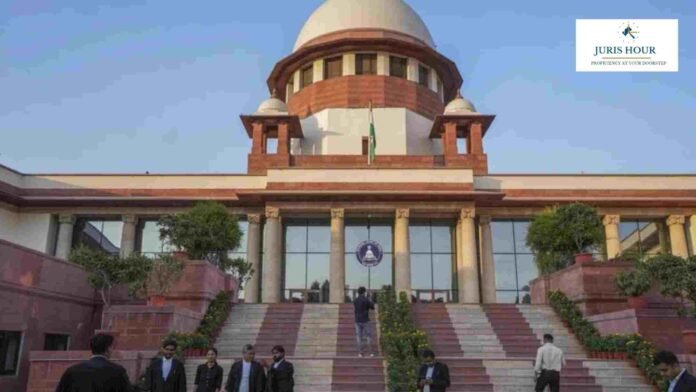
The Supreme Court has set aside a High Court order that had granted suspension of sentence and bail to a life convict in a murder case and emphasized that such relief in serious offences like murder must remain an exception, not the rule.
The bench of Justice Ahsanuddin Amanullah and Justice R. Mahadevan has observed that once a person is convicted, the presumption of innocence no longer survives, and the standards for granting bail become significantly stricter. It emphasized that the power under Section 389 of the Code of Criminal Procedure must be exercised with caution and only in rare and exceptional cases.
The appeal was filed by the informant challenging the decision of the Patna High Court, which had suspended the life sentence of a convict during the pendency of his criminal appeal. The apex court, after examining the record and legal principles, found the High Court’s approach to be legally unsustainable.
The case pertains to a 2016 incident in Bihar where the deceased was shot dead in broad daylight following a confrontation linked to political rivalry. The prosecution alleged that multiple accused persons acted in furtherance of a common intention, with one of them firing the fatal shot while others restrained the victim.
After a full-fledged trial, the Sessions Court convicted the accused under Sections 302 and 307 of the Indian Penal Code along with provisions of the Arms Act, awarding life imprisonment. The conviction was primarily based on consistent eyewitness testimonies, which the trial court found credible.
During the pendency of the appeal, the High Court suspended the sentence of one of the convicts and granted him bail, prompting the informant to approach the Supreme Court seeking cancellation of the relief.
The central issue before the Supreme Court was whether the High Court was justified in suspending the sentence of a person convicted for a grave offence like murder under Section 302 IPC, particularly in the absence of exceptional circumstances.
Relying on settled precedents, the Court held that suspension of sentence cannot be granted mechanically or based on superficial considerations such as delay in appeal or absence of misuse of liberty during trial.
Importantly, the Court criticized the High Court for effectively reappreciating evidence at the stage of suspension of sentence. It noted that such an exercise is impermissible and must be reserved for final adjudication of the appeal.
The Court also observed that the prosecution case was based on credible ocular evidence already accepted by the trial court, and there was no apparent infirmity on record to justify suspension of sentence.
Rejecting the High Court’s reasoning that the convict had not fired the fatal shot, the Supreme Court underscored the doctrine of common intention under Section 34 IPC. It held that active participation, such as restraining the victim during the commission of the offence, is sufficient to attract full criminal liability.
The Court clarified that the distinction between the principal assailant and co-accused becomes immaterial when the offence is committed in furtherance of a shared intention.
The Court also took note of the convict’s criminal antecedents and allegations of threats made to the informant and his family. These factors, it observed, further militated against the grant of bail in a serious offence.
Concluding that the High Court had failed to apply the correct legal principles, the Supreme Court set aside the impugned order granting suspension of sentence. The convict was directed to surrender before the trial court within a stipulated period.
Case Details
Case Title: Dhan Jee Pandey Versus The State Of Bihar & Another
Citation: JURISHOUR-717-SC-2026
Case No.: Criminal Appeal No. 1865 Of 2026
Date: 10/04/2026
Read More: Supreme Court Reaffirms Limited Scope of Revisional Jurisdiction

