
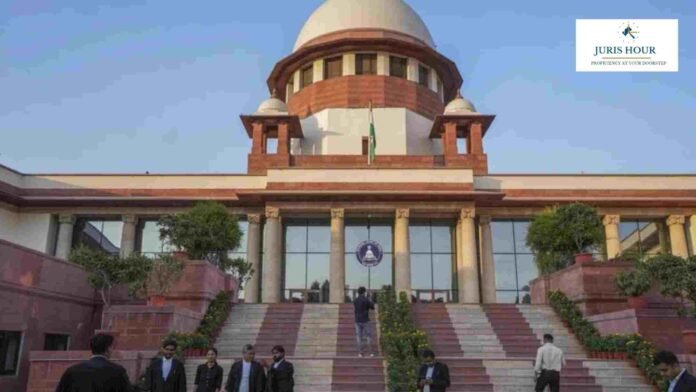
The Supreme Court has overturned the acquittal of an accused in a child sexual assault case, holding that minor inconsistencies in witness testimonies cannot outweigh credible and consistent evidence of the prosecutrix.
The bench of Justice Sanjay Karol and Justice Nongmeikapam Kotiswar Singh has reinstated the conviction earlier recorded by the Trial Court and directed the accused to surrender and serve the remaining sentence.
The case stems from a 2007 incident involving the sexual assault of a nine-year-old girl in Himachal Pradesh. According to the prosecution, the child was sent to fetch buttermilk when she was allegedly taken to a cowshed by the accused and sexually assaulted. The incident was reported to her parents and subsequently to the police, leading to the registration of an FIR and medical examination.
The Trial Court had convicted the accused under Section 376 of the Indian Penal Code and provisions of the SC/ST Act, sentencing him to rigorous imprisonment. However, the High Court later acquitted him, citing major inconsistencies in witness testimonies and improbabilities in the prosecution’s version.
The High Court had raised doubts over the prosecution’s narrative, particularly questioning the feasibility of the child traveling nearly 16 kilometers within a short time span. It also emphasized contradictions in the statements of the victim, her parents, and other witnesses regarding the sequence of events and delay in lodging the FIR.
Additionally, the High Court noted pre-existing animosity between the families, suggesting a possibility of false implication. It also downplayed the medical evidence, observing that it could not independently sustain a conviction.
Rejecting the High Court’s approach, the Supreme Court held that the acquittal was based on an overly technical and flawed appreciation of evidence.
The Court emphasized that the testimony of the prosecutrix was clear, consistent, and withstood cross-examination. Minor discrepancies in witness statements are natural and do not undermine the core prosecution case. Medical evidence corroborated the occurrence of sexual assault and could not be disregarded on speculative grounds. The improbability regarding travel time did not negate the fact of the offence itself.
The bench observed that “courts do not look for mathematical precision” in such cases and warned against discarding credible evidence due to trivial inconsistencies.
The Court held that the sole testimony of a prosecutrix can be sufficient to sustain a conviction if it inspires confidence. It further noted that corroboration, while desirable in certain cases, is not a legal requirement.
The Court also addressed the appreciation of child witness testimony, underscoring that while caution is necessary, such evidence cannot be dismissed merely due to age or minor variations.
While acknowledging that appellate courts are generally reluctant to interfere with acquittals, the Supreme Court clarified that such intervention is justified where the lower court’s findings are perverse or based on misappreciation of evidence.
In this case, the Court found that the High Court had “attempted to pick holes” in an otherwise credible prosecution case, leading to a miscarriage of justice.
The Court directed all High Courts to ensure strict compliance with legal provisions protecting the anonymity of sexual offence victims, especially in cases predating the landmark ruling in Nipun Saxena v. Union of India.
The Supreme Court set aside the acquittal and restored the conviction and sentence awarded by the Trial Court. The accused has been directed to surrender immediately.
Case Details
Case Title: State Of Himachal Pradesh Versus Hukum Chand Alias Monu
Citation: JURISHOUR-498-SC-2026
Case No.: Criminal Appeal No. 1275 Of 2015
Date: 24/03/2026
Read More: No Arbitration Without Valid Agreement: Supreme Court

