
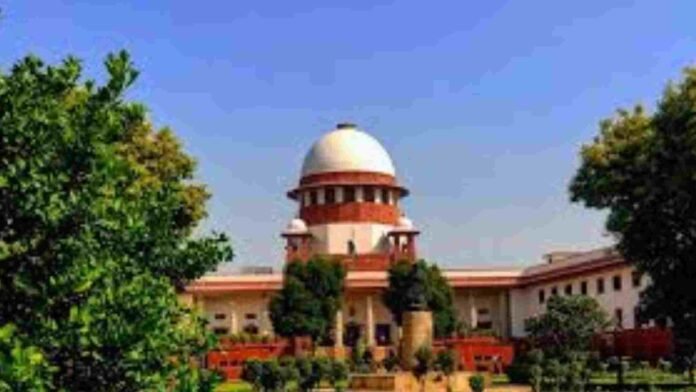
The Supreme Court has set aside the dismissal of a Delhi Police constable, holding that the extraordinary power to dispense with a departmental inquiry under Article 311(2)(b) cannot be invoked merely on presumptions or speculative apprehensions.
The Bench of Justice J.K. Maheshwari has observed that authorities must record cogent reasons backed by material evidence before concluding that holding a disciplinary inquiry is “not reasonably practicable.”
The case arose after Constable Manohar Lal, posted in the Special Cell of Delhi Police, was implicated in FIR No. 390 of 2017 registered at Bhalswa Dairy Police Station. The FIR alleged his involvement, along with others, in a robbery involving a large quantity of sandalwood.
Following the registration of the FIR on 28 June 2017, the constable was arrested the next day and remained in custody until 14 October 2017, when he was granted bail. However, during his period of custody, the Deputy Commissioner of Police (DCP) dismissed him from service on 18 July 2017 by invoking Article 311(2)(b) of the Constitution, which allows dismissal without holding a departmental inquiry if it is not reasonably practicable to conduct one.
The dismissal order relied on a preliminary inquiry conducted by an Assistant Commissioner of Police, which suggested that witnesses could be intimidated or influenced if a departmental inquiry was held.
The constable challenged the dismissal before the Central Administrative Tribunal (CAT), arguing that the disciplinary authority had improperly invoked the constitutional exception without sufficient justification.
However, the CAT dismissed his application, and the Delhi High Court later upheld the dismissal, agreeing with the reasoning that conducting an inquiry might expose witnesses to intimidation.
Aggrieved by these decisions, the constable approached the Supreme Court.
The central legal question before the Supreme Court was: whether the disciplinary authority was justified in invoking Article 311(2)(b) to dismiss the constable without holding a departmental inquiry.
Under Article 311(2), a government servant cannot be dismissed, removed, or reduced in rank without being informed of the charges and given an opportunity to be heard through a proper inquiry.
However, clause (b) of the second proviso allows authorities to bypass this requirement if they record reasons in writing that holding such an inquiry is “not reasonably practicable.”
The Court relied heavily on the landmark Constitution Bench decision in Union of India v. Tulsiram Patel (1985), which clarified the circumstances under which Article 311(2)(b) can be invoked.
According to the Court, the expression “not reasonably practicable” does not mean merely inconvenient or difficult. Instead, it refers to situations where conducting an inquiry is practically impossible due to factors such as witnesses being terrorized or intimidated, an atmosphere of violence or insubordination, or threats to disciplinary authorities or participants in the inquiry.
The Court stressed that such power cannot be used lightly or arbitrarily and must be supported by objective material.
After examining the preliminary inquiry report and witness statements, the Supreme Court found no evidence suggesting that the complainant or witnesses were threatened or traumatized by the constable.
The statements recorded during the preliminary inquiry merely narrated the alleged incident and the investigation process. None of the witnesses reported intimidation or threats.
The Court observed that the disciplinary authority had relied on mere assumptions that the constable might influence witnesses through associates.
A crucial factor noted by the Court was that the constable was already in judicial custody when the dismissal order was passed.
The Court held that if the officer was in custody, the disciplinary authority ought to have demonstrated specific instances of threats or attempts to influence witnesses from jail before dispensing with the inquiry.
Since no such material existed, the Court concluded that the authority had failed to apply its mind properly.
The Supreme Court held that the dismissal order was based on presumptions rather than evidence, which did not meet the constitutional threshold for invoking the exceptional power under Article 311(2)(b).
The Court emphasized that the disciplinary authority must independently assess whether holding an inquiry is genuinely impracticable rather than blindly relying on a preliminary report.
It further clarified that judicial review remains available to test whether the authority’s satisfaction is based on relevant material or constitutes an abuse of power.
Allowing the appeal, the Supreme Court held that the disciplinary authority wrongly dispensed with the departmental inquiry. The reasons recorded for invoking Article 311(2)(b) were unsupported by evidence. The dismissal order was therefore unsustainable in law.
The Court set aside the dismissal and permitted the authorities to initiate a regular departmental inquiry in accordance with law, if they so choose.
Case Details
Case Title: Manohar Lal Versus Commissioner Of Police & Ors.
Citation: JURISHOUR-337-SC-2026
Case No.: CIVIL APPEAL NO. 13860 OF 2024
Date: 12/03/2026

