
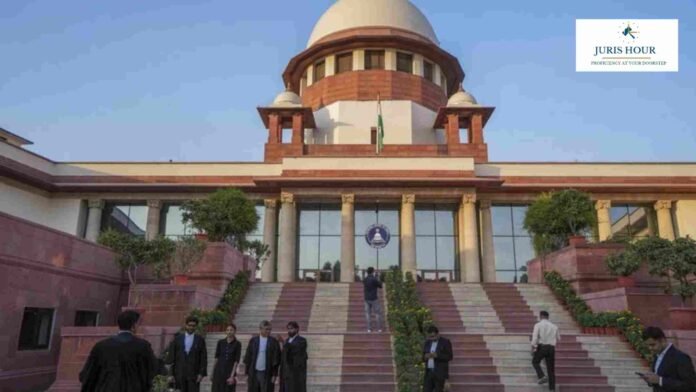
The Supreme Court has upheld the acquittal of a man accused of murdering his parents by setting their house on fire, cautioning that “overzealous investigation” based on public perception rather than evidence can derail criminal prosecution and endanger innocent lives.
A bench comprising Justice K. Vinod Chandran and Justice Sanjay Kumar dismissed the appeal filed against the acquittal of Sanjay Kumar Sharma, who had been accused of killing his father, a lawyer, and his mother in a fire incident in Bihar in 2016. The Court affirmed the earlier judgment of the Patna High Court which had overturned the trial court’s conviction of Sharma and his wife.
The case arose from a tragic incident on November 23, 2016, when a hut-like house in which the elderly couple resided caught fire in the early hours of the morning. The father died on the spot, while the mother succumbed to injuries two days later at a hospital in Patna.
Prosecutors alleged that the younger son and his wife had set the house on fire due to long-standing disputes over ancestral property. According to the prosecution, the son harboured resentment against his father for not giving him his share of the family property.
The trial court accepted the prosecution’s theory, relying largely on the alleged motive and circumstantial evidence, and convicted the accused.
However, the Patna High Court later overturned the conviction, finding serious inconsistencies and gaps in the prosecution case. The High Court held that the evidence presented failed to conclusively establish the guilt of the accused and did not rule out alternative explanations, including the possibility of an accidental fire caused by a gas cylinder explosion.
The acquittal was subsequently challenged before the Supreme Court.
While dismissing the appeal, the Supreme Court emphasized that criminal investigations must be conducted with objectivity and adherence to established procedures. The Court noted that the prosecution case was built almost entirely on the alleged motive and public suspicion rather than reliable evidence.
The bench observed that investigations driven by preconceived notions or community sentiment can be as damaging as delayed or negligent investigations. It remarked that framing a case on “public perceptions and personal predilections” often leads to miscarriage of justice.
The Court also highlighted lapses in the investigation and prosecution, including selective pursuit of evidence and failure to follow proper procedural safeguards during trial.
The Court acknowledged the severe impact of the criminal proceedings on the accused and their family. It noted that the couple had faced arrest, incarceration, and years of trial while their children were left without parental care during the period of imprisonment.
The judges remarked that although the tragic deaths of the elderly couple remained unresolved, the criminal justice system must ensure that innocent individuals are not punished merely because of suspicion.
In its concluding remarks, the Supreme Court cautioned investigators and courts to strictly follow accepted investigative practices and procedural rules, especially in serious cases involving loss of life.
“Lives are lost and reputations are put at peril when investigations are not conducted properly,” the Court observed, stressing the need for greater diligence and fairness in criminal prosecutions.
Case Details
Case Title: Sanjay Kumar Sharma Versus State of Bihar
Citation: JURISHOUR-312-SC-2026
Case No.: Special Leave Petition (Crl.) No. 15378 of 2024
Date: 11/03/2026

