
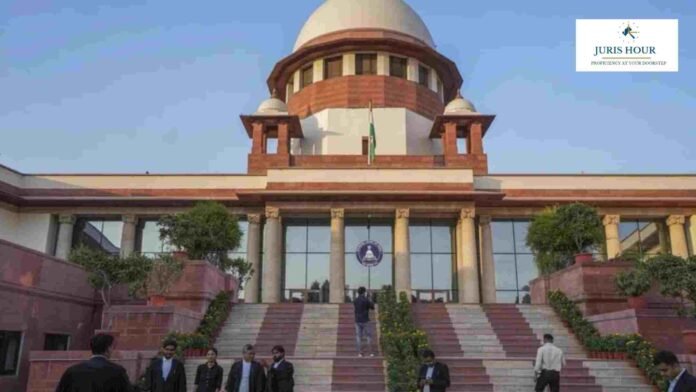
The Supreme Court of India held that courts cannot interfere with the commercial decision of the Committee of Creditors (CoC) merely because unsuccessful bidders allege post-bid modifications.
The bench of Justice B.V. Nagarathna and Justice R. Mahadevan has observed that the CoC’s decision on feasibility, viability, and value maximisation is non-justiciable. Courts cannot undertake quantitative analysis or compare competing bids. Even the highest bidder has no vested right to have its plan approved. Judicial review is limited to ensuring compliance with Section 30(2) of the IBC and absence of material irregularity.
The Corporate Insolvency Resolution Process (CIRP) was initiated against SKS Power Generation (Chhattisgarh) Limited on a petition filed by Bank of Baroda under Section 7 of the IBC before the NCLT, Mumbai Bench.
Multiple resolution applicants submitted plans, including: Torrent Power Ltd., Vantage Point Asset Management Pte. Ltd., Jindal Power Ltd., and Sarda Energy and Minerals Limited.
After negotiations and an inter-se bidding process, the CoC approved SEML’s resolution plan with a 100% voting share. The Resolution Professional (RP) filed an application for approval under Section 30(6) of the IBC, which was allowed by the NCLT. The decision was subsequently upheld by the NCLAT.
Aggrieved unsuccessful bidders approached the Supreme Court under Section 62 of the IBC.
The core grievance of the appellants was that SEML had allegedly modified its commercial offer after the bidding process had concluded, in breach of the Process Note and the Request for Resolution Plan (RFRP).
Two specific allegations were raised:
First, that SEML increased its commitment towards bank guarantees (BGs) from ₹103.39 crore to approximately ₹180.05 crore through a post-bid clarification email dated 10 May 2023.
Second, that SEML converted a deferred payment component of ₹240 crore into an upfront payment, thereby enhancing its financial offer after negotiations had closed.
According to the appellants, these actions amounted to “material irregularity” under Section 61(3) of the IBC and warranted judicial interference.
The Court emphasised that an appeal under Section 61(3) of the IBC is confined to specific statutory grounds, including “material irregularity” by the Resolution Professional. Further, an appeal to the Supreme Court under Section 62 lies only on a question of law.
The Court noted that the RP had merely acted on instructions of the CoC in seeking clarifications from all resolution applicants. Therefore, no material irregularity was made out.
Importantly, the Court observed that allowing such challenges would indirectly subject the CoC’s commercial decision to judicial scrutiny, which is contrary to the scheme of the IBC.
On the issue of bank guarantees, the Court examined the relevant clauses of SEML’s resolution plan and found that the plan, from its inception, contemplated treatment of margin money aggregating to ₹180.05 crore.
The figure of ₹103.39 crore represented only the fresh infusion required for continuing certain guarantees. The remaining amount related to guarantees proposed to be extinguished under the resolution plan.
The Court held that SEML’s email dated 10 May 2023 merely clarified the treatment of margin money and ensured that issuing banks would not remain unsecured during transition. It did not result in any enhancement of payment to the CoC.
Thus, the allegation of post-bid modification was rejected.
On the second issue, the Court analysed Clause 6.3.2(b) of the resolution plan.
SEML had proposed issuance of non-convertible debentures (NCDs) of ₹240 crore with coupon interest, resulting in a total payout of ₹301.64 crore over time. The net present value (NPV) of this amount was ₹240 crore.
The CoC was given an option to either accept the deferred payment structure with interest; or take ₹240 crore upfront (being the discounted present value).
The clarification sought by the RP was only to confirm that ₹240 crore would not be further discounted.
The Court held that this did not alter the commercial value of the plan. The financial metrics remained unchanged, and no enhancement occurred.
The Court underscored that insolvency resolution is intended to be market-driven and creditor-centric, and courts cannot substitute their own assessment for that of financial creditors who bear the economic consequences.
The Court also noted that both the NCLT and NCLAT had returned concurrent findings that no material irregularity existed.
Further, SEML’s resolution plan had already been fully implemented and payments made to creditors. Interference at such a stage would disrupt finality and certainty in insolvency proceedings.
Dismissing all appeals, the Supreme Court firmly held that clarifications do not amount to plan modification and that the commercial wisdom of the CoC cannot be second-guessed by courts.
The ruling strengthens the jurisprudence that insolvency resolution under the IBC remains strictly within the domain of creditors, and unsuccessful bidders cannot challenge plan approval merely on the basis that they consider their financial offer to be superior.
Case Details
Case Title: Torrent Power Ltd. Versus Ashish Arjunkumar Rathi & Others
Citation: JURISHOUR-152-SC-2026
Case No.: Civil Appeal Nos.11746-11747 Of 2024
Date: February 27, 2026
Read More: SC Protects Promotions of Kerala Technical Education Faculty

