
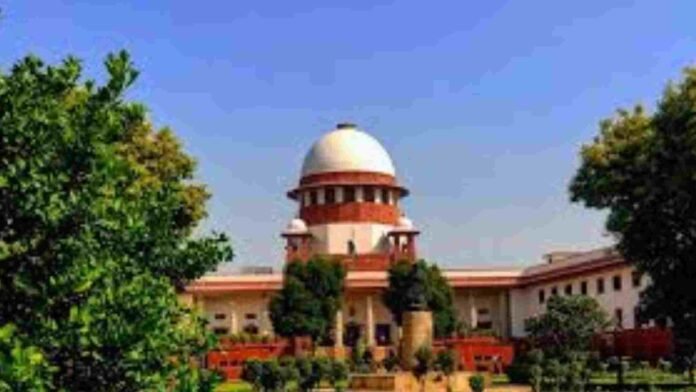
The Supreme Court has ruled that employees cannot be penalised for obtaining degrees from a university that was later rendered invalid due to a judicial decision, holding that termination of service solely on this ground was illegal.
The bench of Justice Rajesh Bindal and Justice Vijay Bishnoi directed reinstatement of several librarians whose services had been terminated by the State of Bihar after their qualifications were questioned.
The Court set aside orders of the Patna High Court that had upheld the termination of the appellants, who had been working as librarians in government service.
The appellants had obtained Bachelor of Library Science (B.Lib) degrees in 2004 from the University of Technology and Science, Raipur, which had been established under the Chhattisgarh Niji Kshetra Vishwavidyalaya Act, 2002. At the time, the institution was recognised, and even the Central Government had acknowledged the validity of degrees for purposes of higher education and employment.
However, in 2005, the Supreme Court struck down key provisions of the 2002 Act, holding that the legislation was unconstitutional, leading to the dissolution of universities established under it.
Several years later, the appellants were recruited as librarians by the State of Bihar in 2010 and served for over five years. Their services were terminated in 2015 on the ground that their degrees were from an unrecognised institution.
The central question before the Court was whether individuals who had completed their education before the law establishing their university was struck down could be deprived of employment benefits on the basis of the subsequent invalidation of the statute.
The Court noted that the appellants had pursued their studies when the university was legally established and functioning. There was no allegation that the institution was bogus or that the degrees were obtained fraudulently.
Importantly, the Court observed that the earlier judgment striking down the 2002 Act had itself emphasised protecting the interests of students so their careers would not suffer.
The Bench further pointed out that the appellants were appointed after due selection, and their qualifications were not questioned at the time of recruitment. The State had knowledge of the legal position and still permitted them to serve for several years. The appellants could not be blamed for studying in a university established under a law enacted by the State legislature, later struck down by the Court.
On this reasoning, the Court held that the termination orders were unsustainable in law.
Allowing the appeals, the Supreme Court ordered reinstatement of the appellants with continuity of service. However, the Court denied back wages for the intervening period, noting that the situation was not entirely attributable to the State alone.
Case Details
Case Title: Priyanka Kumari And Ors. Versus The State Of Bihar And Ors.
Citation: JURISHOUR-20-SC-2026
Case No.: CIVIL APPEAL NO.797 OF 2026
Date: February 18, 2026
Read More: Passport Name Change Can’t Be Denied Solely on Pending Criminal Case Without Cognizance: Bombay HC

