
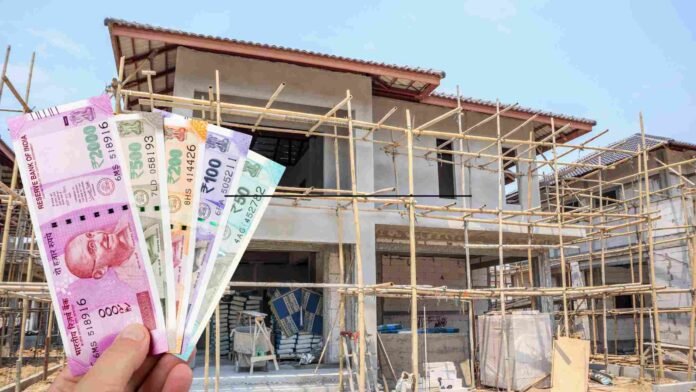
A taxpayer who jointly purchased an under-construction residential property with his daughter in October 2023 has raised a common query: Can long-term capital gains (LTCG) arising from the sale of equity shares over three successive financial years—FY 2023–24, FY 2024–25, and FY 2025–26—be exempted under Section 54F of the Income Tax Act?The possession of the house is expected by March 2026, and the taxpayer does not own any other residential property.
According to tax experts, the provisions of Section 54F are designed to provide relief to individuals and Hindu Undivided Families (HUFs) who reinvest proceeds from long-term capital assets—other than a residential house—into a new residential property. Equity shares, being capital assets, qualify under these provisions.
How Section 54F Works for Under-Construction Properties
Under Section 54F, an assessee can claim full or proportionate exemption from LTCG tax if:
- The capital gains arise from the sale of any long-term capital asset other than a residential house.
- The net sale consideration is invested in purchasing or constructing one residential house within specified timelines.
The timelines prescribed under the law are:
- Purchase of a ready residence:
Within 1 year before or 2 years after the date of transfer of the capital asset. - Construction of a new house (including under-construction booking):
The construction must be completed within 3 years from the date of transfer.
For taxpayers investing in under-construction properties, the law allows investments spread across several instalments and multiple financial years. What matters is that the construction is completed within three years from the date of the first capital asset sale for which exemption is being claimed.
Therefore, if equity shares were sold in FY 2023–24, the construction must be completed by FY 2026–27 to retain the exemption.
Multiple-Year Investments Allowed
Experts confirm that Section 54F does not restrict the exemption to a single financial year. For properties under construction, taxpayers may channel LTCG from different years into the same property, provided the statutory timelines are respected.
The commencement date of construction is also irrelevant—what matters is the completion date.
Joint Ownership Does Not Affect Eligibility
The taxpayer in question purchased the property jointly with his daughter. Tax professionals clarify that joint ownership does not disqualify buyers from claiming Section 54F relief, as long as:
- The assessee’s own investment equals or exceeds the amount of capital gains claimed for exemption.
- The assessee does not own more than one residential house (other than the new one).
In this case, since the taxpayer does not own any other residential property, he remains fully eligible.
Exemption Capped at ₹10 Crore
As per the Finance Act amendments, Section 54F exemption is capped at ₹10 crore. Any investment beyond this limit will not be considered for computing the exempt amount.
Conclusion
Based on the facts and the timelines involved, tax experts affirm that the taxpayer can claim Section 54F exemption for LTCG arising across FY 2023–24, FY 2024–25, and FY 2025–26, provided:
- The under-construction property is completed by March 2026 (or within three years of the first sale of equity shares).
- His share of investment in the house is not less than the total net sale consideration generated over these years.
With careful planning, taxpayers investing in under-construction properties can significantly reduce their capital gains tax burden.

