
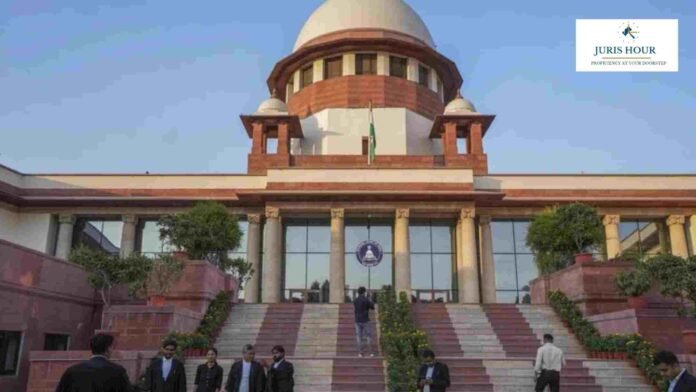
The Supreme Court of India has held that even an unsuccessful party in arbitral proceedings is entitled to seek interim measures under Section 9 of the Arbitration and Conciliation Act, 1996 after the arbitral award is passed but before its enforcement.
The Bench comprising Justice Manoj Misra and Justice Manmohan held that the expression “a party” under Section 9 includes all parties to the arbitration agreement, regardless of whether they succeeded or failed in arbitration. There is no statutory restriction limiting post-award interim relief only to the successful party. Courts cannot read into the law a distinction that the legislature has consciously not made.
The core question before the Court was whether a party that has lost in arbitration and has no enforceable award in its favour can still maintain a petition under Section 9 for interim relief after the award is passed?
Resolving divergent judicial views, the Court answered this in the affirmative, significantly expanding the understanding of interim protection in arbitration law.
The Court emphasized that interpreting “a party” differently depending on the outcome of arbitration would amount to judicial legislation, which is impermissible.
The Court expressly disapproved earlier judgments of the Bombay High Court, Delhi High Court, Madras High Court and Karnataka High Court which had held that only a successful party could seek interim relief post-award.
The court upheld the contrary views taken by: Telangana High Court, Gujarat High Court, and Punjab and Haryana High Court as reflecting the correct legal position.
The Court provided a detailed reasoning namely Section 9 clearly allows “a party” to seek interim measures at three stages—before, during, and after arbitration (before enforcement). Parliament deliberately expanded the scope of interim relief beyond the UNCITRAL Model Law by including the post-award stage. Denying relief to the unsuccessful party would leave them remediless, especially when the award is under challenge under Section 34. The subject matter risks dissipation
The Court clarified that these provisions operate in distinct spheres and are not mutually exclusive.
The Court acknowledged real-world situations where an unsuccessful party may require protection, such as allegations of fraud or lack of notice in arbitration, risk of dissipation of assets during pendency of Section 34 proceedings, and partial success scenarios where rights may change upon modification of the award
It also noted that courts now have the power to modify arbitral awards in limited circumstances, further justifying interim protection.
While granting this right, the Court cautioned that interim relief for unsuccessful parties should be granted sparingly and Courts must apply stricter scrutiny based on Prima facie case, Balance of convenience and Irreparable harm
Only rare and compelling cases would justify such relief.
The Supreme Court conclusively held any party to an arbitration agreement, including an unsuccessful party, can invoke Section 9 at the post-award stage, though courts must exercise caution in granting such relief.
Case Details
Case Title: Home Care Retail Marts Pvt. Ltd. Versus Haresh N. Sanghavi
Citation: JURISHOUR-958-SC-2026
Case No.: SLP (C) NO. 29972/2015
Date: 24/04/2026

