
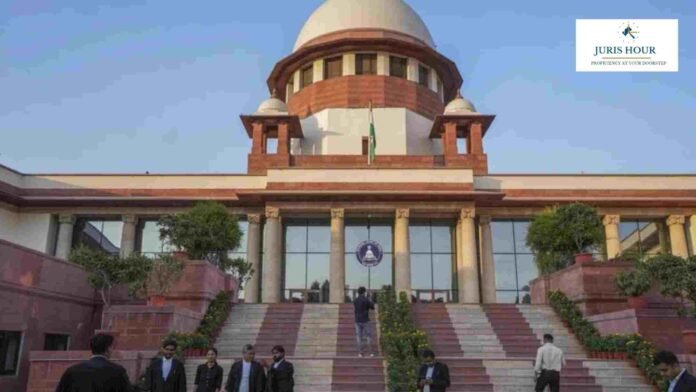
The Supreme Court has set aside the judgments of the Allahabad High Court and the State Public Services Tribunal, restoring the termination of a police constable on grounds of medical unfitness and suppression of material facts.
The bench of Justice Ahsanuddin Amanullah and Justice N.V. Anjaria, underscores that lack of eligibility strikes at the root of an appointment and cannot be cured by procedural or equitable considerations.
The case traces its origins to the 2005 recruitment of constables in the Uttar Pradesh Police. The respondent, Ajay Kumar Malik, was selected and appointed but was subsequently found medically unfit due to a “knock knee deformity” during a re-examination conducted in 2007. His appointment was cancelled on this ground.
Following extensive litigation relating to large-scale irregularities in the recruitment process, the respondent was provisionally reinstated in 2013, claiming parity with similarly situated candidates. However, disciplinary proceedings were later initiated against him on allegations of concealment of his medical condition and misrepresentation, ultimately leading to his termination in 2017.
Buy Now: E-Compilation of Supreme Court Judgements – March 2026
While the Services Tribunal and subsequently the Allahabad High Court granted relief to the respondent, holding that no concealment was proved, the State challenged these findings before the apex court.
The Court categorically held that medical fitness is a foundational eligibility requirement, especially for uniformed services such as the police, and any appointment granted in violation of such criteria is unsustainable.
Rejecting the reasoning of the lower forums, the Court observed that the respondent had failed to disclose his medical condition while seeking reinstatement, despite being fully aware that his earlier termination was based on the same ground. This amounted to deliberate suppression of material facts.
The Court described such conduct as falling within the doctrine of “suppressio veri and suggestio falsi”—suppression of truth and suggestion of falsehood—and held that it vitiated the very basis of his appointment.
Addressing the respondent’s argument of parity with other candidates who were reinstated, the Court reiterated the settled principle that negative equality cannot be claimed in law. It clarified that if other candidates were wrongly reinstated despite being medically unfit, such illegality cannot be extended to justify another illegal appointment.
The Court further directed that cases of similarly placed candidates, if still in service, must be re-examined strictly in accordance with eligibility criteria, including medical fitness.
The judgment also contains strong observations against both administrative authorities and judicial forums. The Court criticized the Superintendent of Police for failing to verify eligibility before reinstating the respondent, calling it a serious lapse in public administration.
Equally, the Court found that the Services Tribunal and the High Court failed to appreciate the broader implications of permitting an ineligible candidate to continue in public service, especially in a disciplined force like the police.
While restoring the termination, the Court sought to balance equities by directing that no recovery shall be made of salary already paid for the period the respondent actually worked; and any unpaid dues for actual service must be released within four weeks, failing which interest at 6% per annum would apply.
Case Details
Case Title: State Of Uttar Pradesh Versus Ajay Kumar Malik
Citation: JURISHOUR-933-SC-2026
Case No.: Special Leave Petitions (Civil) Nos.11145-11146 Of 2025
Date: 20/04/2026
Read More: Service Inam Land Is Wakf Property, Can’t Be Alienated: Supreme Court

