
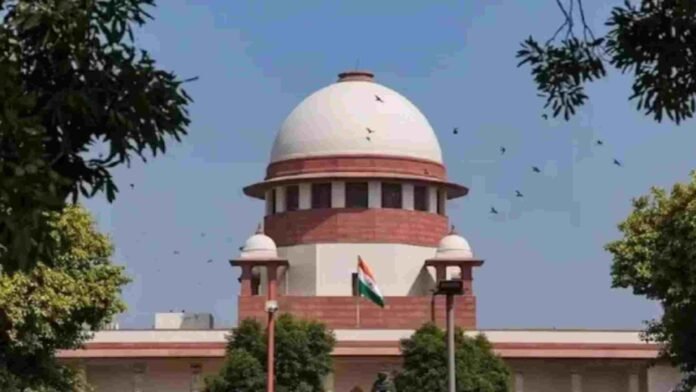
The Supreme Court of India has dismissed a petition challenging the constitutional validity of Section 20(2)(a) of the Bharatiya Nagarik Suraksha Sanhita, 2023 (BNSS), which permits the appointment of a person who “is or has been a Sessions Judge” as Director or Deputy Director of Prosecution.
A Bench led by the Chief Justice of India, while rejecting the plea, termed the challenge “misconceived” and lacking any legal foundation.
The Challenge
The petitioner had contended that Section 20(2)(a) undermines the doctrine of separation of powers by allowing members of the higher judicial service—specifically those who are or have been Sessions Judges—to head the Directorate of Prosecution.
It was argued that enabling judicial officers to occupy executive positions within the prosecution framework compromises judicial independence, a core component of the Constitution’s basic structure. According to the plea, such appointments blur the institutional distinction between the judiciary and the executive, thereby eroding constitutional safeguards.
Court’s Observations
During the hearing, Justice Bagchi clarified the scope of the provision, observing that the phrase “is or has been a Sessions Judge” must be interpreted as an eligibility criterion and not as a mandatory qualification.
“The word has to be read as eligibility and not a mandatory condition,” Justice Bagchi remarked, indicating that the provision merely expands the pool of candidates who may be considered for appointment, rather than mandating that a serving or former Sessions Judge must head the prosecution.
The Chief Justice further observed that the petition was fundamentally flawed. “This is a misconceived challenge and has no legal basis,” the Bench stated, dismissing the plea.
Legal Context
Section 20 of the BNSS deals with the establishment and functioning of the Directorate of Prosecution at the State level. Sub-section (2)(a) provides that the Director of Prosecution and Deputy Director of Prosecution may be appointed from among persons who are or have been Sessions Judges, among other eligible candidates.
The provision forms part of the broader criminal law overhaul enacted in 2023, which replaced the Code of Criminal Procedure, 1973, with the BNSS as part of a comprehensive restructuring of India’s criminal justice framework.
Read More: No Service Tax on Incentives Received by Car Dealers from Manufacturers: CESTAT

